"The penalty good men pay for indifference to public affairs is to be ruled by evil men." attributed to Plato

"Bad men need nothing more to compass their ends, than that good men should look on and do nothing." attributed to Edmund Burke

Let's between us make the world a better place.


Showing posts with label consolatory ministry. Show all posts

Saturday, 21 December 2013

Wounds as a source of healing in pastoral and medical care

I love the idea of the Wounded Healer, the concept that a person's own suffering can be a source of healing for others. I believe this has enormous social significance for us all, in many different ways. 
This idea was reflected in the consolatory ministry with its accompanying literature from Ancient Greece onwards. I'll write more about this consolatory ministry later. Suffice to say here that by the seventeenth and eighteenth century in Western Europe the idea was well established in pastoral healing, mostly among the clergy of the time, but also in use by some physicians. Men such as George Fox, who founded the Society of Friends (or Quakers), George Trosse and Timothy Rogers, both Nonconformist English clergy of the seventeenth century and the English Physician George Cheyne, these and more used their own personal stories of suffering in their successful healing ministries. They were all reflecting the power of the wounded healer to heal others. 
But it was only with the development of the modern psychological schools of Freud, Adler and Jung, picking up the threads of pre Hippocratic holistic care, that the concept was first articulated, by Carl Gustav Jung (1875 – 1961), as a recognized healing archetype. Research papers and specialist textbooks on the concept of the Wounded Healer are plentiful, but these are mostly within the realms of analytical psychology. Both Jung and Sigmund Freud (1856 – 1939) were at certain periods of their lives deeply disturbed psychologically. By submitting themselves to their own styles of self-analysis, they both came to understand their own sufferings more clearly and were able to appreciate and treat their patients more effectively.
Jung introduced extensive self-analysis as an essential part of the training of a psychotherapist, to be followed up by continuing clinical supervision, because, he said,
"The patient’s treatment begins with the doctor…in any ongoing analysis the whole personality of both patient and doctor is called into play. There are many cases that the doctor cannot cure without committing himself. When important matters are at stake, it makes all the difference whether the doctor sees himself as a part of the drama, or cloaks himself in his authority. In the great crises of life, in the supreme moments when to be or not to be is the question, little tricks of suggestion do not help. Then the whole being of the doctor is challenged…the Doctor is effective only when he himself is affected…‘the wounded physician heals.’ But when the doctor wears his personality like a coat of armour, he has no effect." (1)

Elsewhere Jung wrote:

"Without too much exaggeration a good half of every treatment that probes at all deeply consists in the doctor examining himself, for only what he can put right in himself can he hope to put right in the patient…It is his own hurt that gives the measure of his power to heal. This, and nothing else, is the meaning of the Greek myth of the wounded physician." (2)

Jung’s followers proceeded to give the term special significance in their work and thinking and it was Jungian analysts who apparently started referring to the Wounded Healer Archetype as a recognized tool in the healing process. Jung’s ideas were specifically developed in the context of the doctor and his patient in psychotherapy, but this wisdom is surely just as relevant today within the context of the general medical practitioner’s relationship with his patient.

It was the Dutch priest and successful spiritual writer Henri Nouwen who did so much to popularize the use of the term Wounded Healer in his own works in the context of pastoral healing. In the introduction to his book The Wounded Healer he wrote; ‘nothing can be written about ministry without a deeper understanding of the ways in which the minister can make his own wounds available as a source of healing.’

Like Carl Jung, Alfred Adler (1870 – 1937), a pioneer Austrian Psychiatrist, was a prominent member of Freud’s psychological group, before they both broke away from Freud to develop their own psychological theories. Jung developed a more analytical psychology, introducing the concept of the introvert and extrovert and the Collective Unconscious, with a description of the various archetypes of man’s basic and inherent psychic nature. Adler on the other hand developed his own ‘individual psychology’ theory, and introduced the concept of the ‘inferiority complex’. ‘The method of Individual Psychology begins and ends with the problem of inferiority,’ he wrote. Adler believed that all human motivation was power induced, for example by the drive to be superior or the drive to control others. Somehow that rings very true in much that we see around us today!

But these psychological theories and the treatments arising from them were developing apart from rather than in cooperation with clinical medical practice. 

Indeed in many medical circles the new psychologies were viewed with suspicion and regarded as nothing more than ‘quackery’. 

Science was coming to be regarded as the supreme truth: that nothing could be real unless scientifically proven. 

The scientists thought that there was no room for an intangible global value to exist alongside the material and capitalist values that were reigning supreme. Indeed in many academic circles today the writings of Freud and Jung are still regarded with scorn, on the basis that their theories are too anecdotal and can therefore be of little value to any furtherance of understanding of the human condition and the mind/body problem.


But these ideas should not be dismissed so carelessly. Those of Carl Jung in particular seem to me to be very much in line with some recent developments in the fields of consciousness and intuition, ideas which are slowly gaining some credibility and significance in modern medicine, as I shall explain later on...

to be contd......

(1) Jung, Carl G., Memories, Dreams Reflections (London: Fontana Press, 1995) pp.154-156.

(2) Jung, Carl G., Fundamental Questions of Psychotherapy, in The Collected Works of C G Jung, 1953-1979), vol. 16: 111-25, on p. 116.

Friday, 13 December 2013

Hippocrates: the Father of Western Medicine

Considering that Hippocrates has profoundly influenced the development of Western medicine we rather surprisingly know very little about him!

In my last post I introduced the idea that in the context of medicine I believe we need to de-mechanize our bodies, to consider the healing needs of soul and spirit alongside the modern and often wonderful scientific advances, to develop a truly holistic healing opportunity for the patient.

the Lotus flower - divine symbol in Asian traditions
Over the next few weeks I shall trace the history of Western Medicine, showing how we lost sight of this important truth and how we are beginning to pick up the traces again.

We continue the story in Ancient Greece with Hippocrates, widely and popularly regarded as the father of Western medicine as we now know it. Hippocrates was a Greek physician born in the fifth century BC on the island of Cos. The Hippocratic Oath or a modified version of it is still taken by physicians on first qualification at some Universities. Hippocrates developed and worked with a physical model of the human being, looking for cures to physical conditions and following a rational, evidence based medicine with recourse to external agents to effect the cures, much as science is applied to medicine today.

His medicine was based on observation and objectivity, placing more emphasis on the body that could be measured and described, rather than on the subjectivity of feelings and senses. The Hippocratic physicians were not very interested in the opinion of the patient and distanced themselves from any of the charms and incantations of the many traditional and ‘unconventional’ healing methods of the time based on magic and religion. This is why Virgil described the medicine of the day as the silent art. Indeed Hippocrates is still sometimes blamed when people today say that doctors do not communicate well with their patients!

Hippocrates was however said to be good at diagnosis and prognosis. Perhaps, who knows, he used his intuitive skills, that we now see in the modern day medical intuitives. The Hippocratic School believed that all disease had its origin in the yellow and black biles, blood and phlegm, which were the four fluids of the body. These fluids were believed to parallel the natural elements of air, earth, fire and water and their varying proportions in the body influenced the emotional or physical attributes of the patient, or their ‘humors’. At that time medicine was by no means the respectable profession that we recognize today.


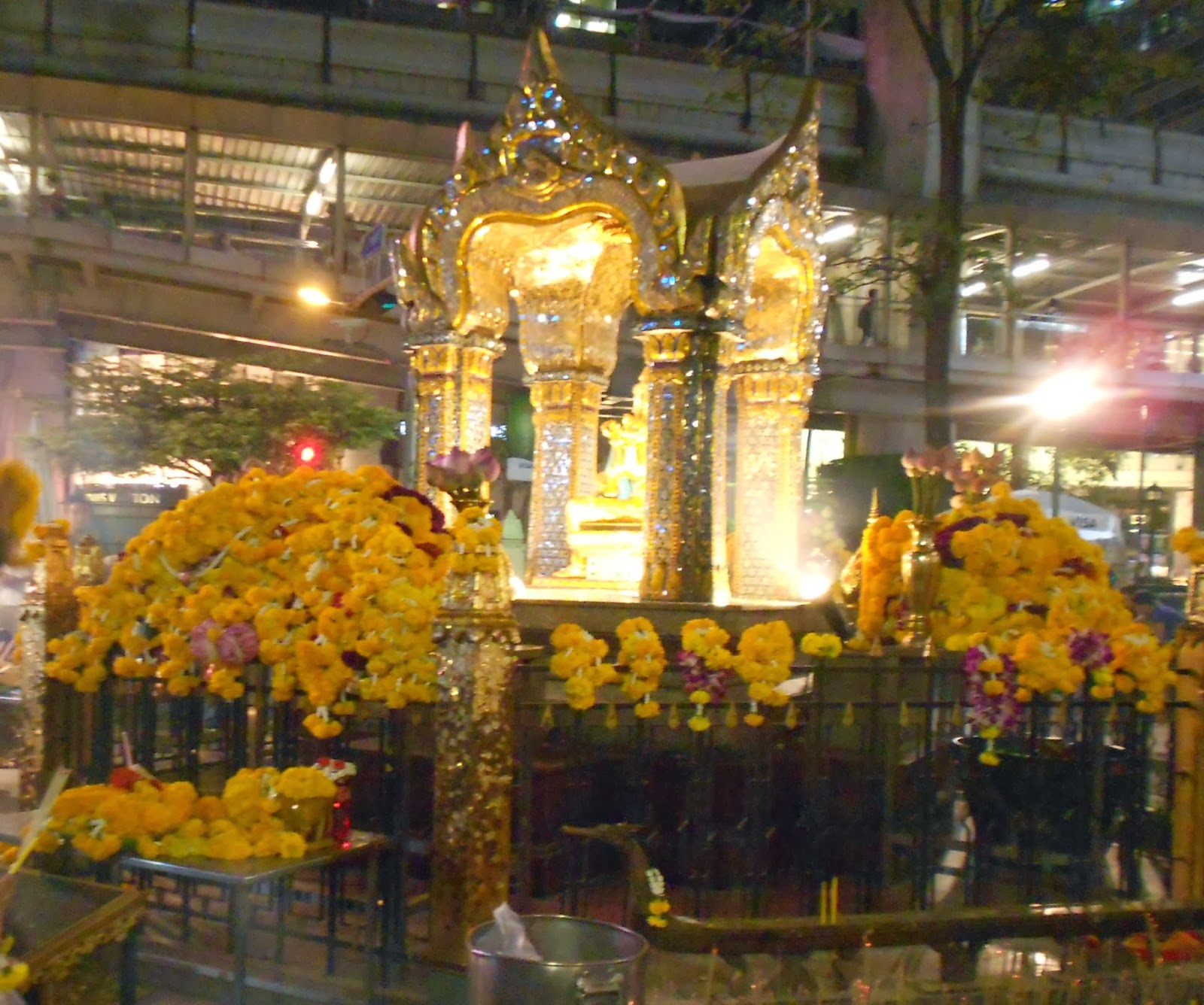
A Buddhist shrine in Bangkok
Medicine had no status and anyone was able to practice in whatever form they wished.

Hippocrates gained respect in this environment with his more detailed methodology. That is not to say that he lost sight of the holistic approach to medicine, which he is said to have still regarded as important in the overall treatment of the person.

It seems though that he believed in a natural and unknown healing power of the mind rather than a divine or spiritual healing force. 

Hippocrates insisted that the body could heal itself naturally and that no treatment should interfere with that healing process. The predominant philosophy in Hippocrates’ time regarding the relationship of the mind and body was that of Plato, who broadly speaking believed that humans had an external soul, linked to the physical body but existing before and after the life of the material body. Certainly the influences of the mind and emotions on physical health were recognized.

One of the less conventional methods of healing that was already well established in Greece at that time was to be found in the Asklepian Temples, named after Asklepios, the Greek God of Healing. Hippocrates was said to respect this hugely popular treatment of the day.

Asklepios was the son of a union between the nymph Coronis and the great Apollo. Because Coronis had been unfaithful to Apollo Apollo’s twin sister Artemis killed her during her pregnancy. The baby Asklepios was removed from his mother’s dead body on the funeral pyre, probably by his father or Hermes, and handed over to Chiron the Wounded Healer to raise him in the art of healing. Asklepios looked towards psychological and spiritual healing, of the mind and soul, for what were otherwise regarded as incurable and chronic conditions. The Greek view of the day was that such conditions were caused by the gods and needed divine healing and that this had to come from within. The Island of Cos had an important Asklepian healing temple and would be visited by such invalids. The patients would be fasted, rested and cleansed in sacred springs under the supervision of the priests. They would then be left to sleep in special resting places, where they would dream. The essence of the healing was that this process of dreaming worked within the psyche of the patient rather than at his conscious level. In the morning the dreams would be discussed with the temple priests and the patient would then leave an offering before he went on his way. Snakes played an important role in this healing process in the temples. It is possible that their healing power was attributed to their ability to slough their skins regularly. This would have been seen as rejuvenation, although of course we know now that this is a natural stage of the growth process.

Snakes are still symbolized in the Caduceus, the international medical symbol that shows a serpent entwined around Asklepios’ staff. 

The Caduceus has also become the popular symbol of the Wounded Healer. It is known that Hippocrates worked in co-operation with the Asklepians and may have referred some of his patients to the temples. There was clearly some integration of these different schools of healing. The Asklepian Temples and their healing methods had disappeared by 500 AD although of all the pagan cults of the time these treatments lasted longer than any of the others into the Christian era. This was because they were enormously popular with the ordinary citizens. With the demise of these healing temples the Greek recognition of the influence of mind and spirit in the healing process was lost to Hippocratic medicine. Although aspects of the Asklepian healing method are seen again in some of the complementary and alternative therapies of today, there is widespread resistance to these ‘soft’ therapies among many ‘mainstream’ medical clinicians. Meanwhile into that ancient Greek culture a new genre of healing literature was appearing. It was being recognized that writing about one’s own afflictions could be a source of comfort for others with similar suffering. This ‘consolatory ministering’ flourished from around the mid fourth century BC to the Renaissance of the fifteenth century.

There were few changes in the basic practice of Hippocratic medicine until in the second century AD the Greek physician and philosopher Galen came on the scene. I shall pick up the story with Galen in my next post... 

Saturday, 27 February 2010

Lent, Consolatory ministry and the Wounded Healer

Well my experiment with the cellphone in the bathroom (last post) didn't do anything for me so I am back to the serious today!
We have just had our first Lent group - a house group of 12 people meeting once a week to discuss a theme. This week the subject was Isaiah chapter 40 - Comfort ye, comfort ye my people, says the Lord.
What is comfort? What comfort does God offer us in times of need? Someone mentioned the additional gift of comfort afforded to those who themselves have seen grief, hurt or other affliction and come through it to be able to help others - of course the Wounded Healer.
This reminded me of the consolatory ministry and the healing prose seen in the consolatory literature of the ancient Greeks. Perhaps the earliest example of this was On Grief, written by the Greek academic and philosopher Crantor in the mid fourth century BC. This type of consolation was offered on the occasion of any human misfortune, but seems to have been used particularly to console or heal following the death of a loved one, often a child. The consolatory ministry was built around the belief that by writing about one’s own suffering the author is not only helping himself through his own difficulties but can be in a better position to help others in a similar situation. The soul or spirit was often implicated in this healing process. It reflected the healing vulnerability of the Wounded Healer.
There were many examples of this genre of literature, which developed well into the European Renaissance period of the fourteenth to seventeenth centuries. By then people were recognixing that  sorrow, misery, and misfortune could be matters for sympathy - up until then they were too often seen as stemming from sinfulness. Francesco Petrarca, or Petrarch, who lived in the fourteenth century, was well known for his self- care and self -analysis. ‘No one’s solace,’ he wrote, ‘penetrates a saddened mind more than that of a fellow sufferer, and therefore the most effective words to strengthen the spirits of the bystanders are those which emerge from the actual torments.’ He quoted from Virgil: ‘Being acquainted with grief, I learn to succor the wretched (Aen. 2.630).’
The consolatory genre surely survives to the present day in the spiritual works of Henri Nouwen and perhaps Michael Mayne, for example. It was only when I read Michael Mayne’s Learning to Dance that I discovered that he had been deeply wounded as a child, when at the age of three his father, with no warning, committed suicide and left his wife and son homeless and very poor. This, Mayne said, left ‘an immense emptiness’ in his life. He was writing a meditation on his life of faith when he learnt that he had cancer. As he struggled with his terminal and painful illness, he completed Enduring Melody,  which became his own beautifully written and moving epitaph. In an addition to Mayne’s obituary in the Times in November 2006, Canon Chris Chivers wrote of Mayne: ‘The letter he wrote to me…was full of down-to-earth wisdom, mixed with deep prayerfulness, and an all-too-rare ability to put himself in the shoes and soul of another. This will surely be the enduring melody of his richly sacrificial ministry.’ Mayne’s meditational books are steeped in wonderful imagery that helps us understand more clearly the ineffable, the God immanent but unknowable. In his vocation as priest he was clearly the very essence of the Wounded Healer to those who received his ministry.
Isaiah 40 raises issues far beyond this and I hope to cover some more in later posts. Do "misery memoirs" come within this consolatory genre I wonder?

It's Time you knew - by Transition Rachel at YouTube

Many reasons to love La Gomera

Madeira

Sunset

Sunset
with vapor trails

Followers

Total Pageviews