This series of blog posts on healthcare is really about the healing of suffering. It is about healing the individual, healing the medical profession and about the contribution that the healthcare profession can make towards healing the world.
It is also about finding the Wounded Healer in our healthcare system; and about infusing that healthcare with spirit. Indeed an understanding of the former should assist a greater appreciation of the latter.
There is a new era of spiritual awakening in the context of pastoral care, which I have written about elsewhere. Medicine is also at the dawn of a new understanding of consciousness. While such changes are for the moment only evident in a few pockets of holistic excellence across America, even less in the UK, progress in this interesting and exciting field is being fuelled by the much more rapid dissemination of information now possible through that most wonderful of tools when used responsibly and with selective discernment, the worldwide web!
Sadly these exciting developments in holistic medicine are yet to be embraced universally in spite of the growing mass of empirical evidence in their support. I also understand that some may find it difficult to share this excitement when tens of millions of American do not have access to free basic healthcare, when so many physicians are disillusioned with their work and when morale within the profession is probably at an all time low. When people are preoccupied not with the state of medical advances but with how they can possibly afford to pay for even basic treatment, perhaps urgent treatment for a sick child, it may seem hopelessly inappropriate to suggest that existing healthcare needs to regain its soul, to suggest that a new spirituality needs to infuse the healthcare profession.
Now I know I am touching on a controversial topic here, but as I watched President Obama make his inaugural speech to the American nation early in 2009, I was concerned. ‘We will restore science to its rightful place,’ he said, ‘and wield technology’s wonders to raise health care’s quality and lower its costs.’
With the emphasis on technology there was no recognition of the need to support an integrated healthcare. Perhaps that was neither the appropriate time nor occasion to raise such issues. But it may be that Obama’s two aims for healthcare are incompatible. Ever more complex drug regimes and technological advances are alone unlikely to lower the costs of healthcare. Also hurling more money at the present healthcare system seems to me like handing out more pills to deal with the side effect of a prescribed drug, rather than looking for a more appropriate initial treatment without that unwanted reaction.
Let me stress, by contrast, that the healing power of the spirit is free and wholesome, with no unwanted side effects. And healthcare is certainly not a commodity to take or leave. The quality of its provision should not depend on the wealth of an individual.
It is a matter of religious compassion and social justice that a basic healthcare should be freely available for all as a human right, not only for fellow citizens but also for all populations across the world.
As we work towards a more integrated and less expensive health system, is it too much to hope that the money saved could be redirected to help to provide basic medical needs across the globe in the fight to combat malaria, AIDS and the other crippling health concerns of so many who are very much less fortunate than ourselves?
Wednesday, 8 January 2014


Monday, 6 January 2014
Is holistic healthcare our future?
"Future generations, looking back, will regard conventional medicine during the twentieth century as being as limited as five-finger arithmetic. A new medicine is arising; one which embraces spirituality and consciousness as emphatically as conventional medicine has dismissed them." (Larry Dossey, M.D (1)
Is it?
Is conventional medicine now looking so outdated?
Is Larry Dossey right or do we still have a long way to go?
The future of an integrated healthcare looks considerably more certain than it did only a few years ago. By integrated healthcare I mean a system that considers not only the interaction of the mind and body, but also the influence of the soul and spirit, in a holistic approach to healing.
But there are still many who are not ready to accept such developments into their lives. This is in spite of the increasing evidence and support for the power of unseen forces within the holistic healing experience. Some even become aggressive in their denial of any hint of such spirituality, soul, Higher Being, or God. That is their great loss. But it is also a loss to the world.
I believe that only by experiencing the transcendent in our lives, submitting ourselves to this new consciousness and spirituality that is all around us, infusing our lives with spirit, will we achieve a personal level of real health, wholeness and well-being never before seen in the history of scientific clinical medicine. Not only that, but I think the social significance of some of these changes could be immense. This fractured world would be healed in so many ways, with increased potential for us all to enjoy a life of well-being, global justice, love and peace. The cost savings could also be significant, relieving the healthcare profession from its present almost unbelievable financial burden. Indeed medicine could be leading the way for us all in this spiritual journey if we only had the will.
‘To be a good doctor you have to be a compassionate chameleon, a shape shifter, a shaman.’ So wrote Cecil Helman, family doctor, medical anthropologist, poet, traveler and observer of health systems worldwide, in his book Suburban Shaman (2). From fascinating anecdotes of consultations with traditional South African shamans or Sangomas to the curative trance dances in the Brazilian favelas, he reflected on how western Doctors can learn much from the folk wisdom and shrewd knowledge of human nature as demonstrated by these indigenous Wounded Healers. In the midst of the poverty, illiteracy and appalling living conditions of the shanty - towns of Southern Brazil, a Brazilian doctor, Carlos Grossman, has developed an innovative Community Health Program. The ‘social doctors’ who work in such areas not only provide the primary health care for their patients but also devote as much as half of their time to community development, to health education, to campaigning for improved conditions and generally engaging with the underlying social conditions of those patients in their care. This, says Helman, is ‘real’ medicine. The shantytown conditions of Brazil or the indigenous medicine man may seem far removed both culturally and geographically from our own Western experience. But the healing methods of indigenous tribes are found in the culture of the Native Americans, in the Ayurveda of native Indian, in Chinese Oriental medicine and in many other cultures worldwide. These traditions go back thousands of years. I would suggest that the importance of the personal, subjective and social elements of patient care are no less relevant in mainstream healthcare provision in the USA or the UK than they are in the favelas of Brazil.
The World Health Organization (WHO) first recognized the value of these traditional shamanic healers as long ago as 1978, as being especially relevant in areas where there were few conventional doctors. The shamans, the WHO said, should be allies of conventional healthcare, not opponents, as they had the holistic advantage of ‘viewing man in his totality within a wide ecological spectrum, and of emphasizing …that ill health or disease is brought about by an imbalance…of man in his total ecological system…’ (3) The shaman could work cooperatively alongside conventional physicians in helping to combat AIDs, to promote family planning, child health and mental illness for example, as ‘social workers.’ Unfortunately the genuine holistic healing skills of the true indigenous shaman are too often today confused with the fads and abuses introduced by some of those unscrupulous ‘medicine men’ and ‘faith healers’ in our twenty first century culture, who are driven more by monetary gain than by any altruistic motive. This insults true shamanism and its origins.
References:
1. From Larry Dossey front cover endorsement of Shealy, Norman and Dawson Church, Soul Medicine: Awakening your Inner Blueprint for Abundant Health and Energy, Santa Rosa, CA: Energy Psychology Press, 2008.
2. Cecil Helman, Suburban Shaman: Tales from Medicine’s Frontline, London: Hammersmith Press, 2006, p. 77
3. World Health Organization, The Promotion and Development of Traditional Medicine (WHO Technical Report Series 622) (Geneva: WHO 1978), cited in Cecil Helman, 2006, p.163.
Is it?
Is conventional medicine now looking so outdated?
Is Larry Dossey right or do we still have a long way to go?
I believe that only by experiencing the transcendent in our lives, submitting ourselves to this new consciousness and spirituality that is all around us, infusing our lives with spirit, will we achieve a personal level of real health, wholeness and well-being never before seen in the history of scientific clinical medicine. Not only that, but I think the social significance of some of these changes could be immense. This fractured world would be healed in so many ways, with increased potential for us all to enjoy a life of well-being, global justice, love and peace. The cost savings could also be significant, relieving the healthcare profession from its present almost unbelievable financial burden. Indeed medicine could be leading the way for us all in this spiritual journey if we only had the will.
‘To be a good doctor you have to be a compassionate chameleon, a shape shifter, a shaman.’ So wrote Cecil Helman, family doctor, medical anthropologist, poet, traveler and observer of health systems worldwide, in his book Suburban Shaman (2). From fascinating anecdotes of consultations with traditional South African shamans or Sangomas to the curative trance dances in the Brazilian favelas, he reflected on how western Doctors can learn much from the folk wisdom and shrewd knowledge of human nature as demonstrated by these indigenous Wounded Healers. In the midst of the poverty, illiteracy and appalling living conditions of the shanty - towns of Southern Brazil, a Brazilian doctor, Carlos Grossman, has developed an innovative Community Health Program. The ‘social doctors’ who work in such areas not only provide the primary health care for their patients but also devote as much as half of their time to community development, to health education, to campaigning for improved conditions and generally engaging with the underlying social conditions of those patients in their care. This, says Helman, is ‘real’ medicine. The shantytown conditions of Brazil or the indigenous medicine man may seem far removed both culturally and geographically from our own Western experience. But the healing methods of indigenous tribes are found in the culture of the Native Americans, in the Ayurveda of native Indian, in Chinese Oriental medicine and in many other cultures worldwide. These traditions go back thousands of years. I would suggest that the importance of the personal, subjective and social elements of patient care are no less relevant in mainstream healthcare provision in the USA or the UK than they are in the favelas of Brazil.
The World Health Organization (WHO) first recognized the value of these traditional shamanic healers as long ago as 1978, as being especially relevant in areas where there were few conventional doctors. The shamans, the WHO said, should be allies of conventional healthcare, not opponents, as they had the holistic advantage of ‘viewing man in his totality within a wide ecological spectrum, and of emphasizing …that ill health or disease is brought about by an imbalance…of man in his total ecological system…’ (3) The shaman could work cooperatively alongside conventional physicians in helping to combat AIDs, to promote family planning, child health and mental illness for example, as ‘social workers.’ Unfortunately the genuine holistic healing skills of the true indigenous shaman are too often today confused with the fads and abuses introduced by some of those unscrupulous ‘medicine men’ and ‘faith healers’ in our twenty first century culture, who are driven more by monetary gain than by any altruistic motive. This insults true shamanism and its origins.
References:
1. From Larry Dossey front cover endorsement of Shealy, Norman and Dawson Church, Soul Medicine: Awakening your Inner Blueprint for Abundant Health and Energy, Santa Rosa, CA: Energy Psychology Press, 2008.
2. Cecil Helman, Suburban Shaman: Tales from Medicine’s Frontline, London: Hammersmith Press, 2006, p. 77
3. World Health Organization, The Promotion and Development of Traditional Medicine (WHO Technical Report Series 622) (Geneva: WHO 1978), cited in Cecil Helman, 2006, p.163.
Subscribe to:
Posts (Atom)
Sunset
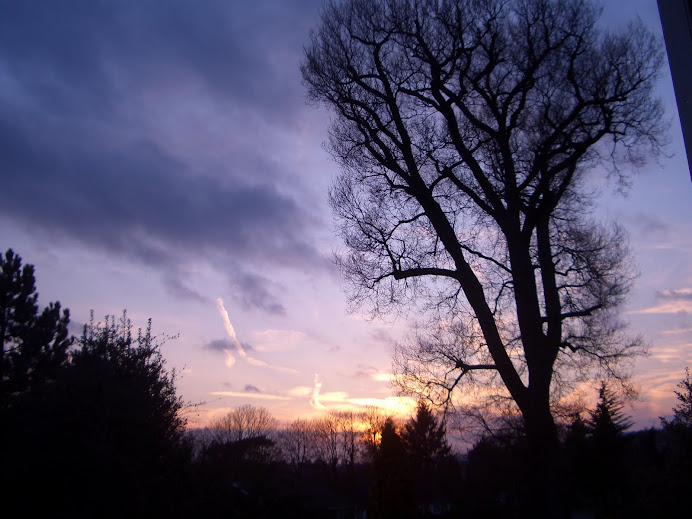
with vapor trails
Subscribe


 Posts
All Comments
Posts
All Comments