This series of blog posts on healthcare is really about the healing of suffering. It is about healing the individual, healing the medical profession and about the contribution that the healthcare profession can make towards healing the world.
It is also about finding the Wounded Healer in our healthcare system; and about infusing that healthcare with spirit. Indeed an understanding of the former should assist a greater appreciation of the latter.
There is a new era of spiritual awakening in the context of pastoral care, which I have written about elsewhere. Medicine is also at the dawn of a new understanding of consciousness. While such changes are for the moment only evident in a few pockets of holistic excellence across America, even less in the UK, progress in this interesting and exciting field is being fuelled by the much more rapid dissemination of information now possible through that most wonderful of tools when used responsibly and with selective discernment, the worldwide web!
Sadly these exciting developments in holistic medicine are yet to be embraced universally in spite of the growing mass of empirical evidence in their support. I also understand that some may find it difficult to share this excitement when tens of millions of American do not have access to free basic healthcare, when so many physicians are disillusioned with their work and when morale within the profession is probably at an all time low. When people are preoccupied not with the state of medical advances but with how they can possibly afford to pay for even basic treatment, perhaps urgent treatment for a sick child, it may seem hopelessly inappropriate to suggest that existing healthcare needs to regain its soul, to suggest that a new spirituality needs to infuse the healthcare profession.
Now I know I am touching on a controversial topic here, but as I watched President Obama make his inaugural speech to the American nation early in 2009, I was concerned. ‘We will restore science to its rightful place,’ he said, ‘and wield technology’s wonders to raise health care’s quality and lower its costs.’
With the emphasis on technology there was no recognition of the need to support an integrated healthcare. Perhaps that was neither the appropriate time nor occasion to raise such issues. But it may be that Obama’s two aims for healthcare are incompatible. Ever more complex drug regimes and technological advances are alone unlikely to lower the costs of healthcare. Also hurling more money at the present healthcare system seems to me like handing out more pills to deal with the side effect of a prescribed drug, rather than looking for a more appropriate initial treatment without that unwanted reaction.
Let me stress, by contrast, that the healing power of the spirit is free and wholesome, with no unwanted side effects. And healthcare is certainly not a commodity to take or leave. The quality of its provision should not depend on the wealth of an individual.
It is a matter of religious compassion and social justice that a basic healthcare should be freely available for all as a human right, not only for fellow citizens but also for all populations across the world.
As we work towards a more integrated and less expensive health system, is it too much to hope that the money saved could be redirected to help to provide basic medical needs across the globe in the fight to combat malaria, AIDS and the other crippling health concerns of so many who are very much less fortunate than ourselves?
Showing posts with label wounded healer. Show all posts
Showing posts with label wounded healer. Show all posts
Wednesday, 8 January 2014


Monday, 6 January 2014
Is holistic healthcare our future?
"Future generations, looking back, will regard conventional medicine during the twentieth century as being as limited as five-finger arithmetic. A new medicine is arising; one which embraces spirituality and consciousness as emphatically as conventional medicine has dismissed them." (Larry Dossey, M.D (1)
Is it?
Is conventional medicine now looking so outdated?
Is Larry Dossey right or do we still have a long way to go?
The future of an integrated healthcare looks considerably more certain than it did only a few years ago. By integrated healthcare I mean a system that considers not only the interaction of the mind and body, but also the influence of the soul and spirit, in a holistic approach to healing.
But there are still many who are not ready to accept such developments into their lives. This is in spite of the increasing evidence and support for the power of unseen forces within the holistic healing experience. Some even become aggressive in their denial of any hint of such spirituality, soul, Higher Being, or God. That is their great loss. But it is also a loss to the world.
I believe that only by experiencing the transcendent in our lives, submitting ourselves to this new consciousness and spirituality that is all around us, infusing our lives with spirit, will we achieve a personal level of real health, wholeness and well-being never before seen in the history of scientific clinical medicine. Not only that, but I think the social significance of some of these changes could be immense. This fractured world would be healed in so many ways, with increased potential for us all to enjoy a life of well-being, global justice, love and peace. The cost savings could also be significant, relieving the healthcare profession from its present almost unbelievable financial burden. Indeed medicine could be leading the way for us all in this spiritual journey if we only had the will.
‘To be a good doctor you have to be a compassionate chameleon, a shape shifter, a shaman.’ So wrote Cecil Helman, family doctor, medical anthropologist, poet, traveler and observer of health systems worldwide, in his book Suburban Shaman (2). From fascinating anecdotes of consultations with traditional South African shamans or Sangomas to the curative trance dances in the Brazilian favelas, he reflected on how western Doctors can learn much from the folk wisdom and shrewd knowledge of human nature as demonstrated by these indigenous Wounded Healers. In the midst of the poverty, illiteracy and appalling living conditions of the shanty - towns of Southern Brazil, a Brazilian doctor, Carlos Grossman, has developed an innovative Community Health Program. The ‘social doctors’ who work in such areas not only provide the primary health care for their patients but also devote as much as half of their time to community development, to health education, to campaigning for improved conditions and generally engaging with the underlying social conditions of those patients in their care. This, says Helman, is ‘real’ medicine. The shantytown conditions of Brazil or the indigenous medicine man may seem far removed both culturally and geographically from our own Western experience. But the healing methods of indigenous tribes are found in the culture of the Native Americans, in the Ayurveda of native Indian, in Chinese Oriental medicine and in many other cultures worldwide. These traditions go back thousands of years. I would suggest that the importance of the personal, subjective and social elements of patient care are no less relevant in mainstream healthcare provision in the USA or the UK than they are in the favelas of Brazil.
The World Health Organization (WHO) first recognized the value of these traditional shamanic healers as long ago as 1978, as being especially relevant in areas where there were few conventional doctors. The shamans, the WHO said, should be allies of conventional healthcare, not opponents, as they had the holistic advantage of ‘viewing man in his totality within a wide ecological spectrum, and of emphasizing …that ill health or disease is brought about by an imbalance…of man in his total ecological system…’ (3) The shaman could work cooperatively alongside conventional physicians in helping to combat AIDs, to promote family planning, child health and mental illness for example, as ‘social workers.’ Unfortunately the genuine holistic healing skills of the true indigenous shaman are too often today confused with the fads and abuses introduced by some of those unscrupulous ‘medicine men’ and ‘faith healers’ in our twenty first century culture, who are driven more by monetary gain than by any altruistic motive. This insults true shamanism and its origins.
References:
1. From Larry Dossey front cover endorsement of Shealy, Norman and Dawson Church, Soul Medicine: Awakening your Inner Blueprint for Abundant Health and Energy, Santa Rosa, CA: Energy Psychology Press, 2008.
2. Cecil Helman, Suburban Shaman: Tales from Medicine’s Frontline, London: Hammersmith Press, 2006, p. 77
3. World Health Organization, The Promotion and Development of Traditional Medicine (WHO Technical Report Series 622) (Geneva: WHO 1978), cited in Cecil Helman, 2006, p.163.
Is it?
Is conventional medicine now looking so outdated?
Is Larry Dossey right or do we still have a long way to go?
I believe that only by experiencing the transcendent in our lives, submitting ourselves to this new consciousness and spirituality that is all around us, infusing our lives with spirit, will we achieve a personal level of real health, wholeness and well-being never before seen in the history of scientific clinical medicine. Not only that, but I think the social significance of some of these changes could be immense. This fractured world would be healed in so many ways, with increased potential for us all to enjoy a life of well-being, global justice, love and peace. The cost savings could also be significant, relieving the healthcare profession from its present almost unbelievable financial burden. Indeed medicine could be leading the way for us all in this spiritual journey if we only had the will.
‘To be a good doctor you have to be a compassionate chameleon, a shape shifter, a shaman.’ So wrote Cecil Helman, family doctor, medical anthropologist, poet, traveler and observer of health systems worldwide, in his book Suburban Shaman (2). From fascinating anecdotes of consultations with traditional South African shamans or Sangomas to the curative trance dances in the Brazilian favelas, he reflected on how western Doctors can learn much from the folk wisdom and shrewd knowledge of human nature as demonstrated by these indigenous Wounded Healers. In the midst of the poverty, illiteracy and appalling living conditions of the shanty - towns of Southern Brazil, a Brazilian doctor, Carlos Grossman, has developed an innovative Community Health Program. The ‘social doctors’ who work in such areas not only provide the primary health care for their patients but also devote as much as half of their time to community development, to health education, to campaigning for improved conditions and generally engaging with the underlying social conditions of those patients in their care. This, says Helman, is ‘real’ medicine. The shantytown conditions of Brazil or the indigenous medicine man may seem far removed both culturally and geographically from our own Western experience. But the healing methods of indigenous tribes are found in the culture of the Native Americans, in the Ayurveda of native Indian, in Chinese Oriental medicine and in many other cultures worldwide. These traditions go back thousands of years. I would suggest that the importance of the personal, subjective and social elements of patient care are no less relevant in mainstream healthcare provision in the USA or the UK than they are in the favelas of Brazil.
The World Health Organization (WHO) first recognized the value of these traditional shamanic healers as long ago as 1978, as being especially relevant in areas where there were few conventional doctors. The shamans, the WHO said, should be allies of conventional healthcare, not opponents, as they had the holistic advantage of ‘viewing man in his totality within a wide ecological spectrum, and of emphasizing …that ill health or disease is brought about by an imbalance…of man in his total ecological system…’ (3) The shaman could work cooperatively alongside conventional physicians in helping to combat AIDs, to promote family planning, child health and mental illness for example, as ‘social workers.’ Unfortunately the genuine holistic healing skills of the true indigenous shaman are too often today confused with the fads and abuses introduced by some of those unscrupulous ‘medicine men’ and ‘faith healers’ in our twenty first century culture, who are driven more by monetary gain than by any altruistic motive. This insults true shamanism and its origins.
References:
1. From Larry Dossey front cover endorsement of Shealy, Norman and Dawson Church, Soul Medicine: Awakening your Inner Blueprint for Abundant Health and Energy, Santa Rosa, CA: Energy Psychology Press, 2008.
2. Cecil Helman, Suburban Shaman: Tales from Medicine’s Frontline, London: Hammersmith Press, 2006, p. 77
3. World Health Organization, The Promotion and Development of Traditional Medicine (WHO Technical Report Series 622) (Geneva: WHO 1978), cited in Cecil Helman, 2006, p.163.
Sunday, 15 December 2013
The History of Western Medicine: Hippocrates to Harvey
I am fascinated by the movement to bring the treatment of the mind, soul and spirit back into mainstream Western medicine. I yearn for a wider mainstream recognition that technology and pharmacology cannot provide all the answers where well-being and healthcare are concerned.
Over the next few weeks in this blog I shall be tracing the history of Western medicine, showing where we lost sight of our souls in our treatments and offering signs of hope all around us for those who are looking for healing for our dis-ease as well as cures for our illness. So far in the last two posts I’ve brought us from primitive man to Ancient Greece where Hippocrates was born in the 5th century BC and where the Asklepian healing temples lasted through to the 5th century AD.
There were few changes in the basic practice of Hippocratic medicine until in the second century AD the Greek physician and philosopher Galen came on the scene. Galen developed the theory that the heart generated the heat of the body and that air from the lungs then regulated the body temperature and stopped it overheating. What an amazing thought now, with the benefit of all our scientific techniques for understanding the workings of the human body! Galen’s was a very theoretical physiology, in marked contrast to the objective, factual medicine of Hippocrates. He was however held in very high regard and when he later moved to Rome he was engaged as physician to the Gladiators, a privileged role indeed. His respected theories, born more out of philosophy than from science or theology, served to stifle the further development of medicine as a science for fifteen centuries until the seventeenth century.
We need to bring the early Christian Church into the story here.
The spread of Christianity with its ministry of healing and compassion was influencing the practice of medicine in the first few centuries AD and was also inhibiting the advance of scientific medicine.
Before seeing why this was so, let’s just spend a moment looking at the concept of the Wounded Healer. I love this idea. In our own healing it is possible for us to discover that we are uniquely equipped to understand the healing needs of others, to walk alongside them and assist them in their own healing process. We will feel a profound and healing compassion towards others.
The origins of the concept lie in the Greek myth of Chiron the physician and in the earliest indigenous shamans, or medicine men. But for a Christian Jesus Christ is seen as the greatest Wounded Healer of all time.
Christ’s healing powers were manifest in many stories throughout His ministry and were carried through into the early healing missions of the Christian apostles. The methods they used included prayer, the anointing of Holy Oils and the laying on of hands, methods that are being reintroduced into healing services in the twenty first century. But the influence of these healing powers in the very early Christian church diminished over time. The apostles were not Jesus and they lacked the confidence or faith to impart His very special healing gifts to the afflicted. There was a gradual reversion to the earliest religious beliefs that illness was in some way caused by man’s sins, that it was mostly in his own power to heal his afflictions.
Any possible link between the healing methods of the early church and the clinical methodology of Hippocrates were short lived.
In 1215 Pope Innocent the Third condemned surgery and all priests who practiced it. Then in 1248 the dissection of the human body was declared sacrilegious and anatomy was condemned as a subject of study.
A split of medicine away from the healing ministries of the church was inevitable.
Little then changed in the development of Western medicine until 400 years later when in 1628 the English physician William Harvey, after nine years of painstaking research, was able to present his theories on the circulation of the blood. This proved to be the most significant medical event since Galen. It opened the way for massive advances in medical science…but at the expense of healing therapy, as we shall see...
Over the next few weeks in this blog I shall be tracing the history of Western medicine, showing where we lost sight of our souls in our treatments and offering signs of hope all around us for those who are looking for healing for our dis-ease as well as cures for our illness. So far in the last two posts I’ve brought us from primitive man to Ancient Greece where Hippocrates was born in the 5th century BC and where the Asklepian healing temples lasted through to the 5th century AD.
 |
| Walsingham |
We need to bring the early Christian Church into the story here.
The spread of Christianity with its ministry of healing and compassion was influencing the practice of medicine in the first few centuries AD and was also inhibiting the advance of scientific medicine.
 |
| Walsingham |
 |
| Reflection in the font at Salisbury Cathedral |
In 1215 Pope Innocent the Third condemned surgery and all priests who practiced it. Then in 1248 the dissection of the human body was declared sacrilegious and anatomy was condemned as a subject of study.
A split of medicine away from the healing ministries of the church was inevitable.
Little then changed in the development of Western medicine until 400 years later when in 1628 the English physician William Harvey, after nine years of painstaking research, was able to present his theories on the circulation of the blood. This proved to be the most significant medical event since Galen. It opened the way for massive advances in medical science…but at the expense of healing therapy, as we shall see...
Tuesday, 19 November 2013
The Wounded Healer: Healing This Wounded Earth
People so often ask me what inspired me to write my book Healing This Wounded Earth, so here goes - adapted from the Preface:
"The idea came to me while on holiday in Turkey in 2004.
I was in the middle of a long process of healing following a devastating mental breakdown and burnout that for a while had turned my life upside down. I was receiving excellent professional help for mind, body, soul and spirit, and to supplement this healing I had turned to the contemplative books by the Roman Catholic priest Henri Nouwen, including his short bestselling gem, The Wounded Healer.
These books became such a valuable and reliable source of comfort and support in my pain. So I was lying by the swimming pool at that Turkish villa reading Michael Ford’s The Wounded Prophet: A Portrait of Henri J.M.Nouwen. As I thought more about what I was reading it seemed to me that the compassion and vulnerability of the Wounded Healer could have a significance for healing our dangerously fractured world far beyond the realms of the pastoral and medical professions, where it is primarily researched and understood as a means of healing and where most of the literature is to be found. And I had one of those Eureka moments!
Where else, I was thinking, can we find the Wounded Healer in our lives?
How, I thought, could we hope to heal this world when so many of us have our own unhealed spiritual and mental wounds, and so much of our destructive behavior is because of those wounds; when for so many of us it is not regarded as appropriate in our working lives to show too much compassion, let alone vulnerability.
I really never gave a thought to just how big this project was going to be as I started on my research and this took me deeper and wider into so very many other fields. It was all so fascinating. Meanwhile the wounds of the world become ever more serious and the healing needs more urgent. It took me five years of research, and numerous abandoned drafts along the way, before the final carefully crafted version went to the publishers.
In this book I address all those who over the years have bemoaned the state of the world and asked ‘But what can I do?’
Any bias towards Anglican Christianity is simply a reflection of my own faith but the book is written for all those who are ‘of good faith,’ those of any faith or none who have the honesty of intention to work alone or together to help heal the world.
This week in the UK is Interfaith Week, and never have spirituality and faith and the ancient wisdoms of all the great religions been more relevant than in today’s fractured world (I tackle this subject in more detail in Why Religions Work).
We need to appreciate these in a spirit of mutual respect and understanding. More than that, I believe there is an urgent need to integrate ancient spiritual wisdom and philosophy with modern scientific endeavors and rediscover the spiritual in all our material experiences. This is our responsibility and we have no choice if we are to halt the destruction all around us. This is a matter of faith for many and an obligation for all humankind.
I hope you enjoy the book!
By the way, I am now working on my latest book, on A Spiritual Journey through Depression, and on the experiences of our pilgrimage through Eastern Turkey this year, the subject of my current blog over at Why Religion: The Wisdom of Tolerance.
Enjoy!
 |
| Aktamar Island Lake Van Eastern Turkey |
These books became such a valuable and reliable source of comfort and support in my pain. So I was lying by the swimming pool at that Turkish villa reading Michael Ford’s The Wounded Prophet: A Portrait of Henri J.M.Nouwen. As I thought more about what I was reading it seemed to me that the compassion and vulnerability of the Wounded Healer could have a significance for healing our dangerously fractured world far beyond the realms of the pastoral and medical professions, where it is primarily researched and understood as a means of healing and where most of the literature is to be found. And I had one of those Eureka moments!
Where else, I was thinking, can we find the Wounded Healer in our lives?
How, I thought, could we hope to heal this world when so many of us have our own unhealed spiritual and mental wounds, and so much of our destructive behavior is because of those wounds; when for so many of us it is not regarded as appropriate in our working lives to show too much compassion, let alone vulnerability.
I really never gave a thought to just how big this project was going to be as I started on my research and this took me deeper and wider into so very many other fields. It was all so fascinating. Meanwhile the wounds of the world become ever more serious and the healing needs more urgent. It took me five years of research, and numerous abandoned drafts along the way, before the final carefully crafted version went to the publishers.
In this book I address all those who over the years have bemoaned the state of the world and asked ‘But what can I do?’
Any bias towards Anglican Christianity is simply a reflection of my own faith but the book is written for all those who are ‘of good faith,’ those of any faith or none who have the honesty of intention to work alone or together to help heal the world.
This week in the UK is Interfaith Week, and never have spirituality and faith and the ancient wisdoms of all the great religions been more relevant than in today’s fractured world (I tackle this subject in more detail in Why Religions Work).
We need to appreciate these in a spirit of mutual respect and understanding. More than that, I believe there is an urgent need to integrate ancient spiritual wisdom and philosophy with modern scientific endeavors and rediscover the spiritual in all our material experiences. This is our responsibility and we have no choice if we are to halt the destruction all around us. This is a matter of faith for many and an obligation for all humankind.
I hope you enjoy the book!
 |
| Beautiful Turkey - view across Lake Van from Aktamar Island |
By the way, I am now working on my latest book, on A Spiritual Journey through Depression, and on the experiences of our pilgrimage through Eastern Turkey this year, the subject of my current blog over at Why Religion: The Wisdom of Tolerance.
Enjoy!
Sunday, 1 September 2013
A world in urgent need of more compassion...
In a week when the crisis in Syria escalates, and when retiring Chief Rabbi Jonathan Sacks is quoted as saying that mankind has "lost the plot", it is sobering to reflect on the fact that man’s place in nature is unique. He is not only conscious of his own evolution, but he can shape his evolutionary future by how he behaves. And we surely behave badly!
Sure, we commit acts of violence against each other and against ourselves, of a physical and brutal nature, that is widely seen across our media. But this violence can be more subtle, such as verbal abuse and childhood bullying. There is aggression and violence in our homes, on our streets, and between communities as well as between nations.
And that is not all. We also commit acts of violence against the environment, manifested in pollution, soil erosion, species extinctions and perhaps in some of the effects of climate change we are now experiencing. We are all guilty of thoughtless and selfish patterns of behavior that can so often directly or indirectly contribute to the suffering of others.
The real problem is that on its own no amount of any rule and regulation, law or leadership, will change the way we behave. Rather than having regulation thrust upon us, we need to understand why we behave as we do and really commit our hearts and our minds to the need for change. Perhaps that means tracing our behavior back to the healing needs of our own wounds. This does not mean our physical wounds, but the wounds we have inherited and those from our own suffering, from the way we react to personal experiences that life has thrown at us: our insecurities and fears, our feelings of hopelessness and despair, that can be reflected in greed and envy, in over-consumption, violence and addictions to work or harmful substances.
 Our unhealed wounds are potentially dangerous not only for our own personal well being but for the future of the world.
We are in grave danger of being driven by our present behavior to spiritual bankruptcy and physical destruction. Action is urgent.
To find healing and wholeness we need to reconnect with our roots, with our souls, rediscovering our spirituality and our faith, and healing those wounds. And once we have found healing for our wounds, we may even discover that we are uniquely equipped to understand the wounds of others, to walk alongside them and assist them in their own healing process. We will feel a profound and healing compassion towards all sentient beings. This is what it means to be a Wounded Healer. And this is surely our future. Is it too much to hope for?
Wednesday, 15 August 2012
I love synchronicity
Don't you just love synchronicity?
Today in church at our mid-week Eucharist we celebrated and
remembered the Blessed Virgin Mary, called to be the mother of Jesus Christ,
the Son of God. And she accepted her role with humility and obedience. We were
asked to reflect on what our own personal callings were, how we might ourselves
make a difference in this world, shining the Gospel and the light of Christ
around the world for the benefit of all.
It so happens that I have just completed and posted a review
on Amazon of
a fascinating book by Reiki Master Deborah Lloyd, Believe and it
is True. The review speaks for itself, but what I found so interesting is her
different approach to the idea that healing ourselves can heal our world, from
that taken in my own first book, Healing This Wounded Earth. True we both had
deep wounds that needed healing, true we both come from conventional Christian
backgrounds (mine Anglican, hers Catholic), but there the similarities more or
less end. Her wounds came with polio at the age of three, mine came much later
in life through breakdown. And her physical healing seems much more miraculous
than any of my own experiences. But we both found strength in our weakness, and
we both were called to make a difference in the world, and whilst Deborah does
not articulate the concept of the Wounded Healer as such, it is there between
the lines of her later chapters.
I think we both understand our own calling. In our own
different ways we hope we can make a difference in the world. With the help of
God we will.
Friday, 27 May 2011
New Freedom Fighters - Wounded Healers to Heal the World
Every now and then - in fact I am glad to say rather more frequently these days - I come across someone else's work that makes me say YEESS! At last the message is getting through - my idea is becoming part of the Zeitgeist, the Spirit of the Moment. And today is one of those days, when I stumbled upon a brilliant talk by Rick Axtell Associate Professor of Religion and College Chaplain at Centre, a Top 50 liberal arts college located in the “centre” of Kentucky in Danville. He was addressing the graduate class of 2011, on May 22nd this year, with a talk on Wounded Healers.
Do read the full transcript. Axtell starts with the story of the courageous Freedom Fighters, fighting for racial equality in America 50 years ago, an event being celebrated this month. He tells the biblical story of Jacob and his ladder, an archetypal story of the human journey, and he talks of the Wounded Healer of Dutch Roman Catholic Priest Henri Nouwen. And he ends with a plea to all the graduates to go out into the world as Wounded Healers to build a better future. Here is a story from a Fr. Daniel Berrigan given in the talk:
"There once was a child who used to play only in the front yard, where everyone was like himself. One day,…he was sent…into the back yard. Back yard? He hadn't known there was one. A revelation! Tanners, shoemakers, alleys, gutters, children, washwomen, markets, flower carts, beggars. The child sat on the back stoop, half frightened, totally fascinated...
His exile ended, as such things will. He was called back indoors, and on into the front yard.
He went in with a strange new look on his face. He knew something for the first time.
It had come to him with the unpredictability of lightning, with the logic of nature, of water and sun, of the opening of a door.
He knew now, THAT A FRONT YARD EXISTED BECAUSE A BACK YARD EXISTED -- front will have back, rich will have poor, master will have slave, pride will have fall, blood will have blood."
Rick continues: "Here is the wound that leads to life. Fr. Henri Nouwen writes in his book, The Wounded Healer, that the outward journey toward healing of others requires an inward journey that recognizes the sufferings of our time in our own unsatisfied cravings, in our own alienation, in our shared human condition.
This is the starting point on the journey into service.
And only when it comes from a heart wounded by the suffering we seek to heal will service be authentic."
Thursday, 19 May 2011
The Healing Power of Art
‘Art first heals the artist and subsequently helps heal others.’ (1) So writes Kay Jamison, psychiatrist and herself a manic-depressive, who has made the connection between personal wounds and creativity and explores the link in some detail in her book Touched With Fire.
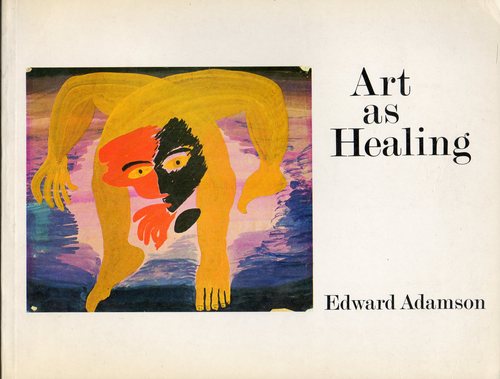 All the creative therapies tap into this healing power, whether as art, music, poetry or dance. As Edward Adamson, one time artistic director at Netherne, a former psychiatric hospital in Southern England, explains: ‘The artist is also on familiar terms with the inner self, and therefore is a little closer to those who are obliged to wrestle with its problems. The hospital artist’s main role is to be a catalyst who allows the healing art to emerge.’ (2)
But the work produced in such therapy sessions can become more if the patient has his own artistic talent. It then ‘transforms other people’s lives in its representation, and majesty, in its depiction of the human condition reaching towards the sublime… Van Gogh wrote to his brother Theo: ‘Either shut me up right away in a madhouse or else let me work with all my strength.’’ (3)
I can personally testify to the healing power of creativity. As I struggled to climb out of the black depression of my own serious breakdown, it was therapy in the art room, with the imaginative use of collage, clay, paint and loads of paper both of the drawing and tissue kind (!), that helped me as well as many others to unblock so much that was otherwise too painful to speak about. My own creations sadly showed none of the flair of Van Gogh. Nonetheless it is only following such release that true healing of mind and spirit can really begin, just as a foreign body or infection must be cleared from a wound before the skin will properly heal over it.
We must however look beyond the caring professions and embrace healing creativity as a guiding principle for us all if we are to live sustainably, responsibly and peaceably together.
Within all our communities people are dedicating much of their spare time to selflessly bring purpose and hope and healing to many where there was previously disharmony and ugliness. Drama and dance can turn feral youth into young responsible adults. Football can unite otherwise divided communities. Nature rambles can introduce children to a further dimension in their lives. Beautiful nature films are produced to inspire us all.
We will find examples all around us if we attune ourselves to the healing needs of the world.
Whether or not we have a faith, I see the need to heal ourselves, in a holistic spiritual sense, to heal our wounded behavior, before we can hope to heal what is around us in this world, animate and inanimate. Linked with the healing power of our own creativity, we can all be a part of that healing process. We can all allow the beauty of creation in its many forms to come into our lives. We can be receptive to its spiritually healing qualities. Whether this happens through a great work of art from one of the Old Masters, or from a poem, an inspiring book, a symphony or our own creative efforts, it may indeed be the Wounded Healer at work. We can then pass that healing on to others.
It is not only those who call themselves artists who have this serious responsibility as agents for social change: creativity is not only about painting and music, poetry and the media. We are all artists: whether as parent or homemaker, businessman or scientist, whether we are in one of the caring or pastoral professions or in education and training, we will all knowingly or perhaps unwittingly put our creative powers and talents to either good or evil use.
Art is an essential feature of sustainable living and as responsible human beings we have a choice as to how we use this for the future of our earth. We can choose ‘celebrity and commercial art, that is disengaged from the concerns of the world… isolationistic and egotistic…[which] has little to do with the ecological spiritual or social challenges of our time.’ Alternatively we can encourage and produce ‘art with integrity; art that inspires, uplifts and serves the greater purpose of life.’ (4)
We can heal or hurt with our creativity. The choice is ultimately ours and ours alone, as is the responsibility.
Sad to say, I read recently that London art galleries are having to restrict numbers of visitors per time slot at special exhibitions, as they are experiencing “gallery rage” as people jostle for a view. Whatever next? But how can anyone have a chance to really appreciate the spiritual or healing message that an exhibit may impart, if the visitor cannot have his own space to absorb that message?
1. Jamison, Kay Redfield, Touched With Fire: Manic Depressive Illness and the Artistic Temperament (New York Free Press: 1993) p. 121. Renowned clinical psychologist and author – sufferer of and expert on bipolar disorder.
2. Edward Adamson, Art as Healing, 1993, published by Coventure, 1993, passage from his introduction. Adamson was Art Director at Netherne Hospital (a psychiatric hospital in the UK) for some time.
3. Jane Piirto, Ph.D. Metaphor and Image in Counseling the Talented, Van Gogh
quotation also in Letter from Vincent van Gogh to Theo van Gogh, Arles, 28 January 1889 cited at ‘Van Gogh’s Letters Unabridged and Annotated.’
4. Canon Peter Challen, South London Industrial Mission annual lecture 2005. This Mission closed in 2006, and is replaced by Mission in London’s Economy, a London wide ecumenical Christian organization set up in 2005, http://www.mile.org.uk/
Image is by Bruce
© Eleanor Stoneham 2011
Wednesday, 16 March 2011
The Wounded Healer - again
However we define and categorize our wounds, we now know that who we are and how we behave as adults is not only a combination of our inherited gene and possibly also our meme makeup. We are also affected by subsequent influences in our upbringing and our experiences as we develop through childhood and beyond. This is what is meant when we talk about ‘nature versus nurture’. So as well as our inherited physical characteristics, we pick up mental wounds from the collective experiences of our ancestors. The unhealed wounds of mankind inflicted through millennia of evolution by strife and violence and disaster mean that hundreds of millions of people are psychologically, emotionally and physically scarred and wounded and in need of healing. It has even been suggested by some psychologists that ‘human culture as a whole has been saturated by unhealed wounding, which, if unchecked, will continue on a downward spiral toward inevitable disintegration.’* This is not a good thought.
Books abound, both popular and academic, on the psychological study of why we behave as we do. But I think the bottom line is that we must understand how our wounds manifest themselves in many different and undesirable personality traits. We see greed and envy, craving for love and attention, consumerism, lust for power, superiority, violence, overspending, addictions to work and substances, depression, cynicism, despair. All these come from our unhealed wounds. What we need to cultivate instead is a compassionate trend, always sensitive to the pain of others. We are wired for empathy - we just shut it out a lot of the time! We need an instinctive urge to support the weak and the vulnerable. And we must combat violence, both against each other and against the planet. Violence is probably threatening our very future more than anything else. And the most obvious violence that we inflict upon this fragile planet is consumerism. That I have written of before, and will do again!
I have just found another good blog commenting on the Wounded Healer.There the point is made that we can all be Wounded Healers. I cannot wholly agree.

*see Judith Thompson and James O'Dea "Social Healing for a Fractured World."
Sunday, 27 February 2011
The Wounded Healer, The King’s Speech and President Barack Obama
I am one of the 75% in Britain who havn’t seen The King’s Speech movie. Our local cinema has been showing it several times a day to meet the demand. I really must go.
But I would not have thought of any link with the Wounded Healer until I read Pythia Peay’s interview for the Huffington Post Academy Awards 2011: Which Myth Will America Choose? with Jungian analyst and psychiatrist John Beebe, lifelong moviegoer as well as psychological teacher, who in his lectures often draws on movies as a way to illuminate Jung's theory of psychological types and to discuss the drama of therapy.
And I would not have linked this immediately with President Barack Obama either.
Now I know President Obama understands empathy. In his superb book, The Audacity of Hope, writing on the difficulties he sometimes experienced in his relationship with his grandfather, he observed ‘that sometimes he really did have a point, and that in insisting on getting my own way all the time, without regard to his feelings or needs, I was in some way diminishing myself.’ He goes on to say: ‘I believe a stronger sense of empathy would tilt the balance of our current politics in favor of those people who are struggling in this society. After all, if they are like us, then their struggles are our own. If we fail to help, we diminish ourselves.” He reaffirmed this message later on the campaign trail, when he spoke of those he had met ‘whose dreams and struggles become my own; they will stay with me in the White House.’
This is the message of a Wounded Healer.
John Beebe takes this further. He does not think it's accidental that "The King's Speech" film came out at a time when a lot of people were worried that Obama was not speaking out enough.
“Obama, who is not interested in resurrecting the hero myth, is post-heroic. He's interested in the archetype of the good parent. He wants us to be better parents, and he wants to protect the infrastructure and take responsibility for the country. But at the same time, Obama has had a reluctance to be assertive in the bully pulpit. Some have felt that he was being too cautious, and that he needed to come forward. He finally came through in the beautiful speech he gave in Tucson and in his State of the Union 2011 address. After hearing from their president, the public brought his ratings up.
King George VI of England needed to master his fear of public speaking,” Beebe continues, “in order to help his people deal with their fears at the terrifying moment that World War II began. By combining courage to lead with the humility needed to face his speech problem, he became a "wounded healer" who helped his country -- the right king for his people at their most trying time. So "The King's Speech" drew on the historical precedent to the situation Obama faced of someone who worked on his reluctance to speak out in order to become an effective father figure for his country -- an example of a collective issue being mirrored and resolved in a brilliant film.”
It’s really worth going to read the full interview between Beebe and Peay, and catching up on Obama’s speeches. Obama at his oratorical best.

Tuesday, 4 January 2011
More on the Wounded Healer
 It was the Jungian psychoanalysts who probably first started referring to the Wounded Healer archetype as a recognized tool in the healing process. But it was the Roman Catholic priest Henri Nouwen who really popularized the term within a wider spiritual and pastoral healing context when he wrote his own bestselling book The Wounded Healer in 1979. In it he identifies the loneliness that he himself so keenly felt as the most painful of our human wounds, leaving us craving for love and attention. Loneliness, he tells us, is recognized in words such as alienation, separation and isolation. (1) But Malcolm Langford identifies four other basic types of wound: those resulting from the evil of our own life experiences and of others with whom we are involved, those from our own broken personalities and motivations, from our personal prejudices and fears and those which reflect our emotional and spiritual poverty in such a materially wealthy world. (2) We can all relate to some if not all of these examples of woundedness. And there is plenty of need for healing in the world!
Ian McEwan reflected on the Twin Towers collapse on 9/11:
 If the hijackers had been able to imagine themselves into the thoughts and feelings of the passengers, they would have been unable to proceed. It is hard to be cruel once you permit yourself to enter the mind of your victim. Imagining what it is like to be someone other than yourself is at the core of our humanity [my italics]. It is the essence of compassion, and it is the beginning of morality…The hijackers used fanatical certainty, misplaced religious faith, and dehumanizing hatred to purge themselves of the human instinct for empathy. Among their crimes was a failure of the imagination. (3)
And as the Chief Rabbi Jonathan Sacks explains, when bad things do happen to us, we can use these experiences to sensitize us to the pain of others. Rather than allowing such wounds to make us victims of circumstance, let them turn us into potentially life changing agents of hope. (4)
1. Nouwen, Henri J. M. The Wounded Healer, London: Darton, Longman and Todd, 1994, p. 83
2. Malcolm Langford, draws much of his inspiration from Henri Nouwen. Langford, Malcolm, Waking the Wounded: Facing our own Poverty. This was on World Vision site at
http://www.worldvision.com.au/getinvolved/faithinaction/files/grid2000_wakingthewounded.pdf sourced 17 February 2009.
3. McEwan, Ian, The Guardian 15 September 2001, ‘Only love and then oblivion. Love was all they had to set against their murderers.’ http://www.guardian.co.uk/world/2001/sep/15/september11.politicsphilosophyandsociety2 sourced 19 February 2009.
4. Jonathan Sacks, The Times, 5 January 2008, Count your Blessings and Begin to Change your Life.
Thursday, 16 December 2010
The Wounded Healer in the Community?
“In and through community lies the salvation of the world.” M S Peck

This is an expansion of a blog on community I published not so long ago. It is such an important subject for today's world.
M. Scott Peck became well known in the 1970s and 1980s for his best selling books on personal spiritual growth. He is probably best remembered for The Road Less Traveled and Further Along the Road Less Traveled. He also made a study of community building and its role in achieving world peace, and he wrote this up for the popular market in his book The Different Drum. His books continue to sell well and are just as relevant in today’s world.
In his book Peck defined the basic community as “a group of individuals who have learned how to communicate honestly with each other, whose relationships go deeper than their masks of composure, and who have developed some significant commitment to ‘rejoice together, mourn together,’ and to ‘delight in each other, make others’ conditions our own.”This definition emphasizes the need for vulnerability amongst the members of a community. It sets up the conditions for healing and wholeness in an atmosphere of mutual trust.
A participant in one of M Scott Peck’s community building workshops observed that ‘the greatest gift we can give each other is our own woundedness.’ Only the wounded, says Peck, can heal community.This story is obviously quite old, but some ideas are timeless, hence we talk of the need in today's world for Ancient Wisdom.
Real honesty and openness, two of his community-making principles, require us to be vulnerable, to have a willingness to be wounded. In The Different Drum, he writes at length on vulnerability in community building. The danger of invulnerability, he warns, of acting as a ‘cool cat,’ is that psychological defences are put up between the two parties, and the relationship between them becomes nothing more than ‘ two empty tanks bumping against each other in the night.’ He talks of a ‘peace through weakness’ strategy to build community, at all levels. ‘For the reality is that …. there can be no community without vulnerability; and there can be no peace – ultimately no life – without community.’ And this involves taking the risk of showing our vulnerability.
Alastair McIntosh is a Scottish human ecologist, writer and campaigner. If “humankind is to have any hope of changing the world,” he writes in his wonderful book Soil and Soul, “we must constantly work to strengthen community.”We will achieve this only by “coming alive to community with one another, with the place where we live, and with soul.” This, he says, recognizes “a Celtic truth about identity, which is actually a deep human truth: a person belongs only inasmuch as they are willing to cherish and be cherished by a place and its peoples.”
A lovely thought.
The photo is of the Chestnut Festival in Nuns Valley in Madeira.It was raining, as we say, "cats and dogs" but the community spirit there was palpable - you could feel it in spite of the discomforts of the heaviest rain they had seen for years.
Tuesday, 14 December 2010
Chiron the Wounded Healer
 Pain and loneliness are forms of energy that can be transformed if we turn them outward, using them to recognize and redeem someone else’s pain or loneliness.
This is quoted from Jonathan Sacks book: To Heal a Fractured World- the Ethics of Responsibility.
Many people outside the healing professions of pastoral care and medicine have not heard of the expression The Wounded Healer. So here is a brief story from Greek mythology, where there was a Centaur called Chiron. Centaurs are normally portrayed as clumsy and brutal beasts. Chiron was different. He was kind, gentle and well educated and tutored many of the Greek gods. Famous pupils included Jason, the leader of the fifty Argonauts, who sailed aboard the Argo to bring back the golden fleece to Pelias. Another was Achilles of the vulnerable heel legend, killed by an arrow from Apollo’s bow.
Much of Greek mythology is highly intricate and complex and the myth of Chiron varies in precise details depending on its source. The story goes that he was the love child of an affair between the Greek God Cronus and the Earth Nymph Philyra. Before making love to Philyra, Cronus changed her into a horse to allay the suspicions of his wife Rhea. And so the centaur Chiron was conceived. Abandoned by his parents at birth, Chiron was adopted and brought up by Apollo, The Divine Physician, who trained him to be a great and wise teacher, physician and healer.
Centaurs were known for their over indulgences and Chiron was probably no exception. One day there was a bloody fight between Centaurs over a carafe of wine and Chiron was accidentally shot in his knee by a stray poisoned arrow from the bow of Heracles (or Hercules). The wound would not heal and it gave him much pain. Centaurs also had the gift of immortality. Such was Chiron’s suffering, from both the mental wounds of his abandonment at birth and from this painful physical wounding, that he prayed to the gods to let him surrender his own immortality and die. He then spent the rest of his life trying to find a cure for his physical wound and became an expert in the healing power of plants, particularly the herbal remedies he developed for war wounds. But the healing abilities for which he was renowned came especially from the empathy he developed for the suffering of others, acquired from his struggle to overcome his own physical and mental wounds. Chiron allowed his own wounds to be a source of healing for others. He became a Wounded Healer.
What became of Chiron? His prayer was eventually answered and after his death he was placed in the sky by the king of the Greek gods, Zeus (the Roman Jupiter and the only surviving son of Cronus and Rhea), where he can be seen in the night sky as the constellation Sagittarius (the archer), otherwise known as Centaur (the man/horse).
Greek mythology is of course a collection of fables, of the Greek gods, goddesses and heroes. But many of them encompass a deeper wisdom about human behavior even if few have any basis in fact.
One of the legacies left by the analytical psychologist Carl Jung was the idea that in our psyche we all share deep inherited and unconscious ideas and images together known as our “collective unconscious.” This collective unconscious, Jung said, is made up of different recognizable human models or archetypes. He saw in the Greek myth of Chiron a reflection of the archetypal Wounded Healer of the indigenous medicine man or shaman, first recorded in the earliest known hunting and fishing communities of Siberia and Sub Arctic North America. In fact it was probably from the language of a small group of hunters and reindeer herders from the Arctic Tungus that the name shaman comes, meaning “he who knows.”
The true shaman was both priest and healer and prophet. The essential prerequisite of the shaman was that he would have suffered a serious mental or physical illness or both, which would often be long and drawn out. As healing progressed, the shaman acquired the capacities for inspiration and healing and with recovery he came to understand the spirits and how to master them. He would also train and initiate assistants into the role of healer. Shamans can therefore be seen as people who have come through their own serious illness as a result of which they are stronger in themselves and more able to safeguard the souls of others, either into the next world or to heal them in this world. Michael Lerner has aptly called them “spiritual midwives.”
 This then is the concept of the Wounded Healer. The idea is well researched, documented and understood within the traditional fields of medical and pastoral care. But I believe that the Wounded Healer holds a much wider significance for us all within the healing needs of the whole world.
So why the spring flowers photo? Simply to give some cheer on this gloomy foggy frosty winter morning, when the last remnant of our unseasonably early snow is still lying around on the grass and the roads. Oh for spring!
Copyright Eleanor Stoneham 2010
Sunday, 5 December 2010
The Wounded Healer

There is quite a bit of misunderstanding around as to the real nature of a Wounded Healer, and indeed many are not familiar with the term at all. I have been interested for a while in the whole concept, and in the social significance of the healing process to this world of ours that seems to be in such a mess.
I am prompted to publish this short article by a comment I saw recently on another blog: “We often hear about wounded healers in the healing arena. These wounded healers can sometimes offer a bad reputation to the healing community because they are trying to heal their wounds through their clients.”*
Of course someone who is using their clients to heal their own wounds is surely not a wounded healer at all and it is unfortunate that such people give the real “Wounded Healer” a bad name. Analytical psychologists are required to undergo personal analysis in order that they may understand their own wounds and the compensations they make for them in their own behavior. This ensures that those wounds do not interfere in the therapeutic process with their clients.
Professor of Psychology Charles Carver has identified several stages along the road to the true Wounded Healer.
Firstly, if we fail to recognize wounds in ourselves there is a danger that we allow them to crush us. We turn them in upon ourselves, and then we harbor thoughts of anger, resentment, envy, lust, greed, and all the worst character traits of mankind. They cause us to be unhappy or discontent. This impacts on our relationships with other people, in everything we do, in our work, in our creativity. Without intentionally setting out to do harm, we allow those wounds to hurt those around us, as Simone Weil explained: “A hurtful act is the transference to others of the degradation which we bear in ourselves.”
Then there is the “survivor” response, seen in the desensitization we can experience if we are continually bombarded with the wounding images of horror, either real or in the relentless gratuitous violence of screen or computer game. This is so relevant in the context of our responsible and healing use of creativity.
There are other stages of healing that we may recognize in us or in others. For example there are the “martyrs” and the “thrivers.” We all know the “martyr;” he could also be called the moaner or whinger and hardly needs further explanation.
The thriving response to our wounds is complex and the subject of much research. In simple terms the “thriver” may be defined as the “person who experiences the traumatic or stressful event and benefits or gains in some way from the experience and can apply that gain to new experiences, leading to more effective subsequent functioning.” An example would be Beethoven who overcame his deafness to find joy in his music making. But this response type may not always be what it seems. I believe it may sometimes be similar to what I think of as the “self-help response.”
Next is the “inspirational” phase. Here we use an understanding of our own wounds to work for the benefit of others with the same afflictions. Superman Christopher Reeve was a fine example – he fought paralysis after a stunt accident whilst filming and fought for more research to help others suffering from the same disablement. Such people campaign, they set up charities, they march for a cause, they fund-raise. This is praiseworthy but it does not make a Wounded Healer.
Mental health nursing expert Marion Conti-O’Hare describes one more stage along the road to Wounded Healer. These are the people, she explains, who have experienced trauma and are using it to help others but without understanding how they themselves are affected. O’Hare describes Diana Princess of Wales as an example of what she calls the “walking wounded.” Diana died tragically before she could transcend much of her suffering. She did however devote much of her later years to causes such as the victims of HIV infection and AIDS, almost certainly reflecting her own advanced stage along the road to Wounded Healer.
 The person who has taken his wounds into his soul, fully comprehended them, and has transformed and transcended them achieves the ultimate healing goal. From those transcended wounds we have the insight to fully understand and care about the sufferings and wounds of others. We can be with them in true empathy and compassion. Compassion literally means; “to suffer with” and means much the same in this context as empathy. We identify with you in your suffering. We can bare our own souls and walk in your shoes to share your suffering; that is true empathy. And that is the Wounded Healer.
It seems appropriate to be writing this now, as we enter the Christian season of Advent and await the birth of Jesus Christ, as he is of course the greatest Wounded Healer of all time.
Of course this subject is vast and I have only scratched the surface here – do let me know of any experiences you have of the Wounded Healer in your own lives.
*See http://serenitynowwellness.wordpress.com/2010/11/30/the-sweetness-of-doing-nothing/#comment-6
** see http://www.intuitive-connections.net/2004/book-beethoven.htm
Tuesday, 12 October 2010
simone weil a wounded healer?

Simone Weil, the French philosopher, Christian mystic and activist, was known for her support of the cause of the working classes in early twentieth century France. She recognised that for any real and positive change to come about, a spiritual awakening must occur in the individual conscience. To achieve this she thought it was necessary to experience for herself the lives and hardships of those she sought to help. She recognised that she had to enter completely into their pain and suffering. She described this as allowing the experience to permeate her entire spirit and being. One must become a slave, she wrote, to understand what a slave endures.
Lasting and real solutions to the many and seemingly intractable problems of the 21st century world in which we live will not be found in Government interventions and interference. The world’s many fractures will not be healed in that way. Positive change must come from within our own hearts, through a healing of our own wounds and our own behaviour. To achieve that we have to rediscover our own spirituality, recognise with new eyes the spiritual in all our material experiences, and feel that spiritual awakening in our own individual consciences.
This is a healing imperative for our world. ‘There are a thousand hacking at the branches of evil to one who is striking at the root,’ wrote Henry David Thoreau. We all have to start striking at those roots.
Friday, 8 October 2010
more about community

A participant in one of M Scott Peck’s community building workshops observed that ‘the greatest gift we can give each other is our own woundedness.’ Only the wounded, says Peck, can heal community.
Real honesty and openness, two of his community-making principles, require us to be vulnerable, to have a willingness to be wounded. In his book on community, The Different Drum, he writes at length on vulnerability in community building. The danger of invulnerability, he warns, of acting as a ‘cool cat,’ is that psychological defences are put up between the two parties, and the relationship between them becomes nothing more than ‘ two empty tanks bumping against each other in the night.’ He talks of a ‘peace through weakness’ strategy to build community, at all levels. ‘For the reality is that …. there can be no community without vulnerability; and there can be no peace – ultimately no life – without community.’ And this involves taking the risk of showing our vulnerability.
Saturday, 2 October 2010
The healing power of creativity

Through Art we can see deep truths that are otherwise invisible. In great works of art we feel the deepest yearnings of our Heart and glimpse the shimmering revelations of our Spirit.
- Dana Lynne Andersen
Creativity in its many forms is an integral part of our lives. We cannot escape its impact. But our creativity can be used for good or evil. There is nothing neutral about creative force. We can use it as a source of inspiration and healing for ourselves and for those around us. Or our creativity has the power to hurt or corrupt, to disturb or destroy.
We therefore have government and industry guidelines that protect us from ourselves! We have rules and regulations that prohibit or restrict certain creative practices. But of course it is difficult if not impossible to restrict what goes on within the confines of our own homes, and the bar of acceptability seems to be continually and subtly lowered. Yesterday’s restrictions often seem to have been diluted to the extent that they become today’s standard! Does it matter?
Yes it does! Because it is our own behaviour, not government intervention, which in the end will influence our future, the future of this planet, and the future for our children. I have no doubt that creativity in all its forms can be used either to help our spiritual regeneration, or to destroy our sensitivities. With its power to hurt or heal, creativity is at the very heart of all our lives, in boardroom or kitchen, hospital or garden, at work or at leisure. And so we all have a personal choice: We can be responsible and spread healing and beauty and a sense of the soul and the spiritual throughout our lives, or we can perpetuate evil and hurt. Those who spread images of violence and ugliness to their fellow human beings are reflecting their own wounded-ness and infecting others in the process.
We therefore all need to reflect on how our own creativity may be a mirror of our own wounds and the effect this may be having on those around us. We have a profound responsibility to change our own behaviour – to heal ourselves and be creative for the forces for good rather than for evil.
Saturday, 27 February 2010
Lent, Consolatory ministry and the Wounded Healer
Well my experiment with the cellphone in the bathroom (last post) didn't do anything for me so I am back to the serious today!
We have just had our first Lent group - a house group of 12 people meeting once a week to discuss a theme. This week the subject was Isaiah chapter 40 - Comfort ye, comfort ye my people, says the Lord.
What is comfort? What comfort does God offer us in times of need? Someone mentioned the additional gift of comfort afforded to those who themselves have seen grief, hurt or other affliction and come through it to be able to help others - of course the Wounded Healer.
This reminded me of the consolatory ministry and the healing prose seen in the consolatory literature of the ancient Greeks. Perhaps the earliest example of this was On Grief, written by the Greek academic and philosopher Crantor in the mid fourth century BC. This type of consolation was offered on the occasion of any human misfortune, but seems to have been used particularly to console or heal following the death of a loved one, often a child. The consolatory ministry was built around the belief that by writing about one’s own suffering the author is not only helping himself through his own difficulties but can be in a better position to help others in a similar situation. The soul or spirit was often implicated in this healing process. It reflected the healing vulnerability of the Wounded Healer.
There were many examples of this genre of literature, which developed well into the European Renaissance period of the fourteenth to seventeenth centuries. By then people were recognixing that sorrow, misery, and misfortune could be matters for sympathy - up until then they were too often seen as stemming from sinfulness. Francesco Petrarca, or Petrarch, who lived in the fourteenth century, was well known for his self- care and self -analysis. ‘No one’s solace,’ he wrote, ‘penetrates a saddened mind more than that of a fellow sufferer, and therefore the most effective words to strengthen the spirits of the bystanders are those which emerge from the actual torments.’ He quoted from Virgil: ‘Being acquainted with grief, I learn to succor the wretched (Aen. 2.630).’
 The consolatory genre surely survives to the present day in the spiritual works of Henri Nouwen and perhaps Michael Mayne, for example. It was only when I read Michael Mayne’s Learning to Dance that I discovered that he had been deeply wounded as a child, when at the age of three his father, with no warning, committed suicide and left his wife and son homeless and very poor. This, Mayne said, left ‘an immense emptiness’ in his life. He was writing a meditation on his life of faith when he learnt that he had cancer. As he struggled with his terminal and painful illness, he completed Enduring Melody, which became his own beautifully written and moving epitaph. In an addition to Mayne’s obituary in the Times in November 2006, Canon Chris Chivers wrote of Mayne: ‘The letter he wrote to me…was full of down-to-earth wisdom, mixed with deep prayerfulness, and an all-too-rare ability to put himself in the shoes and soul of another. This will surely be the enduring melody of his richly sacrificial ministry.’ Mayne’s meditational books are steeped in wonderful imagery that helps us understand more clearly the ineffable, the God immanent but unknowable. In his vocation as priest he was clearly the very essence of the Wounded Healer to those who received his ministry. Isaiah 40 raises issues far beyond this and I hope to cover some more in later posts. Do "misery memoirs" come within this consolatory genre I wonder?
We have just had our first Lent group - a house group of 12 people meeting once a week to discuss a theme. This week the subject was Isaiah chapter 40 - Comfort ye, comfort ye my people, says the Lord.
What is comfort? What comfort does God offer us in times of need? Someone mentioned the additional gift of comfort afforded to those who themselves have seen grief, hurt or other affliction and come through it to be able to help others - of course the Wounded Healer.
This reminded me of the consolatory ministry and the healing prose seen in the consolatory literature of the ancient Greeks. Perhaps the earliest example of this was On Grief, written by the Greek academic and philosopher Crantor in the mid fourth century BC. This type of consolation was offered on the occasion of any human misfortune, but seems to have been used particularly to console or heal following the death of a loved one, often a child. The consolatory ministry was built around the belief that by writing about one’s own suffering the author is not only helping himself through his own difficulties but can be in a better position to help others in a similar situation. The soul or spirit was often implicated in this healing process. It reflected the healing vulnerability of the Wounded Healer.
There were many examples of this genre of literature, which developed well into the European Renaissance period of the fourteenth to seventeenth centuries. By then people were recognixing that sorrow, misery, and misfortune could be matters for sympathy - up until then they were too often seen as stemming from sinfulness. Francesco Petrarca, or Petrarch, who lived in the fourteenth century, was well known for his self- care and self -analysis. ‘No one’s solace,’ he wrote, ‘penetrates a saddened mind more than that of a fellow sufferer, and therefore the most effective words to strengthen the spirits of the bystanders are those which emerge from the actual torments.’ He quoted from Virgil: ‘Being acquainted with grief, I learn to succor the wretched (Aen. 2.630).’
 The consolatory genre surely survives to the present day in the spiritual works of Henri Nouwen and perhaps Michael Mayne, for example. It was only when I read Michael Mayne’s Learning to Dance that I discovered that he had been deeply wounded as a child, when at the age of three his father, with no warning, committed suicide and left his wife and son homeless and very poor. This, Mayne said, left ‘an immense emptiness’ in his life. He was writing a meditation on his life of faith when he learnt that he had cancer. As he struggled with his terminal and painful illness, he completed Enduring Melody, which became his own beautifully written and moving epitaph. In an addition to Mayne’s obituary in the Times in November 2006, Canon Chris Chivers wrote of Mayne: ‘The letter he wrote to me…was full of down-to-earth wisdom, mixed with deep prayerfulness, and an all-too-rare ability to put himself in the shoes and soul of another. This will surely be the enduring melody of his richly sacrificial ministry.’ Mayne’s meditational books are steeped in wonderful imagery that helps us understand more clearly the ineffable, the God immanent but unknowable. In his vocation as priest he was clearly the very essence of the Wounded Healer to those who received his ministry.
Thursday, 25 February 2010
cell phones in the bathroom
Alternative title - don't use mobile phones in the loo. I am still trying to find a connection between this and compassion, spirituality, love, the Wounded Healer. Indeed I feel anything but love and compassion for pigeons at the moment.
But first - my experiment - dont spoil it for me - please leave a comment just to say you've passed by this blog.Why?
I have just read a blog where the blogger said his hits and comments left on his blog for writing said item suddenly jumped to 100's from the total anonymity of his more serious but definitely more worthwhile musings both before and since. So this is my experiment - to see if this has the same effect for me!! Out of interest I googled said title - and hey there are literally millions of entries - of all sorts - videos - advice serious and otherwise - around "Don't use your cell phone in the bathroom."
 On to pigeons and pigeon netting again. Why do the pictures in gardening catalogues always show such neat netting around perfectly formed frames around the vegetables. I spent two hours this morning in bitter cold putting new nets around the broccoli that the pigeons are determined to strip bare before any of it gets to my dinner plate. And it looks far from neat and symmetrical - it's a bit lopsided for sure - but I just hope it does the trick!
But first - my experiment - dont spoil it for me - please leave a comment just to say you've passed by this blog.Why?
I have just read a blog where the blogger said his hits and comments left on his blog for writing said item suddenly jumped to 100's from the total anonymity of his more serious but definitely more worthwhile musings both before and since. So this is my experiment - to see if this has the same effect for me!! Out of interest I googled said title - and hey there are literally millions of entries - of all sorts - videos - advice serious and otherwise - around "Don't use your cell phone in the bathroom."

Sunday, 21 February 2010
Barack Obama, The Audacity of Hope and the Wounded Healer
Which of us hasn't at some stage had a difficult relationship with a parent or grandparent?!
I guess what I am about to say may be controversial, and I realise Barack Obama may not be "flavour of the month" to everyone. But writing on the difficulties he sometimes experienced in his relationship with his grandfather, Obama observes “that sometimes he really did have a point, and that in insisting on getting my own way all the time, without regard to his feelings or needs, I was in some way diminishing myself.” He goes on to say: “I believe a stronger sense of empathy would tilt the balance of our current politics in favor of those people who are struggling in this society. After all, if they are like us, then their struggles are our own. If we fail to help, we diminish ourselves.”
This story comes from Obama's book The Audacity of Hope that I am reading for the second time. I really recommend it. In a very easy style he writes with clarity and honesty on the political divide, values, faith, race, the American Constitution, opportunity. Written as a senate before he made it to the White House, these are his personal reflections on his values and ideals and how change may be brought about for the common good.
He reaffirmed his message of empathy later on the campaign trail, when he spoke of those he had met “whose dreams and struggles become my own; they will stay with me in the White House.”
This is a great show of the importance of empathy in our relationships, and in our lives, and is but a step away from the power to heal of the Wounded Healer. Barack Obama a Wounded Healer? Some may disagree but surely he has borne his own wounds of upbringing that he can bring with empathy, compassion and understanding to the world, to "tilt the balance of politics?"
I would like to hear from you to let me know what you think. And where in your life do you see the Wounded Healer at work? Can you identify with the motif in your work place, in your own home, in the work of the physician?
Subscribe to:
Posts (Atom)
Sunset
with vapor trails
Subscribe


 Posts
All Comments