There have been glimmers of hope in the development of what I like to call “soul medicine” but sometimes they seem to be lost from view.
In its 1990 definition of palliative care, the World Health Organization said that the
‘control of … psychological, social and spiritual problems is paramount’ in the total care package of those with incurable disease.
At the same time, Michael Kearney, clearly not sharing the optimism of Dossey or the W.H.O., was predicting that the holistic focus in palliative care (let alone in the wider medical field) was in danger of being lost under the weight of the biomedical model of medicine (1) and the narrow mindedness of those who paid attention only to physical symptoms, whom he called ‘symptomologists’. His concerns were justified. Only a few years later in a paper in Progress in Palliative Care a leader in the field, Sam Ahmedzai, wrote in his editorial:
The view now, within palliative medicine, is that it is okay to be symptomologists, and proud of it …Ultimately, suffering from losses, lack of love, existential doubts as well as from poverty and cruelty are not medical issues, and the response to them is not necessarily the responsibility of any healthcare discipline (2).
Surely those who have argued for the exclusion of psychological concerns from the field of medicine, let alone spiritual elements, must be mistaken?
Many have campaigned over the years for a greater understanding of suffering and holistic healing in a medical context. This first assumed some recognition in the UK within the field of cancer and other terminal illness care, where an understanding was developed within the hospice movement, founded in 1967 on the ideas of Dame Cicely Saunders.
The spiritual theme of medical care is also picked up by Michael Lerner who has a special interest in mind/body health in the care of cancer patients. In his book, Choices in Healing, (3) he explores the very diverse range of mainstream and complementary treatments available to the cancer patient. These include for example the practice of Yoga and the power of prayer, in addition to shamanism, all clearly understanding the importance of the inner life of the mind and spirit to the overall well being of a patient in the context of a terminal illness. Some of this is inevitably out of date in a fast changing world but Lerner’s book is still available as a valuable overview of the wealth of ideas and treatments available. The book is well illustrated from literary sources that delightfully complement the consideration of the technical aspects of treatments.
Michael Kearney, palliative care consultant and former medical director of palliative care at Our Lady's Hospice in Dublin, Ireland, has also long campaigned for medical practitioners to pay more attention to the interactions of body, mind and spirit in healthcare (4). He writes of the ‘deep’ as well as the ‘surface’ elements of suffering, and the patient’s “soul pain” that must be acknowledged in addition to the physical pain. He suggested that the principles of Asklepian healing should be taught alongside the traditional and well-established Hippocratic style training almost universally taught in medical schools today, so that they can again work together as happened in Hippocrates’ day.
Healing, he says, needs to be given the environment in which the natural human psyche can be given the space to take over and do its own healing work.
The overriding problem in healthcare today seems to be that too often our doctors are ‘Techno-doctors’ (5) and ‘Super Specialists’ in a system that reduces patients to paper statistics and doctors to slaves of machinery, forgetting the importance of the personal, the subjective and the social aspects of care. ‘By their very nature doctors deal with bits and pieces – microbes, hormone deficiencies or tumors – while patients experience illness as the disorders, disruption and possible disintegration of their ordinary lives…Every healing art sees illness in its own terms. Patients need to remember that the illness is theirs and theirs alone.’(6) And perhaps some physicians need to remember this also?
Apart from the palliative care available for patients at the end of life, it still seems that the different forms of spiritual and religious healthcare (S/RH), complementary and alternative medicine (CAMs) and conventional allopathic clinical practice are not working together as well as they could and should. Many of the CAMs are gaining credibility within mainstream traditional healthcare but the influence of S/RH lags woefully behind.
To be contd...
References:
(1) in Foreword by Balfour Mount p viii to Kearney, Michael, A Place of Healing: Working with Suffering in Living and Dying, Oxford University Press, USA (November 30, 2000), p. 31. Now see Place of Healing: Working With Nature And Soul At The End (Spring Journal paperback, August 27, 2009)
(2) Sam H.Ahmedzai (1997) ‘Five years: five threads’ (editorial, Progress in Palliative Care, 5(6), 235-7
(3) Lerner, Michael, Choices in Healing; Integrating the Best of Conventional and Complementary Approaches to Cancer, Cambridge, Massachusetts: MIT Press paperback edition 1998, p.123.
(4) This is explored in much more detail in Michael Kearney, A Place of Healing, 2000, foreword by Balfour Mount p. iv. Now see Place of Healing: Working With Nature And Soul At The End (Spring Journal paperback, August 27, 2009)
(5) Helman, Cecil, Suburban Shaman: Tales from Medicine’s Frontline, London: Hammersmith Press, 2006, pp. 5.
(6) Ted Kaptchuk and Michael Croucher, 1986, pp. 26, 37, cited in Mayne, Michael, A Year Lost and Found, London: Darton Longman and Todd, 1987, p. 38.
Showing posts with label Allopathic medicine. Show all posts
Showing posts with label Allopathic medicine. Show all posts
Sunday, 29 December 2013


Thursday, 12 December 2013
Where are we going wrong in Western Medicine? Has it lost its soul?
I can always rely on the local branches of the Scientific and Medical Network to organize stimulating and refreshingly different meetings which push the boundaries of our understanding of the nature of reality – within their overall mission objective of exploring and expanding the frontiers of science, medicine and spirituality.
(why not go across to their website to see their mission, aims and values for yourself – it is a very worthy organization for all who think that there must be something beyond the totally materialistic and reductionist world which we have created for ourselves in the West.)
Last night certainly didn’t disappoint our expectations, as many members and non members gathered to hear the medical anthropologist Dr Natalie Tobert speak to us about Alternative Psychiatry, based on her fieldwork in India on bio-medical, religious and spiritual strategies for mental health. Natalie Tobert is course director of the educational programme, Medicine Beyond Materialism, education director of Aethos and has run workshops worldwide as well as publishing many articles and two books.
She showed us how in India there is no dominant medical paradigm for ill health, and the practitioner draws on social factors, cultural and religious beliefs which are all critical determinants of health and well being. The discussion which followed concentrated on how we can bring these ideas into the Western medical health system, not only for the benefit of the ethnic minorities who are quite clearly not well served by our allopathic medicine but also for the benefit of us all.
Now this is something I have been really interested in promoting for several years. I believe firmly that in the context of medicine we need to de-mechanize our bodies, to consider the healing needs of soul and spirit alongside the modern and often wonderful scientific advances, to develop a truly holistic healing opportunity for the patient, so I am very much on the same wave length as Natalie here.
Very early on in its history Western medicine lost its soul to scientific advances and we can learn so much from the Eastern traditions of which Natalie spoke so eloquently. There are glimmers of hope. Slowly but surely we are beginning to realize the importance of the whole person again in our healthcare systems, but progress is slow, although as with many things the USA are ahead of the UK and the rest of Europe in this regard.
For earliest man physical illness was inextricably linked with the mind, with spirituality and with religion. The original belief was that disease came from the gods as punishment for invoking their displeasure in some way. Amulets found alongside the remains of Paleolithic man were almost certainly used as charms for healing purposes, a recognition at that time of the importance of the mind to the cause of illness, a precursor of modern psychology long before it was known as such! Later, but still long before the birth of medical science, man called on his religion to heal his pain and suffering. He sought wholeness of the body, a holistic approach to healing.
Now I'm not saying that all of these beliefs stand the test of time and education, but I am saying that we ignore the lessons we can learn from indigenous wisdom at our peril.
 Western medicine largely lost this holistic wisdom with the advancement of medical science, and it was not to be rediscovered until the second half of the last century. In this new millennium I believe that in time we will come to marvel at how we could have ignored this sense of the soul’s healing significance for so long.
Over the next few weeks I am going to trace the history of Western medicine and see how and why the importance of the soul, spirit and mind was lost sight of in the enthusiasm of technological and pharmacological advance and how we are now beginning to rediscover this vital element in our health and well being. And I will be discussing why I think that this has enormous social consequences for us all.
Western medicine largely lost this holistic wisdom with the advancement of medical science, and it was not to be rediscovered until the second half of the last century. In this new millennium I believe that in time we will come to marvel at how we could have ignored this sense of the soul’s healing significance for so long.
Over the next few weeks I am going to trace the history of Western medicine and see how and why the importance of the soul, spirit and mind was lost sight of in the enthusiasm of technological and pharmacological advance and how we are now beginning to rediscover this vital element in our health and well being. And I will be discussing why I think that this has enormous social consequences for us all.
Tomorrow I’ll start with Hippocrates, Asklepios and Galen…
Thank you Natalie for helping us spread the debate...
(why not go across to their website to see their mission, aims and values for yourself – it is a very worthy organization for all who think that there must be something beyond the totally materialistic and reductionist world which we have created for ourselves in the West.)
 |
| Sea of Galilee |
She showed us how in India there is no dominant medical paradigm for ill health, and the practitioner draws on social factors, cultural and religious beliefs which are all critical determinants of health and well being. The discussion which followed concentrated on how we can bring these ideas into the Western medical health system, not only for the benefit of the ethnic minorities who are quite clearly not well served by our allopathic medicine but also for the benefit of us all.
 |
| Bangkok |
Now this is something I have been really interested in promoting for several years. I believe firmly that in the context of medicine we need to de-mechanize our bodies, to consider the healing needs of soul and spirit alongside the modern and often wonderful scientific advances, to develop a truly holistic healing opportunity for the patient, so I am very much on the same wave length as Natalie here.
Very early on in its history Western medicine lost its soul to scientific advances and we can learn so much from the Eastern traditions of which Natalie spoke so eloquently. There are glimmers of hope. Slowly but surely we are beginning to realize the importance of the whole person again in our healthcare systems, but progress is slow, although as with many things the USA are ahead of the UK and the rest of Europe in this regard.
For earliest man physical illness was inextricably linked with the mind, with spirituality and with religion. The original belief was that disease came from the gods as punishment for invoking their displeasure in some way. Amulets found alongside the remains of Paleolithic man were almost certainly used as charms for healing purposes, a recognition at that time of the importance of the mind to the cause of illness, a precursor of modern psychology long before it was known as such! Later, but still long before the birth of medical science, man called on his religion to heal his pain and suffering. He sought wholeness of the body, a holistic approach to healing.
Now I'm not saying that all of these beliefs stand the test of time and education, but I am saying that we ignore the lessons we can learn from indigenous wisdom at our peril.
 Western medicine largely lost this holistic wisdom with the advancement of medical science, and it was not to be rediscovered until the second half of the last century. In this new millennium I believe that in time we will come to marvel at how we could have ignored this sense of the soul’s healing significance for so long.
Over the next few weeks I am going to trace the history of Western medicine and see how and why the importance of the soul, spirit and mind was lost sight of in the enthusiasm of technological and pharmacological advance and how we are now beginning to rediscover this vital element in our health and well being. And I will be discussing why I think that this has enormous social consequences for us all.
Western medicine largely lost this holistic wisdom with the advancement of medical science, and it was not to be rediscovered until the second half of the last century. In this new millennium I believe that in time we will come to marvel at how we could have ignored this sense of the soul’s healing significance for so long.
Over the next few weeks I am going to trace the history of Western medicine and see how and why the importance of the soul, spirit and mind was lost sight of in the enthusiasm of technological and pharmacological advance and how we are now beginning to rediscover this vital element in our health and well being. And I will be discussing why I think that this has enormous social consequences for us all.Tomorrow I’ll start with Hippocrates, Asklepios and Galen…
Thank you Natalie for helping us spread the debate...
Subscribe to:
Posts (Atom)
Sunset
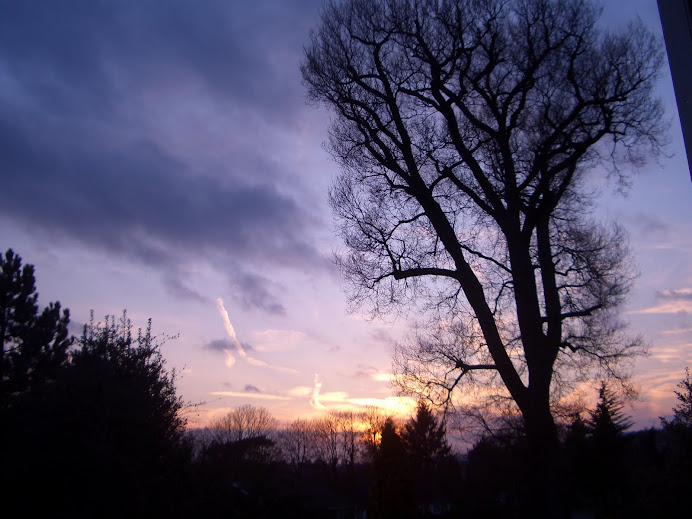
with vapor trails
Subscribe


 Posts
All Comments
Posts
All Comments