"God, grant me the serenity to accept the things I cannot change,
The courage to change the things I can,
And the wisdom to know the difference."
The 9/11 atrocity changed our world for ever, and it seems an even more dangerous place today, with no apparent let up in the dreadful acts of barbarism, cruelty and depravity we witness with a frightening immediacy and in so much detail through our media.
Man's inhumanity to man seems to know no bounds.
Do you want to cry when you witness or hear stories of wrongdoing and suffering in the world around you?
In its written form the above "serenity prayer" is widely attributed to Reinhold Niebuhr, the American theologian. Only later was it adopted by Alcoholics Anonymous and other twelve step programmes, for its powerful message of serenity, courage and wisdom.
But is this serenity prayer to some extent a cop-out? Yes it is true that it can often take courage to change things for the better, to take a stand, to be a whistle-blower. I can relate to that. But how easy it can be to shrug our shoulders, leaning on the first line of that prayer, and say to ourselves that some things we just have to accept, while having a nagging doubt in our hearts that perhaps we could do something. No, it is all too difficult. We won't upset the status quo. It's easier just to get on with our own lives.
But as the American cultural anthropologist Margaret Mead once said: "Never doubt that a small group of committed people can change the world – indeed it’s the only thing that ever has."
Matthew tells us in his Gospel that Jesus had travelled throughout Galilee, teaching in the synagogues, performing healing miracles and telling his audience of the good news of the kingdom. The crowds came from far and wide, from Galilee, Jerusalem, Judea and from lands east of the Jordan river. Seeing those crowds, Jesus climbed the mountain side, sat down and proceeded to teach his disciples who had followed him there, starting with the Beatitudes, (or what Billy Graham once called the Beautiful Attitudes.)
These do not make for comfortable reading, in that to receive our blessings there seem to be some pretty harsh conditions, and the blessings themselves are a little hard to grasp. What is clear is that Jesus is telling his followers what he is expecting of them, what it means to follow him, and therefore it is imperative for Christians or Jesus followers to listen that message and try to understand it.
Luke tells a slightly different story, in what is known by many as the Sermon on the Plain, where Jesus teaches four blessings and four woes. These seem to be less well known and make for even more uncomfortable reading for Christians.
The combined Beatitudes and the Woes from both Gospels challenge us to examine our lives and behaviours and they teach us some tough lessons. In our material world full of self help guides we are encouraged to pursue our happiness through wealth, status, power, consumption and material comforts. But this type of happiness is insecure and fleeting.
The Beatitudes are all broadly rooted in love and humility, mercy, spirituality and compassion. Billy Graham called them the Beautiful Attitudes. They paradoxically tell us that true happiness or blessing is found through being poor in spirit, meek, merciful, hungry, thirsty, and so on, values which often seem alien to our 21st century world. These are tough lessons, but the Woes are even more difficult to accept into our lives. Perhaps this is why they are often neglected.
Some years ago I felt inspired by world events to explore the many areas of our lives where perhaps we could introduce more compassion, spirituality and healing for the benefit of all; where we could change things, however hard that might be. I set out these ideas in my first book, Healing This Wounded Earth. This was an ambitious project, and is uncomfortable and challenging reading for many. I meant it to be.
Now I have come to see that those Beatitudes and Woes which Jesus taught his disciples in those Sermons (on the Mount and the Plain) form the very backbone of many of the ideas I set out in Healing This Wounded Earth, inspired by what I saw as a spiritual poverty and lack of compassion in so much of the world around us.
So take a fresh and very critical look at the Beatitudes, why don't you, in the context of the really hard hitting and challenging views I expressed in Healing This Wounded Earth.
Which by the way is available for just £1.99/$3 on Kindle for February only (with a free Kindle app available if you do not have a Kindle).
UK Amazon
US Amazon
Showing posts with label spirituality. Show all posts
Showing posts with label spirituality. Show all posts
Saturday, 14 February 2015


Thursday, 12 December 2013
Where are we going wrong in Western Medicine? Has it lost its soul?
I can always rely on the local branches of the Scientific and Medical Network to organize stimulating and refreshingly different meetings which push the boundaries of our understanding of the nature of reality – within their overall mission objective of exploring and expanding the frontiers of science, medicine and spirituality.
(why not go across to their website to see their mission, aims and values for yourself – it is a very worthy organization for all who think that there must be something beyond the totally materialistic and reductionist world which we have created for ourselves in the West.)
Last night certainly didn’t disappoint our expectations, as many members and non members gathered to hear the medical anthropologist Dr Natalie Tobert speak to us about Alternative Psychiatry, based on her fieldwork in India on bio-medical, religious and spiritual strategies for mental health. Natalie Tobert is course director of the educational programme, Medicine Beyond Materialism, education director of Aethos and has run workshops worldwide as well as publishing many articles and two books.
She showed us how in India there is no dominant medical paradigm for ill health, and the practitioner draws on social factors, cultural and religious beliefs which are all critical determinants of health and well being. The discussion which followed concentrated on how we can bring these ideas into the Western medical health system, not only for the benefit of the ethnic minorities who are quite clearly not well served by our allopathic medicine but also for the benefit of us all.
Now this is something I have been really interested in promoting for several years. I believe firmly that in the context of medicine we need to de-mechanize our bodies, to consider the healing needs of soul and spirit alongside the modern and often wonderful scientific advances, to develop a truly holistic healing opportunity for the patient, so I am very much on the same wave length as Natalie here.
Very early on in its history Western medicine lost its soul to scientific advances and we can learn so much from the Eastern traditions of which Natalie spoke so eloquently. There are glimmers of hope. Slowly but surely we are beginning to realize the importance of the whole person again in our healthcare systems, but progress is slow, although as with many things the USA are ahead of the UK and the rest of Europe in this regard.
For earliest man physical illness was inextricably linked with the mind, with spirituality and with religion. The original belief was that disease came from the gods as punishment for invoking their displeasure in some way. Amulets found alongside the remains of Paleolithic man were almost certainly used as charms for healing purposes, a recognition at that time of the importance of the mind to the cause of illness, a precursor of modern psychology long before it was known as such! Later, but still long before the birth of medical science, man called on his religion to heal his pain and suffering. He sought wholeness of the body, a holistic approach to healing.
Now I'm not saying that all of these beliefs stand the test of time and education, but I am saying that we ignore the lessons we can learn from indigenous wisdom at our peril.
 Western medicine largely lost this holistic wisdom with the advancement of medical science, and it was not to be rediscovered until the second half of the last century. In this new millennium I believe that in time we will come to marvel at how we could have ignored this sense of the soul’s healing significance for so long.
Over the next few weeks I am going to trace the history of Western medicine and see how and why the importance of the soul, spirit and mind was lost sight of in the enthusiasm of technological and pharmacological advance and how we are now beginning to rediscover this vital element in our health and well being. And I will be discussing why I think that this has enormous social consequences for us all.
Western medicine largely lost this holistic wisdom with the advancement of medical science, and it was not to be rediscovered until the second half of the last century. In this new millennium I believe that in time we will come to marvel at how we could have ignored this sense of the soul’s healing significance for so long.
Over the next few weeks I am going to trace the history of Western medicine and see how and why the importance of the soul, spirit and mind was lost sight of in the enthusiasm of technological and pharmacological advance and how we are now beginning to rediscover this vital element in our health and well being. And I will be discussing why I think that this has enormous social consequences for us all.
Tomorrow I’ll start with Hippocrates, Asklepios and Galen…
Thank you Natalie for helping us spread the debate...
(why not go across to their website to see their mission, aims and values for yourself – it is a very worthy organization for all who think that there must be something beyond the totally materialistic and reductionist world which we have created for ourselves in the West.)
 |
| Sea of Galilee |
She showed us how in India there is no dominant medical paradigm for ill health, and the practitioner draws on social factors, cultural and religious beliefs which are all critical determinants of health and well being. The discussion which followed concentrated on how we can bring these ideas into the Western medical health system, not only for the benefit of the ethnic minorities who are quite clearly not well served by our allopathic medicine but also for the benefit of us all.
 |
| Bangkok |
Now this is something I have been really interested in promoting for several years. I believe firmly that in the context of medicine we need to de-mechanize our bodies, to consider the healing needs of soul and spirit alongside the modern and often wonderful scientific advances, to develop a truly holistic healing opportunity for the patient, so I am very much on the same wave length as Natalie here.
Very early on in its history Western medicine lost its soul to scientific advances and we can learn so much from the Eastern traditions of which Natalie spoke so eloquently. There are glimmers of hope. Slowly but surely we are beginning to realize the importance of the whole person again in our healthcare systems, but progress is slow, although as with many things the USA are ahead of the UK and the rest of Europe in this regard.
For earliest man physical illness was inextricably linked with the mind, with spirituality and with religion. The original belief was that disease came from the gods as punishment for invoking their displeasure in some way. Amulets found alongside the remains of Paleolithic man were almost certainly used as charms for healing purposes, a recognition at that time of the importance of the mind to the cause of illness, a precursor of modern psychology long before it was known as such! Later, but still long before the birth of medical science, man called on his religion to heal his pain and suffering. He sought wholeness of the body, a holistic approach to healing.
Now I'm not saying that all of these beliefs stand the test of time and education, but I am saying that we ignore the lessons we can learn from indigenous wisdom at our peril.
 Western medicine largely lost this holistic wisdom with the advancement of medical science, and it was not to be rediscovered until the second half of the last century. In this new millennium I believe that in time we will come to marvel at how we could have ignored this sense of the soul’s healing significance for so long.
Over the next few weeks I am going to trace the history of Western medicine and see how and why the importance of the soul, spirit and mind was lost sight of in the enthusiasm of technological and pharmacological advance and how we are now beginning to rediscover this vital element in our health and well being. And I will be discussing why I think that this has enormous social consequences for us all.
Western medicine largely lost this holistic wisdom with the advancement of medical science, and it was not to be rediscovered until the second half of the last century. In this new millennium I believe that in time we will come to marvel at how we could have ignored this sense of the soul’s healing significance for so long.
Over the next few weeks I am going to trace the history of Western medicine and see how and why the importance of the soul, spirit and mind was lost sight of in the enthusiasm of technological and pharmacological advance and how we are now beginning to rediscover this vital element in our health and well being. And I will be discussing why I think that this has enormous social consequences for us all.Tomorrow I’ll start with Hippocrates, Asklepios and Galen…
Thank you Natalie for helping us spread the debate...
Monday, 25 November 2013
Why Religions Really Do Matter
There is
only one religion, though there are a hundred versions of it.
George
Bernard Shaw |
| view from the Saffron Monastery in East Turkey south towards Syria |
I looked at it with a touch of sadness. I wondered if the person who had written that had actually read any of the book to find out why religions do indeed work? Because the "work" in the title, Why Religions Work has three different meanings: first to reflect all the amazing good work that religions do in the world, thereby cancelling out many times over the negative aspects of religions (because of course anyone can find the negative in any thing that they themselves have no time for.)
The fact is that religions are social capital writ large.
Secondly, religions do all of this because it is within their teachings to do so; to care for creation and each other, for example.
Thirdly, and somewhat subtly,
they "work" in the sense that they satisfy a spiritual need that is inherent in the human condition and in the sense that science is perhaps beginning to show us some of the reasons for some of our religious beliefs.
If there were no religions established to worship a "Being" mightier than ourselves then we would have to invent one. And there is exciting science emerging that helps us to understand some of the beliefs the religious among us hold dear: discoveries about the nature of consciousness, the way the brain works, and the existence of empathy neurons, for example; together with mystical experiences and evidence from near death and out of body experiences of another existence beyond this one, even evidence for a "soul." These give us ideas as to why religions "work" in that sense.
 |
| St Albans Cathedral UK |
Such questions matter for the future of our world
and I try to answer them in the book.
So I could have called the book Why Religions Matter. But that would not have conveyed fully what the reader will find within its covers. Religions WORK. And there are very many reasons why they do!
So I hope that person comes back and reads the book. But I fear he won't!
From the
arrogance that thinks it knows all truth,
From the
cowardice that shrinks from new truth,
From the
laziness that is content with half-truths,
O God of
truth, deliver us.
Anon
 |
| sunset over the canary islands |
Friday, 6 September 2013
Oh God Come to my assistance O Lord make haste to help me
The most
beautiful thing we can experience is the mysterious. It is the source of all
true art and science. He to whom this emotion is a stranger, who can no longer
pause to wonder and stand wrapped in awe, is as good as dead: his eyes are
closed. Einstein
Our priest did a very brave thing in our church service last
Sunday. He called for 5 minutes silence at the beginning of the sermon!
What a powerful experience it was: just over one hundred
people all united together in silent thought and prayer. The church was so quiet, save only for the occasional and delightful
accompaniment of a young toddler gently burbling, experimenting with his own sounds
and his own first words!
The spiritual connection between us all was palpable. And I’m sure God was listening.
Fresh from Greenbelt ,
and inspired by Fr Christopher Jamison, former abbot of the English Benedictine Worth Abbey, our priest
told us of the prayer used by the Benedictines, and others, based on Psalm 69:
“Oh God, come to my assistance. O Lord, make haste to help me”.
He asked us to prepare for 5 minutes quiet time every
morning starting with this prayer, as a life giving rule, not as a puritanical
chore. Even attach it to a pleasure, to a nice cup of tea! Then, he said,
listen and let God answer.
In the general ‘busyness’ of many church services there is
simply no opportunity for such contemplative spiritual experience. And there is
a very real need for more communal silent reflection, prayer and meditation in our
services. Churches seem so very busy doing all they can to encourage young
families into services, with child friendly music and liturgy, and that is a
wonderful and essential thing. But they must also make time and space for the
spiritual silences, to nurture our souls and enhance our relationship with God..
But I think there is much more to this. Carl Jung introduced the idea of the "collective unconscious," and in his Answer to Job, wrote of a God
Consciousness, an awakening consciousness in the universe. This echoes the
higher levels of consciousness recognized within various mystic and meditation
practices.
Isn’t it possible that when we have our spiritual experiences we are all tapping into the same spirit, higher level
of collective consciousness, transcendence, whatever we may choose to call it, even the
Holy Spirit? This spirituality could be the common thread
that binds and unites all religions in a true spiritual oneness of humanity, a global spiritual interdependence. Indeed this is available to everyone, whatever our belief or otherwise in God. Because, after all, this indefinable
global consciousness, soul, spirit, empathy is presumably of the same character
whether we are Christian, Muslim, Jains, atheists, agnostics, black, white,
Scottish or Zulu or whatever our faith, color or culture.

What a dream! How do we achieve this?
Having
five minutes prayerful or meditational silence in our religious service every
Sunday and in our homes every day is surely a good place to start!
Sunday, 1 September 2013
A world in urgent need of more compassion...
In a week when the crisis in Syria escalates, and when retiring Chief Rabbi Jonathan Sacks is quoted as saying that mankind has "lost the plot", it is sobering to reflect on the fact that man’s place in nature is unique. He is not only conscious of his own evolution, but he can shape his evolutionary future by how he behaves. And we surely behave badly!
Sure, we commit acts of violence against each other and against ourselves, of a physical and brutal nature, that is widely seen across our media. But this violence can be more subtle, such as verbal abuse and childhood bullying. There is aggression and violence in our homes, on our streets, and between communities as well as between nations.
And that is not all. We also commit acts of violence against the environment, manifested in pollution, soil erosion, species extinctions and perhaps in some of the effects of climate change we are now experiencing. We are all guilty of thoughtless and selfish patterns of behavior that can so often directly or indirectly contribute to the suffering of others.
The real problem is that on its own no amount of any rule and regulation, law or leadership, will change the way we behave. Rather than having regulation thrust upon us, we need to understand why we behave as we do and really commit our hearts and our minds to the need for change. Perhaps that means tracing our behavior back to the healing needs of our own wounds. This does not mean our physical wounds, but the wounds we have inherited and those from our own suffering, from the way we react to personal experiences that life has thrown at us: our insecurities and fears, our feelings of hopelessness and despair, that can be reflected in greed and envy, in over-consumption, violence and addictions to work or harmful substances.
 Our unhealed wounds are potentially dangerous not only for our own personal well being but for the future of the world.
We are in grave danger of being driven by our present behavior to spiritual bankruptcy and physical destruction. Action is urgent.
Our unhealed wounds are potentially dangerous not only for our own personal well being but for the future of the world.
We are in grave danger of being driven by our present behavior to spiritual bankruptcy and physical destruction. Action is urgent.
To find healing and wholeness we need to reconnect with our roots, with our souls, rediscovering our spirituality and our faith, and healing those wounds. And once we have found healing for our wounds, we may even discover that we are uniquely equipped to understand the wounds of others, to walk alongside them and assist them in their own healing process. We will feel a profound and healing compassion towards all sentient beings. This is what it means to be a Wounded Healer. And this is surely our future. Is it too much to hope for?
Sure, we commit acts of violence against each other and against ourselves, of a physical and brutal nature, that is widely seen across our media. But this violence can be more subtle, such as verbal abuse and childhood bullying. There is aggression and violence in our homes, on our streets, and between communities as well as between nations.
And that is not all. We also commit acts of violence against the environment, manifested in pollution, soil erosion, species extinctions and perhaps in some of the effects of climate change we are now experiencing. We are all guilty of thoughtless and selfish patterns of behavior that can so often directly or indirectly contribute to the suffering of others.
The real problem is that on its own no amount of any rule and regulation, law or leadership, will change the way we behave. Rather than having regulation thrust upon us, we need to understand why we behave as we do and really commit our hearts and our minds to the need for change. Perhaps that means tracing our behavior back to the healing needs of our own wounds. This does not mean our physical wounds, but the wounds we have inherited and those from our own suffering, from the way we react to personal experiences that life has thrown at us: our insecurities and fears, our feelings of hopelessness and despair, that can be reflected in greed and envy, in over-consumption, violence and addictions to work or harmful substances.
 Our unhealed wounds are potentially dangerous not only for our own personal well being but for the future of the world.
We are in grave danger of being driven by our present behavior to spiritual bankruptcy and physical destruction. Action is urgent.
Our unhealed wounds are potentially dangerous not only for our own personal well being but for the future of the world.
We are in grave danger of being driven by our present behavior to spiritual bankruptcy and physical destruction. Action is urgent.To find healing and wholeness we need to reconnect with our roots, with our souls, rediscovering our spirituality and our faith, and healing those wounds. And once we have found healing for our wounds, we may even discover that we are uniquely equipped to understand the wounds of others, to walk alongside them and assist them in their own healing process. We will feel a profound and healing compassion towards all sentient beings. This is what it means to be a Wounded Healer. And this is surely our future. Is it too much to hope for?
Monday, 3 September 2012
Oh for A Still Small Voice of Calm


I was lucky enough to be in Mallorca a few months ago. It's the largest of the Balearic Islands, in the Mediterranean, and amongst other worthy tourist attractions it is known for its cathedral in the capital Palma.
And in the cathedral there is a magnificent rose window, all of 36ft or 11m in diameter, claimed to be the largest in the world.
So I had to take a day trip to Palma to see this for myself.
I love visiting churches and cathedrals. I love the atmosphere, the hushed sense that pilgrims galore have visited and prayed and worshipped and found in the building a communion with God or some other transcendent quality greater than themselves.
But oh dear I was sorely disappointed this time. The din was incredible. Even art galleries and museums usually manage to maintain some air of decorum and atmosphere. Here in the cathedral there was none of that. This great sacred monument was simply full of a massive noise - as dozens and dozens of parties were being shown around or making their own way, guidebook and camera at the ready, oblivious of any sacred space - simply anxious to take as many photos as they could to take back home, upload and forget! How sad! I left quickly, wondering if any one else was similarly affected. It seemed not.
More recently still I visited Florence. What a joy - a super abundance of sacred art and sacred spaces to surely affect even the most hardened non spiritual amongst us. But even here, in the amazing Duomo, pictured above, the noise level would have been unbearable if there hadn't been a pre recorded Sshhhhhhh ... relayed at regular intervals throughout the building. At least they were trying to maintain some sense of peace and awe so that all could enjoy brief snatches of the true atmosphere of this wonderful building.
We need quiet, and beauty, and atmosphere and positive energies. We need to nurture our sensitivities and our spirit. And this nourishment will come from beautiful things, from sacred spaces, from the wonders of nature and science, not from noise, whether it be loud "music" or mindless chatter. We need to be able to listen and hear that "still small voice of calm" in our lives.
I am reminded of what St Benedict said in Chapter 52 of his Holy Rules about the Oratory of the Monastery:
St Benedict clearly knew what I mean!!
Thursday, 20 October 2011
The Big Society and the Cultural Creatives
 Here is a post I published in September 2010, and since someone recently told me they had not heard very much about the Cultural Creatives movement, I make no apology for re-posting it, perhaps to a new audience:
" I know that I am not alone. From reading the websites, articles, and books around us, many of us clearly feel the need for a return to spiritual values in our lives, coupled with the need to heal our desperately fractured world and halt what may otherwise be our march towards spiritual bankruptcy and physical destruction. But how will this happen?
My own conviction is that no amount of law and regulation alone can be the full answer. We need to take personal responsibility for the way we live our lives.
This is behind Prime Minister David Cameron’s ideas for a Big Society for Britain, a society in which we rebuild family, rebuild community, but above all rebuild responsibility.
But I don’t think it is quite as simple as that.
We are after all human, with all our frailties, and our vulnerabilities.
Our behaviour is often flawed, we do not behave like saints all the time, even the very best of us. And sometimes, perhaps often, this may be traced back to our own wounds:
wounds we have inherited and those from our own suffering; wounds from the personal experiences that life has thrown at us;
for example, our insecurities and fears, our feelings of hopelessness and despair.
Surely such wounds are reflected in our greed and envy, in our over consumption, in violence and in our addictions to work or harmful substances.
And these wounds, left unhealed, not only affect our own mental and physical well-being.
I believe that they must also be seen within the context of the wider world fellowship of which we are such an integral part. We must understand the significance of our own healing in addressing the wider social issues and the often seemingly intractable problems of our fractured world. I would go so far as to suggest that this healing is a fundamental directional force in our own evolutionary progress as we become catalysts for our own social change.
And to find real, meaningful healing of these wounds then I believe we now have an urgent need to rediscover our spirituality and the spiritual element in all our material experiences, to reconnect with our roots and our souls.
In the latter half of the 21st century we seem to have lost sight of this essential truth.
Materialism, observes Satish Kumar, now rules economy, politics and business. There is nothing wrong with having material or bodily needs of food, water, shelter, for example, but we need to have the wisdom to know when we have enough and to be satisfied with that. Instead, we are pressured into striving to have more and more beyond our needs. Spirituality rather than materialism is something that should infuse our lives at all times.
This is where the Cultural Creatives come into the picture. It is estimated that there are 50 million adults in the United States and about 80-90 million in Europe who have the worldview, values and lifestyle of the Cultural Creatives. Are you one of them? And what are they?
If you are a Cultural Creative you “hunger for a deep change in your life that moves you in the direction of less stress and more health, lower consumption, more spirituality, more respect for the earth and the diversity within and among the species that inhabit her…"
You are one of a growing number of people who want to see deep, integral change in the cultures that have evolved in industrialized nations.” (Paul Ray)
The term was coined by Paul Ray who with Sherry Anderson wrote a book; The Cultural Creatives: How 50 Million People Are Changing the World
 “to help make cultural creatives visible to each other… to find new ways to work and learn together…in service to the world, in service to this emergence of a new, integral culture.”
Are you a cultural creative? Are we doing all we can? How much time do we have?
We all need to start our own Ripples of Hope for a better world."
The photo is of my allotment.
Thursday, 14 July 2011
Climate Change Denial 2

These are my further thoughts on the post yesterday on Climate Change Denial, prompted by the comment left by "anonymous." He is right in one respect. To some people science has become their new religion, which then becomes unquestionably right and has no room for other viewpoints. But this refers to scientific reductionism, a perpetuation of the view that eventually everything in nature will be described and explained scientifically and there can be no other explanations “outside the box.”
The Dalai Lama has warned us about this; that we should not ‘overlook the limitations of science. In replacing religion as the final source of knowledge in popular estimation, science begins to look a bit like another religion itself. With this comes a similar danger on
the part of some of its adherents to blind faith in its principles, and, correspondingly, to intolerance of alternate views.’ I agree that this spawns those who are as fervent and aggressive in their scientific beliefs as the religious fundamentalists.
But there can be no comparison between the ignorant illiterate masses who were within the influence of the priests of old, and the literate well educated, indeed often overly opinionated people of today who are mostly quite capable, scientist background or otherwise, of reading and understanding the essence of the reports of the IPCC on climate change. These reports are based on the research of very many well-qualified scientists worldwide, whose work is subject to the rigorous peer reviews that are a part of all new scientific research.
We should respect and try to understand, but this is not a question of reverence. And yes science has its limitations, not only within the IPCC reports. Science cannot explain everything, and increasingly many scientists understand this. Science can and does ignore another dimension, another way of knowing, that is somewhere between (or above?) the two extreme mental poles of objectivity and subjectivity, language based or sensory based, analytic or holistic, rational or intuitive, science or religion, left hand or right hand brain if you like.
Perhaps this is where wisdom comes into its own and is most needed.
Iain McGilchrist in his wonderful book The Master and His Emissary shows how it seems that the former objective end of the mental polarity is suppressing the subjective element, with huge implications for our future on this planet. We need a balance between the way our different brain hemispheres relate and act, a harmony between science and spirituality that has been lost, particularly by those with the new scientific reductionist faith.
Iain McGilchrist in his wonderful book The Master and His Emissary shows how it seems that the former objective end of the mental polarity is suppressing the subjective element, with huge implications for our future on this planet. We need a balance between the way our different brain hemispheres relate and act, a harmony between science and spirituality that has been lost, particularly by those with the new scientific reductionist faith.
We need joint tools and joint actions to heal the breach, for science to dialogue with spirituality to redress the balance.
Professor Clarke suggested that perhaps the very real threat of Climate Change becomes an opportunity to heal that problem within society; the problem that is the disjunction between these different ways of knowing, which poses a greater risk to society than Climate Change itself.
Wednesday, 13 July 2011
Climate Change Denial

Well apparently something like 50% of Americans are in total denial about climate change. And what is more, the percentage seems to be increasing as the science produces even better and more indisputable evidence. It seems that there are psychological dynamics at work here. We rely so much on technology and when we are told it has to change, we find this uncomfortable, unendurable, intolerable even, and think there has to be a way out, that science has it wrong, and we go into denial.
We in Britain are nearly as skeptical. A Times poll in 2009 found that only two in five Britons believed that this current and visible problem was largely man made. We really should take more notice of the evidence, including for example the report to world leaders by the United Nations Intergovernmental Panel on Climate Change (IPCC) following its meeting in Paris at the start of 2007. This report concludes that it is very likely (and that means a 90% chance!) that the activities of man are responsible for the increased greenhouse gases and the resultant problems of climate change now being seen and predicted for the foreseeable future. As a consequence average temperatures are likely to rise by 4°C by the end of the century. This is the consensus of opinion from the combined efforts of more than 800 contributing authors and more than 450 lead authors, with more than 2500 scientific expert reviewers involved in the two-stage scientific and technical review process.
For the continuing cynics why not use an adaptation of Pascal’s Wager? Pascal reasoned that whether or not one believed in the existence of God, it was a safer bet and one had nothing to lose by supposing that He existed. So it is with the global warming debate. If we allow ourselves to become more spiritually aware, more sensitive to our finely balanced place in the world, more compassionate towards the plight of our brethren across the globe, more simple in our needs, more at peace with ourselves, more in tune with our own souls and the soil beneath our feet, then surely we are all enriched? We will certainly be happier, and we will be leaving a better world for those who come after us. What do we have to lose, climate change or not?
Of course there are bound to be some controversies and debates surrounding the details of the IPCC report and the scale of its significance. But much of our best scientific research effort continues to be directed towards gaining a fuller understanding of all the issues involved, and what actions we can take.
Please let's not ignore the evidence any longer.
And let's find a dialogue between the scientists and spirituality, between the rational and the emotional, combine the analytical with wisdom.
E F Schumacher said something along the lines of: "Man is now far too clever to survive without wisdom."
(The photo is of white hydrangeas at Loseley Park, Surrey, England)
Tuesday, 12 July 2011
I'm Moving - and sculptures at Loseley Park

This is not me speaking, although it could be. It is the opening sentences of Andrew Cohen's latest quote for the week, and I find it so true.
I feel that I have come a long way philosophically, spiritually, and personally over the last few months and years, encouraged and aided by the opportunities that have arisen out of my writing, and inspired and supported by the conferences I attend of the Scientific and Medical Network, an organisation that explores and expands the frontiers of science, medicine and spirituality. Do visit it's website.
and here are more photos of those amazing Zimsculpt sculptures at Loseley Park - sadly the exhibition has now moved on but the beautiful gardens are still there and surely looking at their best now.


Thursday, 30 June 2011
Religious Pluralism versus Tolerance
Continuing my recent theme of religious tolerance, and why it is not good, and what are the alternatives:

“Eboo Patel is an American Muslim of Indian heritage. Brought up in Chicago, he struggled in his youth with his cultural background and came to understand how different faiths could be the source not only of mutual enrichment but as readily could become mutually exclusive. At school he witnessed religious discrimination at first hand as to his shame he turned away when his Jewish friend was subjected to anti Semitic taunts. Patel was no stranger to bullying himself on account of his faith origins. Most importantly, his own upbringing made him consider the forces that determine whether a youngster follows a route of hatred against the world or takes the alternative and happier route of love and compassion for all. He realized that much depends upon whom you meet when you are at your most impressionable. He saw firsthand that the twenty first century is being dominated not by the color line but by a different line, which he calls the faith line. This, he points out, is no less divisive and no less violent than the color line. The faith line does not divide different faiths, or separate the religious from the secular. This line is divisive between the values of religious totalitarians and the values of the religious pluralists. The former believe that their way is the only way and are prepared to convert, condemn or indeed kill, those who are different, in the name of God. It is this side of the faith line that gives religions a bad press in the eyes of the secular public. The pluralists on the other hand hold that ‘people believing in different creeds and belonging to different communities need to learn to live together in equal dignity and mutual loyalty.’ Pluralism is the belief, Patel explains, ‘that the common good is best served when each community has a chance to make its own unique contribution.’ What Patel soon realized was that the dangerous religious fundamentalism we see around us is nurtured in the young, in the disaffected youth of our day who are taken advantage of and exploited for fundamental political aims. It is those youth of today who fuel the religious conflicts we witness, who martyr themselves while they kill or maim thousands. He also knew that the main faith leaders over the decades who have campaigned for justice and peace, leaders such as Gandhi, Martin Luther King, the Dalai Lama and Nelson Mandela all started young; they became active while still in their youth.
Inspired by this knowledge Patel saw that there could be no better place to make a start in trying to achieve a harmony and a common good among all America’s variants of religion than with this youth of today, those who will shape and see tomorrow’s world. It was against this background that in 2003 he founded the Chicago based Interfaith Youth Core (IFYC).
The idea of the IFYC was simple. Its mission is to build ‘a global movement of interfaith youth cooperation by generating mass public support for interfaith youth work, equipping youth-focused institutions to positively engage their religious diversity, and nurturing the emerging leaders of this movement.’
This has become an extremely successful organization with a multimillion-dollar budget. It actively involves tens of thousands of religiously diverse young people in projects that are taking the message of religious pluralism to millions across six continents.”
References:
Interfaith Youth Core at www.ifyc.org
Eboo Patel, Acts of Faith: the Story of an American Muslim, the Struggle for the Soul of a Generation, Boston: Beacon Press, generally and at p. 61
© Eleanor Stoneham 2011 quoted from Healing this Wounded Earth: with Compassion, Spirit and the Power of Hope, O Books 2011

“Eboo Patel is an American Muslim of Indian heritage. Brought up in Chicago, he struggled in his youth with his cultural background and came to understand how different faiths could be the source not only of mutual enrichment but as readily could become mutually exclusive. At school he witnessed religious discrimination at first hand as to his shame he turned away when his Jewish friend was subjected to anti Semitic taunts. Patel was no stranger to bullying himself on account of his faith origins. Most importantly, his own upbringing made him consider the forces that determine whether a youngster follows a route of hatred against the world or takes the alternative and happier route of love and compassion for all. He realized that much depends upon whom you meet when you are at your most impressionable. He saw firsthand that the twenty first century is being dominated not by the color line but by a different line, which he calls the faith line. This, he points out, is no less divisive and no less violent than the color line. The faith line does not divide different faiths, or separate the religious from the secular. This line is divisive between the values of religious totalitarians and the values of the religious pluralists. The former believe that their way is the only way and are prepared to convert, condemn or indeed kill, those who are different, in the name of God. It is this side of the faith line that gives religions a bad press in the eyes of the secular public. The pluralists on the other hand hold that ‘people believing in different creeds and belonging to different communities need to learn to live together in equal dignity and mutual loyalty.’ Pluralism is the belief, Patel explains, ‘that the common good is best served when each community has a chance to make its own unique contribution.’ What Patel soon realized was that the dangerous religious fundamentalism we see around us is nurtured in the young, in the disaffected youth of our day who are taken advantage of and exploited for fundamental political aims. It is those youth of today who fuel the religious conflicts we witness, who martyr themselves while they kill or maim thousands. He also knew that the main faith leaders over the decades who have campaigned for justice and peace, leaders such as Gandhi, Martin Luther King, the Dalai Lama and Nelson Mandela all started young; they became active while still in their youth.
Inspired by this knowledge Patel saw that there could be no better place to make a start in trying to achieve a harmony and a common good among all America’s variants of religion than with this youth of today, those who will shape and see tomorrow’s world. It was against this background that in 2003 he founded the Chicago based Interfaith Youth Core (IFYC).
The idea of the IFYC was simple. Its mission is to build ‘a global movement of interfaith youth cooperation by generating mass public support for interfaith youth work, equipping youth-focused institutions to positively engage their religious diversity, and nurturing the emerging leaders of this movement.’
This has become an extremely successful organization with a multimillion-dollar budget. It actively involves tens of thousands of religiously diverse young people in projects that are taking the message of religious pluralism to millions across six continents.”
References:
Interfaith Youth Core at www.ifyc.org
Eboo Patel, Acts of Faith: the Story of an American Muslim, the Struggle for the Soul of a Generation, Boston: Beacon Press, generally and at p. 61
© Eleanor Stoneham 2011 quoted from Healing this Wounded Earth: with Compassion, Spirit and the Power of Hope, O Books 2011
Tuesday, 14 June 2011
Worldshift 20 calls for spirit, compassion and personal responsibility
Can we possibly create the world of which (most of us) dream?
Yes but only if we act quickly. It is up to us now, at this most critical of times in the world’s history, to determine whether we grow or die – “whether the 13.8 billion year experiment that resulted in our lives will end within the next century or two.”
 This is the message from the newly created Worldshift 20 Council, composed of “twenty prominent global citizens from diverse cultures and religions worldwide.” They include for example Paul Ray (best known for his research and book on the “Cultural Creatives”, and who incidentally endorsed my own book), Deepak Chopra, Ervin Laszlo, Hazel Henderson, Marylyn Schlitz, etc., and all well known for their work and concern for the sustainability of our present life on earth.
They urgently call for a new philosophy, a new Consciousness and the leadership to go with it, reminding us of Einstein’s perceptive observation all that time ago that the same consciousness that produced the problem cannot get us out of it. The call is for a re-orientation within the public sector, replacing obsolete notions of governance that clearly have not worked (witness the G20 debacle in Copenhagan). They want to foster an understanding that our present crisis is a “whole-system crisis of the human spirit” and that leaders must embrace this notion, alongside the development of overriding compassion for all other beings.
But the leaders of the G20, the Worldshift Declaration points out, did not create the world’s problems – they perpetuate them:
 “A lack of gratitude toward the environment, exploitive treatment of animal life, plant life and the world of nature, discrimination against people, cultures, and nations – these kinds of destructive behaviors do not originate solely from the minds of a small group of leaders. They also arise from the consciousness of billions of individual human beings. We must support the efforts of each global citizen, whether in a leadership role or not, to take responsibility for uplifting their consciousness thereby safeguarding the future of our human society and the Earth.”
I cannot do justice to the Worldshift Declaration in such a short post and I would urge all readers who care for the future of this planet – and you must be if you are reading my blogs (!) – to go to their website and study the Declaration, from which I have quoted and drawn the notes above. Also take time to read the individual statements of the council members. And then think: how can I change my own behaviour to help the cause of Worldshift 20? How can I influence those around me in our daily lives of work and play?
I will be returning again and again to the work of Wordshift 20, as I think the ideas it embraces are so fundamentally important to our future survival, the future of the World and Mother Earth herself. The notions they have come up with, of the need for spirit and compassion to infuse our lives, and their recognition of the need for personal responsibility from all the billions of individuals now alive, to make this happen, are central to the theme of my own book. We are entering upon very exciting times. The rewards are enormous if we win – and we cannot afford to lose!
Yes but only if we act quickly. It is up to us now, at this most critical of times in the world’s history, to determine whether we grow or die – “whether the 13.8 billion year experiment that resulted in our lives will end within the next century or two.”

They urgently call for a new philosophy, a new Consciousness and the leadership to go with it, reminding us of Einstein’s perceptive observation all that time ago that the same consciousness that produced the problem cannot get us out of it. The call is for a re-orientation within the public sector, replacing obsolete notions of governance that clearly have not worked (witness the G20 debacle in Copenhagan). They want to foster an understanding that our present crisis is a “whole-system crisis of the human spirit” and that leaders must embrace this notion, alongside the development of overriding compassion for all other beings.
But the leaders of the G20, the Worldshift Declaration points out, did not create the world’s problems – they perpetuate them:

I cannot do justice to the Worldshift Declaration in such a short post and I would urge all readers who care for the future of this planet – and you must be if you are reading my blogs (!) – to go to their website and study the Declaration, from which I have quoted and drawn the notes above. Also take time to read the individual statements of the council members. And then think: how can I change my own behaviour to help the cause of Worldshift 20? How can I influence those around me in our daily lives of work and play?
I will be returning again and again to the work of Wordshift 20, as I think the ideas it embraces are so fundamentally important to our future survival, the future of the World and Mother Earth herself. The notions they have come up with, of the need for spirit and compassion to infuse our lives, and their recognition of the need for personal responsibility from all the billions of individuals now alive, to make this happen, are central to the theme of my own book. We are entering upon very exciting times. The rewards are enormous if we win – and we cannot afford to lose!
Tuesday, 7 June 2011
Wisdom Seekers at a crossroads in spiritual history
I have just read a rather good book. I have always been interested in the history of the New Age movement and wanted to understand that history, the good and the bad aspects, and where the movement sits in today’s search for an understanding of human consciousness. Wisdom Seekers, by Nevill Drury, is a detailed story of the evolution of that movement. Devotees, we are told, are wisdom seekers in quest of a new spiritual paradigm, hence the title of the book.
 I have written a more detailed review to be found at Amazon, but what interested me most was the final and brief but no less important consideration of the implications of the New Age Movement for the future of human life on the planet.
In a final chapter the author expands on this.We are at a crossroads in spiritual history – we have a new spirituality that is open to all, that is not exclusive, and that is a vital aspect of a global tolerance that is so desperately needed. As individuals we should all take responsibility for our own lives and spiritual beliefs, and should be open to scientific developments and to many “truths,” all with their own values. We need a new paradigm shift; scientific reductionism still has the upper hand but the scientific study of human consciousness is challenged by the quantum/transpersonal/holistic model. That will be the solution to our global problems, if we allow it to be and if we can overcome the power of the self- interested corporations, economies, etc. We have become “dis-spirited” in shamanic terms and need to re- sacralize the world. Our personal spiritual transformations must be allowed to transform communities, then whole societies, and be allowed to spread to the international stage. I agree! These of course are issues I expand on in some detail in my own recent book, in the context of searching for healing and spirituality in all aspects of our lives.
Overall a fascinating read, for any one wanting a fuller understanding of the New Age movement, how it arrived at where it stands today, and its potential as a transpersonal solution to our current global crisis.

In a final chapter the author expands on this.We are at a crossroads in spiritual history – we have a new spirituality that is open to all, that is not exclusive, and that is a vital aspect of a global tolerance that is so desperately needed. As individuals we should all take responsibility for our own lives and spiritual beliefs, and should be open to scientific developments and to many “truths,” all with their own values. We need a new paradigm shift; scientific reductionism still has the upper hand but the scientific study of human consciousness is challenged by the quantum/transpersonal/holistic model. That will be the solution to our global problems, if we allow it to be and if we can overcome the power of the self- interested corporations, economies, etc. We have become “dis-spirited” in shamanic terms and need to re- sacralize the world. Our personal spiritual transformations must be allowed to transform communities, then whole societies, and be allowed to spread to the international stage. I agree! These of course are issues I expand on in some detail in my own recent book, in the context of searching for healing and spirituality in all aspects of our lives.
Overall a fascinating read, for any one wanting a fuller understanding of the New Age movement, how it arrived at where it stands today, and its potential as a transpersonal solution to our current global crisis.
Saturday, 21 May 2011
Sacredness in everything
 "I used to believe that we must choose between science and reason on the one hand, and spirituality on the other, as foundations for living our lives. Now I consider this a false choice…we can recover the sense of sacredness…not just in science,but in every area of life."
Larry Dossey, Reinventing Medicine
Thursday, 19 May 2011
The Healing Power of Art
‘Art first heals the artist and subsequently helps heal others.’ (1) So writes Kay Jamison, psychiatrist and herself a manic-depressive, who has made the connection between personal wounds and creativity and explores the link in some detail in her book Touched With Fire.
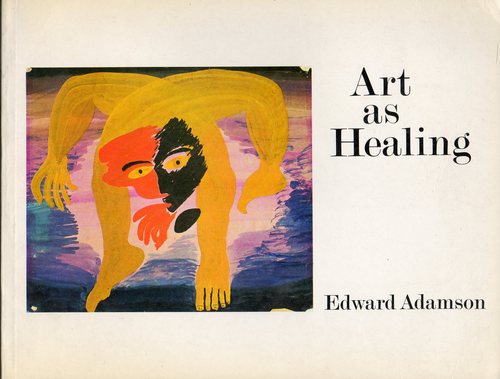 All the creative therapies tap into this healing power, whether as art, music, poetry or dance. As Edward Adamson, one time artistic director at Netherne, a former psychiatric hospital in Southern England, explains: ‘The artist is also on familiar terms with the inner self, and therefore is a little closer to those who are obliged to wrestle with its problems. The hospital artist’s main role is to be a catalyst who allows the healing art to emerge.’ (2)
 But the work produced in such therapy sessions can become more if the patient has his own artistic talent. It then ‘transforms other people’s lives in its representation, and majesty, in its depiction of the human condition reaching towards the sublime… Van Gogh wrote to his brother Theo: ‘Either shut me up right away in a madhouse or else let me work with all my strength.’’ (3)
I can personally testify to the healing power of creativity. As I struggled to climb out of the black depression of my own serious breakdown, it was therapy in the art room, with the imaginative use of collage, clay, paint and loads of paper both of the drawing and tissue kind (!), that helped me as well as many others to unblock so much that was otherwise too painful to speak about. My own creations sadly showed none of the flair of Van Gogh. Nonetheless it is only following such release that true healing of mind and spirit can really begin, just as a foreign body or infection must be cleared from a wound before the skin will properly heal over it.
We must however look beyond the caring professions and embrace healing creativity as a guiding principle for us all if we are to live sustainably, responsibly and peaceably together.
Within all our communities people are dedicating much of their spare time to selflessly bring purpose and hope and healing to many where there was previously disharmony and ugliness. Drama and dance can turn feral youth into young responsible adults. Football can unite otherwise divided communities. Nature rambles can introduce children to a further dimension in their lives. Beautiful nature films are produced to inspire us all.
We will find examples all around us if we attune ourselves to the healing needs of the world.
Whether or not we have a faith, I see the need to heal ourselves, in a holistic spiritual sense, to heal our wounded behavior, before we can hope to heal what is around us in this world, animate and inanimate. Linked with the healing power of our own creativity, we can all be a part of that healing process. We can all allow the beauty of creation in its many forms to come into our lives. We can be receptive to its spiritually healing qualities. Whether this happens through a great work of art from one of the Old Masters, or from a poem, an inspiring book, a symphony or our own creative efforts, it may indeed be the Wounded Healer at work. We can then pass that healing on to others.
It is not only those who call themselves artists who have this serious responsibility as agents for social change: creativity is not only about painting and music, poetry and the media. We are all artists: whether as parent or homemaker, businessman or scientist, whether we are in one of the caring or pastoral professions or in education and training, we will all knowingly or perhaps unwittingly put our creative powers and talents to either good or evil use.
Art is an essential feature of sustainable living and as responsible human beings we have a choice as to how we use this for the future of our earth. We can choose ‘celebrity and commercial art, that is disengaged from the concerns of the world… isolationistic and egotistic…[which] has little to do with the ecological spiritual or social challenges of our time.’ Alternatively we can encourage and produce ‘art with integrity; art that inspires, uplifts and serves the greater purpose of life.’ (4)
We can heal or hurt with our creativity. The choice is ultimately ours and ours alone, as is the responsibility.
Sad to say, I read recently that London art galleries are having to restrict numbers of visitors per time slot at special exhibitions, as they are experiencing “gallery rage” as people jostle for a view. Whatever next? But how can anyone have a chance to really appreciate the spiritual or healing message that an exhibit may impart, if the visitor cannot have his own space to absorb that message?
1. Jamison, Kay Redfield, Touched With Fire: Manic Depressive Illness and the Artistic Temperament (New York Free Press: 1993) p. 121. Renowned clinical psychologist and author – sufferer of and expert on bipolar disorder.
2. Edward Adamson, Art as Healing, 1993, published by Coventure, 1993, passage from his introduction. Adamson was Art Director at Netherne Hospital (a psychiatric hospital in the UK) for some time.
3. Jane Piirto, Ph.D. Metaphor and Image in Counseling the Talented, Van Gogh
quotation also in Letter from Vincent van Gogh to Theo van Gogh, Arles, 28 January 1889 cited at ‘Van Gogh’s Letters Unabridged and Annotated.’
4. Canon Peter Challen, South London Industrial Mission annual lecture 2005. This Mission closed in 2006, and is replaced by Mission in London’s Economy, a London wide ecumenical Christian organization set up in 2005, http://www.mile.org.uk/
Image is by Bruce
© Eleanor Stoneham 2011
Wednesday, 9 February 2011
Visions of empathy in healthcare
I found a really good article by Alex Massie on the Foreign Policy site
Bitter Medicine - Britain's prime minister grabs the third rail of national politics: the National Health Service.
“However severely the prime minister has slashed other sectors of government spending and however inauspicious the country's latest growth figures -- GDP shrunk 0.5 percent in the final quarter of 2010 -- it's the NHS reforms that are seen as the most controversial. The government needs a plan for economic growth, but it also needs to show that, despite what the Labour Party argues, the NHS is "safe in Conservative hands," as Cameron puts it…Although the NHS will remain paid for by general taxation and free at the point of use, the aim is to build a more flexible service more responsive to patient needs that's less bureaucratic and better able to adapt to changing market demands. The downside might be that an already complex service will become still more complicated and susceptible.”
 Massie recognises that all of this is being done to also save money in the long run. Because the original “totally free at point of service” National Health Service introduced in 1948 can no longer cope. Indeed the enormous costs of the latest technology, drugs and procedures could never have been foreseen all that time ago. There simply has to be rationing of procedures and medications. And that provokes widespread media attention when some are denied treatments available elsewhere in the country, or to other patients. In the eyes of many it is no longer “fair”.

But what strikes me most whenever there are debates about our ever burgeoning health care costs in the UK is that no one seems to ever consider in any detail the role that complementary and alternative medicines can play as part of a more holistic approach to healthcare. Ever more complex drug regimes and technological advances are alone unlikely to lower the costs of healthcare. It seems to me so often that many expensive invasive procedures and drug regimes could be averted if much earlier attention was paid to the health of mind and spirit, and the fitness of the body, through both physical and mental fitness regimes.
Because healing needs soul. And the healing power of the spirit and the soul is free and wholesome, with no unwanted side effects.
I have written elsewhere of the new era of spiritual awakening in medicine, of the dawn of a new understanding of consciousness. But this is only evident in a few pockets of holistic excellence. These are mostly in America, although some campaign tirelessly for the cause of the holistic practitioners in some parts of the UK. See SECTco for example, in Brighton.
It is surely because so many of us do not receive the healing for which we yearn on the visit to the physician that we join the ever increasing number of people who seek complementary and alternative therapies (CAMs) elsewhere, often without our physician’s knowledge and with varying degrees of success. It is no coincidence that the number of practitioners trained in such therapies has mushroomed. But these therapists need to be more widely recognized and paid for by the NHS.
This all raises a serious and fundamental question. Should healthcare be seen as a problem of cost, or an opportunity for growth? It should be neither! It should be a dynamic and readily affordable system that continually strives to integrate its conventional allopathic disciplines with the various and increasingly popular complementary and alternative medicines, including spiritual and religious healing methods. These should all work alongside one another in a spirit of full cooperation and mutual respect. This is truly integrated medicine at its very best.
(see for example Hufford, David J., ‘An analysis of the field of spirituality, religion and health.’)
Bitter Medicine - Britain's prime minister grabs the third rail of national politics: the National Health Service.
“However severely the prime minister has slashed other sectors of government spending and however inauspicious the country's latest growth figures -- GDP shrunk 0.5 percent in the final quarter of 2010 -- it's the NHS reforms that are seen as the most controversial. The government needs a plan for economic growth, but it also needs to show that, despite what the Labour Party argues, the NHS is "safe in Conservative hands," as Cameron puts it…Although the NHS will remain paid for by general taxation and free at the point of use, the aim is to build a more flexible service more responsive to patient needs that's less bureaucratic and better able to adapt to changing market demands. The downside might be that an already complex service will become still more complicated and susceptible.”
 Massie recognises that all of this is being done to also save money in the long run. Because the original “totally free at point of service” National Health Service introduced in 1948 can no longer cope. Indeed the enormous costs of the latest technology, drugs and procedures could never have been foreseen all that time ago. There simply has to be rationing of procedures and medications. And that provokes widespread media attention when some are denied treatments available elsewhere in the country, or to other patients. In the eyes of many it is no longer “fair”.
But what strikes me most whenever there are debates about our ever burgeoning health care costs in the UK is that no one seems to ever consider in any detail the role that complementary and alternative medicines can play as part of a more holistic approach to healthcare. Ever more complex drug regimes and technological advances are alone unlikely to lower the costs of healthcare. It seems to me so often that many expensive invasive procedures and drug regimes could be averted if much earlier attention was paid to the health of mind and spirit, and the fitness of the body, through both physical and mental fitness regimes.
Because healing needs soul. And the healing power of the spirit and the soul is free and wholesome, with no unwanted side effects.
I have written elsewhere of the new era of spiritual awakening in medicine, of the dawn of a new understanding of consciousness. But this is only evident in a few pockets of holistic excellence. These are mostly in America, although some campaign tirelessly for the cause of the holistic practitioners in some parts of the UK. See SECTco for example, in Brighton.
It is surely because so many of us do not receive the healing for which we yearn on the visit to the physician that we join the ever increasing number of people who seek complementary and alternative therapies (CAMs) elsewhere, often without our physician’s knowledge and with varying degrees of success. It is no coincidence that the number of practitioners trained in such therapies has mushroomed. But these therapists need to be more widely recognized and paid for by the NHS.
This all raises a serious and fundamental question. Should healthcare be seen as a problem of cost, or an opportunity for growth? It should be neither! It should be a dynamic and readily affordable system that continually strives to integrate its conventional allopathic disciplines with the various and increasingly popular complementary and alternative medicines, including spiritual and religious healing methods. These should all work alongside one another in a spirit of full cooperation and mutual respect. This is truly integrated medicine at its very best.
(see for example Hufford, David J., ‘An analysis of the field of spirituality, religion and health.’)
Monday, 27 December 2010
Educating our Children
 Following the reviews on Amazon.com of Prince Charles' wonderful book Harmony, I came upon one reviewer's comments that took me back to something I have written about elsewhere; What future do we have if we do not recognize the need for a holistic education for our children?
I visited Herm a year or so ago. It is a very small Channel Island ‘community’ off the coast of North France, where life of necessity is simple. I watched the children playing outside, gloriously free and dirty and happy, using what nature has given them, the trees and bushes and grass and flowers, and their own abilities to run and hide and shout and climb trees, to be themselves. There was not an adult in sight. And I recalled the vision held by Alastair McIntosh, in his wonderful book Soil and Soul,for a spiritually rich and holistic education. He imagines a life-long curriculum of organic food and biodiversity, energy alternatives and respect for all, healing skills incorporating not only the most advanced scientific advances but also the spiritual healing principles, of poetry and story. There would be the study of conflict resolution and how to eliminate the causes of war. And the kids would have fun and play in tree houses.
McIntosh’s wish list is long but the spiritual message is clear. Such an education is about ‘building of community as right relationship between soil, soul and society, powered by the passion of the heart, steered by the reason of the head, and then applied by the skilled technique of the hand.’
The Global Justice Movement describes the purpose of education as to ‘teach people how to become life-long learners and virtuous human beings, with the capacity to adapt to change, to become masters of technology and builders of civilization through their ‘leisure work,’ and to pursue the highest spiritual values.’
The Dalai Lama stresses that education ‘constitutes one of our most powerful weapons in our quest to bring about a better, more peaceful, world.’He emphasizes the need to open children’s eyes to the needs and rights of others, so that their actions have a universal dimension, and they develop their ‘natural feelings of empathy so that they come to have a sense of responsibility towards others.’ He reminds us that traditionally it has been assumed that ethical and human values would be taught through a child’s religious upbringing rather than in mainstream state education. With the declining influence of religion and faith in family life this vital part of a child’s education has become neglected. The Dalai Lama proffers three guidelines for the education of our children. First, he says, we need to awaken their consciousness to basic human values by showing them how these are relevant to their future survival, rather than presenting them as solely an ethical or faith issue. Then we must teach them how to discuss and debate, to understand the value of dialogue rather than violence for resolving conflict. Finally there is the urgent need to teach children that differences of race, faith, culture, while important to preserve, are nevertheless secondary to the equal rights of us all from whatever background to be happy. And of course this is best done in the security of a close loving family unit.
Regrettably the purpose of education as seen in most of our traditional schools is to train people for jobs, rather than to be the rounded and spiritually grounded citizens of tomorrow. As a result the system becomes shackled by the needs of exams and syllabuses and league tables. May it come to pass sooner rather than later that many more of our schools come to be judged not only on their position in academic league tables but on how successfully they turn out well rounded, happy, respectful, empathic and spiritual citizens.
Thursday, 9 December 2010
The Sacred Activist - an agent of profound change

By the side of my bed and in my study I have so many piles of books - books waiting to be read, books to finish reading, books I must have thought were a good idea when I bought them but which languish forgotten at the bottom of one of those piles. But this book by Andrew Harvey, the inspired visionary and mystic, is so good - I could hardly bear to put it down and I read it in just a few sittings.
Those who read these blogs regularly will know my passion for any books that try to find a happier and more peaceable way forward through and beyond the mess we have made of this world, particularly when the proposals are spiritually based and give us all the chance to change words into deeds.
But as a Christian I always approach books that seem to be of a "new age" or mystical nature with some caution.
However I warmed to Harvey’s theme as I saw the respect he holds for the faiths and religious beliefs held by others, for the wisdom of the elders both past and living today, and his love for Jesus Christ, the Wounded Healer, the greatest love of his heart throughout his life, he claims. But this is the Jesus Christ of the Gospel of Thomas, and many may be unable to reconcile the Gnostic teachings of Christ with their own faith.
He therefore urges us to become Sacred Activists and envisions what he calls Networks of Grace, small groups at community level spread across the globe where his ideas can be put into practice. He has even formed an Institute and a Global Curriculum for Sacred Activities. I have to say that the practices he proposes to nourish us spiritually and the Networks he outlines bear remarkable similarity to many of the activities of my own church and doubtless of others across the land. And I do therefore question whether a newly defined mysticism or faith is necessary. But I really recommend you read this book, whether of faith or none, if you are receptive at all to the idea of spirituality and its importance in our lives. At the very least everyone could profitably read and act upon the "Ten Things you can do Right Now," (plus one added for good measure and because, he says, 11 is a sacred number) with which the book opens.
(Some of this is taken from my full review that has been posted on Amazon.)
Tuesday, 23 November 2010
A New Rennaisance; Transforming Science, Spirit and Society

E. F. Schumacher once said: “man is far too clever to be able to survive without wisdom.” And we now need that wisdom in large measure.
Someone said to me today: "the trouble is, (a phrase I dislike as much as "the problem is") there are so many books on this climate change stuff and other problems of our age, but nothing ever gets done."
That is simply not true, but there is always room to do more.
I went recently in London to a day conference at the University of London, the occasion being the launch of A New Renaissance; Transforming Science, Spirit and Society. This book was born out of a vision by the Scientific Medical Network of the urgent need for action to address the now deeply rooted and dangerous ecological, political and spiritual crisis in which we find ourselves.
Members of the Network were invited to submit essays on aspects of the crisis, which would discuss the causes of, and/or the paths beyond, the current crisis, to create an important repository of wisdom.
The predominant aim was to underpin a programme of action, to help the Network to “move boldly from theory to practice,” with progressive solutions, not only within the Network itself but by working with other like minded organisations and within the wider global community.
What we have now in this excellent volume is a compilation of 25 of the best essays, many of them from some of the world’s leading thinkers, bringing the latest scientific discoveries and philosophical ideas alongside ancient spiritual wisdoms.
The book is divided into four sections, under the headings; Worldviews in Transition, Consciousness and Mind in Science and Medicine, Spirituality and New Understandings of the Sacred, and finally Global and Local Transformation: Governance, Economics and Education (and also including, importantly, a chapter on the role of music and the arts in a possible future). This final part is most important, examining as it does some possible reforms in politics, economics and education, to help "bring forth a society that can sustain the flourishing of human beings in the twenty first century."
The scene is set in the first chapter (by Ervin Laszlo) by diagnosing the world’s own health problems –unsustainable living, irrational behaviours and obsolete beliefs and aspirations. But crisis brings opportunities for transformation, in enlightened politics, a more socially aware business ethic, and personal responsibility. And underlying all of this is the need for a greater spiritual awareness, a shift of our dominant consciousness towards a connectedness with each other and with the natural world, a new understanding of humans as psychic beings. This is a theme that occurs again and again in many of the essays; that rediscovery of our souls, or the spirit in matter, or a sense of the sacred, or changes in human consciousness in some way, will be essential for finding a more meaningful and spirit filled world and for healing our planet. And this new understanding of reality must acknowledge the inadequacy of reductionist materialism and the mechanistic scientific worldview.
Readers will not agree with everything here. Boundaries are being pushed to limits of thought and understanding, but there are common threads of purpose, and urgency. There are practical ideas in plenty, and there are messages of hope from some authors, whilst others seem more doubtful that we still have time for change or indeed about the nature of the crisis itself.
I enjoyed reading all these essays immensely. Some are more technical than others, some the reader will find controversial. But all have their own profoundly important message from the authors’ own hearts. They combine a rich pattern of diverse thinking, knowledge, wisdom and proposed solutions and together they form a valuable resource for healing this wounded earth.
However, all this effort will have been in vain unless the book promotes positive healing actions. As humans we have freedom of choice and the benefits of hindsight and foresight and if we want to we can put this to a healing purpose. And this, we are reminded, will variously require courage, confidence and determination to move ideas forward, changes in education, changes in mindset, hearts and minds, and a sense of personal responsibility. Some believe that change must start from small groups, within community, a bottoms- up approach, and that we have to change our beliefs and attitudes before we can change our values and behaviour. Others stress the need for careful and respectful dialogue to establish a shared wisdom, for a unifying vision of our purpose on this planet and a call for global unity in diversity.
I could go on – there is so much wisdom in these pages. But to go into detail on any specific chapter would surely offend, albeit unintentionally, those I have left out.
As humans we yearn to be happy, at peace, part of a global family. This book is an important step in that direction if we heed its wisdom and advice.
(This article, with a few small changes, repeats the review I have posted on Amazon.com and Amazon.co.uk).
Wednesday, 17 November 2010
HRH Prince Charles and Harmony

Lincolns Inn Fields is the largest square in London, built in the 1630s from an original design by Inigo Jones. In the square is the Sir John Soane's Museum, tribute to that famous architect and now a national centre for the study of architecture, housing a large collection of important drawings, books and artifacts. And just a few doors down is the Lincoln Centre, where I found myself the other evening, on a bitterly cold night, to hear a book launch lecture by Ian Skelly, co-author with HRH Prince of Wales and Tony Juniper of Harmony-A New Way of Looking at the World , hosted by the Temenos Academy.
I quote from their website: "In 1980 the poet and scholar Kathleen Raine, together with Keith Critchlow, Brian Keeble and Philip Sherrard, launched Temenos, a journal devoted to the Arts of the Imagination. The journal sought to give space to poets, artists, writers and thinkers who subscribed to the belief that man is firstly a spiritual creature with spiritual needs which have to be nourished if we are to fulfil our potential and be happy.
From these early beginnings the Temenos Academy was launched in 1990 as a teaching organisation dedicated to the same central idea that had inspired the Journal. Scholars and teachers, committed to what is known as 'the perennial philosophy' - the learning of the Imagination - were invited to lecture and hold study groups to teach an ever-growing number of students."
So of course it is no surprise that HRH the Prince of Wales should be the Academy's Patron and that it should be instrumental in launching this important new book.
Again I quote, this time from the publisher's product information. This book is: "A practical guide to what we have lost in the modern world, why we have lost it and how easily it is to rediscover. Harmony is a blueprint for a more balanced, sustainable world that the human race must create to survive...Drawing on his own practical experience, Prince Charles charts how changes to how we look at the world could lead us toward a better future. He describes how knowledge and perspectives now largely lost could help us meet very modern challenges, including in the built environment, engineering, medicine and farming."
Beautifully illustrated and thoughtfully written, this would make a lovely present for anyone who respects the Prince's views on these vital issues, but perhaps more importantly anyone who will be receptive to having their eyes and hearts opened to the really urgent need for a change in perception and heart to save our planet. And we need to open as many peoples' hearts and minds and souls to these issues as we possibly can.
The scene was set for the excellent lecture with slides of paintings by the artist John Napper, a favourite of the Prince, with views of the beautiful Shropshire countryside, followed by illustrations of the symmetry and harmony to be found in nature, as then contrasted with some odious architecture which gave no thought to such beauty and harmony, and did not resonate with nature's patterns. I recall Prince Charles causing a real hoo hah many years ago when he referred to many such buildings as "carbuncles." Now I believe and sincerely hope that more of us are understanding what he meant.
Subscribe to:
Posts (Atom)
Sunset
with vapor trails
Subscribe


 Posts
All Comments
Posts
All Comments