Over on my Wisdom of Tolerance blog I am currently exploring the way in which all the great world faiths view nature and our place within it. So often when discussing religious tolerance we are called to celebrate our differences. But here is one area where we can celebrate our common beliefs! Isn't that a better quality with which to cement relationship?
So back to nature and the environment and sustainability. Too often in the past we have been arrogant enough to believe that humanity is in some way in charge of the world’s ecosystems. We have either seen ourselves as the dominant stewards of God’s creation or believed that our superior intelligence and consciousness entitles us to manipulate the world’s resources solely for our own needs. That has certainly been a failing of Christian teaching in the past (happily no longer).
Anyway I believe that both views are wrong. I believe we need to become more sensitive to our humble place within this vast and complex web of life that God has created. I believe that our future depends on that understanding. I am not alone.
Lovelock has described our desire to use this Earth for our benefit alone, particularly in our wholesale burning of fossil fuels, as ‘breathtaking insolence’. (1) Cottrell calls it the ‘arrogance of the superiority of intellect’.(2)When we truly regain our sense of belonging to earth, he says, ‘this elemental awareness automatically brings with it a gentleness and humility towards all other expressions of life.’
We have indeed sinned in all our excessive use and abuse of nature, showing our greed and selfishness. In the past this often may have been due to ignorance, but we can no longer claim that as any sort of excuse for our behavior.
We need to come with humility and awe to apologize to our own higher spiritual power, whether that is God, Dao, Yahweh, Allah, or perhaps simply our own inner conscience. We need to beg forgiveness and resolve in our healed hearts and souls here and now to do all we can to amend what we have caused and prevent further ravaging of the natural and wonderful creation of which we are but a relatively small but so destructive part. ‘We have followed too much the devices and desires of our own hearts,’ we lament in the beautiful prose and poetry of The Order for Evening Prayer in the 1662 Book of Common Prayer for the Church of England. Do we go out and live our faith?
It seems that too many of us follow the mechanics of our religion to the near exclusion of prayerful living and discipleship. I believe there is a need for much more spirituality in our Western religions, for more ministry directed to the healing of our own souls for the sake of the spiritual health of the world around us, and for underpinning our mission to the world, not just for our own personal redemption.
While controversy and debate continues over the facts surrounding climate change and our role in handling this, the ecologists have little doubt that we are part of a complex web of life and we are damaging this fragile global ecosystem. We have become aware that any of our actions must weave into that whole living system. Traditional indigenous cultures understand that and we need to work with them. They have wisdom that we have lost in our urbanization. As Lovelock reminds us, we need ‘to renew that love and empathy for nature that we lost when we began our love affair with city life.’(3)
1 and 3. James Lovelock, The Revenge of Gaia, London: Penguin Books Ltd, 2006, pp. 146 and 8 respectively.
2. Barry Cottrell, The Way Beyond the Shaman: Birthing a New Earth Consciousness Hampshire UK: O Books 2008, p107.
"The penalty good men pay for indifference to public affairs is to be ruled by evil men." attributed to Plato
"Bad men need nothing more to compass their ends, than that good men should look on and do nothing." attributed to Edmund Burke
Showing posts with label wisdom of tolerance. Show all posts
Thursday, 22 September 2011
Wednesday, 31 August 2011
Restorative Justice - The Woolf Within
Am just back from a splendid weekend conference organised by the Scientific and Medical Network on the Science of Empathy, the Spirit of Compassion. I’ve written a piece on my other blog Wisdom of Tolerance already, about the Charter for Compassion that was introduced there by Karen Armstrong, its founder.
We covered so much ground, so much of which is relevant for healing this world. I am preparing a detailed report of the conference for the digital magazine Conscious Connections – for 21st century Cultural Creatives worldwide and will probably come back to this again.
During the weekend a film was shown, The Woolf Within , introduced by Janine Edge, an independent mediator. It made a huge impression on many of us.
I quote: “Peter Woolf was a prolific offender, ensconced in a world of violence and depravity, who, by his own reckoning committed about 20,000 crimes. Then he burgled a house, fought with his victim and ended up in prison yet again. This time though it was different. Peter met with his victim, Will, in a restorative justice session that took place in the prison. The meeting changed both their lives for ever…….”
Do please watch it. Perhaps you now have! What is striking is the compassion that victim and criminal were able to show for each other by the end of the process, despite the obvious difference in their social circumstances. This has to be restorative justice at its best, a lesson for us all in how good can come out of bad in our world.
We are all unique human beings, and all equal, regardless of background, education, color, creed, social circumstances etc. All of us suffer, all of us have the need for compassion from the day we are born to the day we die. Deprive children and youngsters of compassion in their upbringing and they will feel they are unloved, valueless, and marginalized. Through evolution the brain has become highly sensitive to kindness received, Neuroscience tells us that specific brain areas respond to kindness and compassion, Ancient Wisdom tells us that compassion is the road to happiness, and Social and developmental psychology tell us that we are affected by our own history of affiliation – i.e. the relationships we experience in our upbringing. So help people love themselves, then help them to understand the suffering of others, and we can change people and society in profound ways.
Subscribe to:
Posts (Atom)
It's Time you knew - by Transition Rachel at YouTube
Many reasons to love La Gomera
Madeira
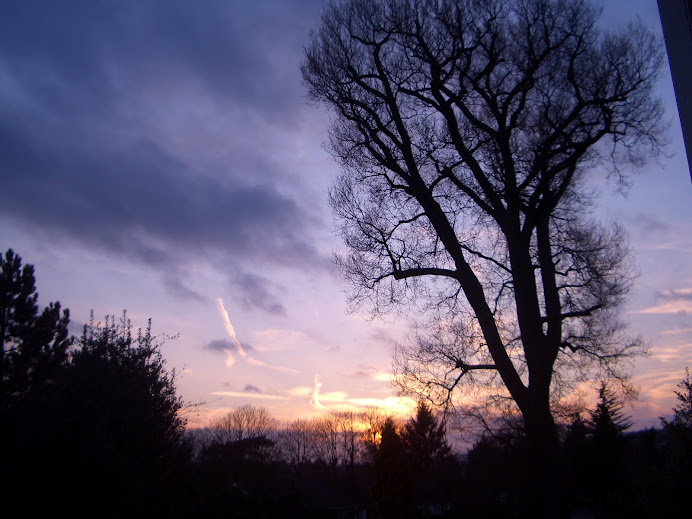
Sunset
with vapor trails