Occasionally I repeat an article across my blogs. I make no apology for this if I believe it to be so important that I want it to reach as wide an audience as possible. So here is one such repeat.
"Arguably one of the most important books of our time. All Christians and Muslims should know about this initiative."
That was how I ended the blog the other day over on my other site Wisdom of Tolerance about A Common Word, the Muslim initiative addressed to Christians, prompted by the Islamic furore provoked in many Muslim countries by part of the Pope’s 2005 Regensburg address.
And the response is said to have been phenomenal. Quoting from the Cambridge Interfaith Programme site, “A Common Word has been the subject of major international conferences at Yale University, the University of Cambridge - facilitated by CIP, Lambeth Palace and Georgetown University, over 600 Articles—carried by thousands of press outlets—have been written about A Common Word in English alone, over 200,000 people have visited the Official Website of A Common Word (and) over 6000 people have ‘fully endorsed’ A Common Word online alone.”
But in the grand scale of things, although these together make for a very promising start, they are but “a drop in the ocean.” As the book so rightly reminds us, there needs to be a trickle down effect to reach the masses, and the learned conferences and articles are but a stage towards that goal. There is a significant proportion of the population that can only be reached by people of influence: by Imams, priests, teachers, lecturers, youth leaders etc. They’re not going to read conference reports and educated commentary. We need that trickle down effect to start working in a big way to reach beyond the intellectual and the well educated, to reach out to the masses, many of whom do not read very widely if at all and may harbour plenty of prejudice born of ignorance and fear. And we need plenty of responsible media reporting and press officers in organizations who can push for that responsible reporting to reach out as far and wide as possible. Because not only can the media be hugely influential in that trickle down effect; They also have the networks to become tentacles reaching out laterally as far and wide into crevices of public ignorance and prejudice as possible. And if we continue the water metaphors, we need Ripples of Hope, because as Robert Kennedy said all those many years ago, in Cape Town in 1966:
Each time a man stands up for an ideal, or acts to improve the lot of others, or strikes out against injustice, he sends forth a tiny ripple of hope, and crossing each other from a million different centers of energy and daring, those ripples build a current that can sweep down the mightiest walls of oppression and resistance.
When I think of what needs to be done to promote tolerance and peace, I am reminded of Tariq Jahan, the hero in the Birmingham riots earlier this year after his son Haroon had been killed in the violence. ‘I lost my son.” He said to the angry crowd, “Blacks, Asians, whites, we all live in the same community. Why do we have to kill one another? Why are we doing this? Step forward if you want to lose your sons. Otherwise, calm down and go home – please.”
Now if every person of influence at grass roots level where there is a choice between violence and anger or dialogue and calm could step forward and speak up for peace between us all in the same dignified way that Tariq did back in August, couldn’t we begin to build a better world for us all?
Showing posts with label Robert Kennedy. Show all posts
Showing posts with label Robert Kennedy. Show all posts
Thursday, 8 December 2011


Sunday, 20 November 2011
What is money? Why do we need it?
It is difficult to define money. We have ingrained within our deepest psyche a sense that our monetary wealth reflects our success and affects our happiness.
But we know from studies that once a certain and fairly modest standard of living has been achieved any further increase in wealth does not improve our happiness. It is then influenced more by our status in society, the quality of our personal relationships and our physical health.(1)And status emphatically does not mean celebrity status. It means being valued for our own unique gifts and qualities, whatever those may be.
 And if we still think that an accumulation of wealth can give us longer-term security we are deluded. Monetary wealth is a very poor long-term investment. It cannot guarantee long-term security and no investment is totally risk free. We saw this only too clearly during the global banking crisis that began in 2007 with problems in the United States over ‘sub-prime’ loans. The effect was soon felt in the UK as they reeled from the Northern Rock building society debacle, the first ‘run’ on a bank in that country for 141 years. Now we have the Eurozone crisis and the global stock markets move dizzily up and down fuelled mostly, it would seem, by alternating cycles of fear and greed, and the longer-term effects of this financial tsunami remain uncertain.
Why do we need money?
The Greek Philosopher and scientist Aristotle explained in his Politics in c 330BC why money had been invented. The art of acquisition, he said, for which a currency was required, arose out of the simpler barter of goods, and he saw this as quite natural and healthy. But when ‘The supply of men’s needs came to depend on more foreign sources, as men began to import for themselves what they lacked, and to export what they had in superabundance: …in this way the use of a money currency was inevitably instituted.’(2)
But Aristotle made the distinction, between essential and therefore laudable expenditure for the daily needs of food, shelter and clothing, and the acquisition of money for acquisition’s sake by profit associated with retail trade. The latter he censured,
because the gain in which it results is not naturally made, but is made at the expense of other men. The trade of the petty usurer is hated with most reason: it makes a profit from currency itself, instead of making it from the process which currency was meant to serve. Currency came into existence merely as a means of exchange; usury tries to make it increase.(3)
Aristotle did not trust money because he could see that it could feed an insatiable desire way beyond what was necessary for our needs and he saw this as unethical.
In addition to life’s basic survival necessities of warmth, clean air, medicine, clean water, food and housing, all human beings worldwide have a need and a human right to be free, to be respected as equals, able to choose their own destiny and to fulfill their full emotional, intellectual and spiritual potential. We are all entitled to the five basic human justices, of monetary and social justice, economic and environmental justice and of the right to peace.(4)
I believe that to really achieve such justice in our world we need to allow the healing qualities of compassion and vulnerability and spirituality to infuse our lives and our actions in our financial housekeeping.
Our present economy is flawed - in many ways. That is why I have a sympathy and empathy with the real underlying gripes of the Occupy movement.
Probably the most important flaw is that Humans are not valued
A very large number of people in our society are presently undervalued or not valued at all in monetary terms. These include the old and young, the infirm and disabled, the housewives and the many community and charity volunteers without whom many organizations would simply not survive. All of these people outside the conventional workforce often work very much harder and longer hours than many in full time employment. But they gain no financial independence or recognition within the economic framework from their toil. I know of a wife who for two decades has selflessly cared full time for an increasingly and profoundly disabled husband. Or I think of the mother who takes a career break to raise her own children. These women both lead enormously valuable lives, but feel undervalued.
We measure a ‘healthy’ economy in terms of the material wealth or prosperity that is created by and for its working citizens, expressed in terms such as the gross domestic product (GDP), gross domestic income (GDI) or gross national product (GNP). Whichever measure is used, they all put a zero valuation on the environment, on healthy citizens, social cohesion and cultural values!(5)As Robert Kennedy said:
…the (Gross National Product) does not allow for the health of our children, the quality of their education, or the joy of their play. It does not include the beauty of our poetry or the strength of our marriages… It measures neither our wit nor our courage, neither our wisdom nor our learning, neither our compassion nor our devotion to our country, it measures everything, in short, except that which makes life worthwhile. And it tells us everything about America except why we are proud that we are Americans. (6)
1. Schluter, Michael and John Ashcroft, Editors, Jubilee Manifesto: a Framework, Agenda and Strategy for Christian Social Reform, Leicester: Inter-Varsity Press, 2005, p. 217.
2. Aristotle Politics, translated by Ernest Barker Revised R F Stalley 1998, 1.9 1257a 5 p.26.
3. Ibid., 1258a 35 p.30.
4. Based on the principle of global justice taken from the five principles of the Global Justice Movement
5. Hazel Henderson, 2001, Mapping the Transition from GDP Growth to Rising Quality of Life, in Nikkei Ecology, 2001, cited in The Path to Living Economies – a collaborative Working Document of the Social Ventures Network
6. Robert F. Kennedy, 18 March 1968.
© Eleanor Stoneham 2011 Adapted from Healing this Wounded Earth
But we know from studies that once a certain and fairly modest standard of living has been achieved any further increase in wealth does not improve our happiness. It is then influenced more by our status in society, the quality of our personal relationships and our physical health.(1)And status emphatically does not mean celebrity status. It means being valued for our own unique gifts and qualities, whatever those may be.
 And if we still think that an accumulation of wealth can give us longer-term security we are deluded. Monetary wealth is a very poor long-term investment. It cannot guarantee long-term security and no investment is totally risk free. We saw this only too clearly during the global banking crisis that began in 2007 with problems in the United States over ‘sub-prime’ loans. The effect was soon felt in the UK as they reeled from the Northern Rock building society debacle, the first ‘run’ on a bank in that country for 141 years. Now we have the Eurozone crisis and the global stock markets move dizzily up and down fuelled mostly, it would seem, by alternating cycles of fear and greed, and the longer-term effects of this financial tsunami remain uncertain.
Why do we need money?
The Greek Philosopher and scientist Aristotle explained in his Politics in c 330BC why money had been invented. The art of acquisition, he said, for which a currency was required, arose out of the simpler barter of goods, and he saw this as quite natural and healthy. But when ‘The supply of men’s needs came to depend on more foreign sources, as men began to import for themselves what they lacked, and to export what they had in superabundance: …in this way the use of a money currency was inevitably instituted.’(2)
But Aristotle made the distinction, between essential and therefore laudable expenditure for the daily needs of food, shelter and clothing, and the acquisition of money for acquisition’s sake by profit associated with retail trade. The latter he censured,
because the gain in which it results is not naturally made, but is made at the expense of other men. The trade of the petty usurer is hated with most reason: it makes a profit from currency itself, instead of making it from the process which currency was meant to serve. Currency came into existence merely as a means of exchange; usury tries to make it increase.(3)
Aristotle did not trust money because he could see that it could feed an insatiable desire way beyond what was necessary for our needs and he saw this as unethical.
In addition to life’s basic survival necessities of warmth, clean air, medicine, clean water, food and housing, all human beings worldwide have a need and a human right to be free, to be respected as equals, able to choose their own destiny and to fulfill their full emotional, intellectual and spiritual potential. We are all entitled to the five basic human justices, of monetary and social justice, economic and environmental justice and of the right to peace.(4)
I believe that to really achieve such justice in our world we need to allow the healing qualities of compassion and vulnerability and spirituality to infuse our lives and our actions in our financial housekeeping.
Our present economy is flawed - in many ways. That is why I have a sympathy and empathy with the real underlying gripes of the Occupy movement.
Probably the most important flaw is that Humans are not valued
A very large number of people in our society are presently undervalued or not valued at all in monetary terms. These include the old and young, the infirm and disabled, the housewives and the many community and charity volunteers without whom many organizations would simply not survive. All of these people outside the conventional workforce often work very much harder and longer hours than many in full time employment. But they gain no financial independence or recognition within the economic framework from their toil. I know of a wife who for two decades has selflessly cared full time for an increasingly and profoundly disabled husband. Or I think of the mother who takes a career break to raise her own children. These women both lead enormously valuable lives, but feel undervalued.
We measure a ‘healthy’ economy in terms of the material wealth or prosperity that is created by and for its working citizens, expressed in terms such as the gross domestic product (GDP), gross domestic income (GDI) or gross national product (GNP). Whichever measure is used, they all put a zero valuation on the environment, on healthy citizens, social cohesion and cultural values!(5)As Robert Kennedy said:
…the (Gross National Product) does not allow for the health of our children, the quality of their education, or the joy of their play. It does not include the beauty of our poetry or the strength of our marriages… It measures neither our wit nor our courage, neither our wisdom nor our learning, neither our compassion nor our devotion to our country, it measures everything, in short, except that which makes life worthwhile. And it tells us everything about America except why we are proud that we are Americans. (6)
1. Schluter, Michael and John Ashcroft, Editors, Jubilee Manifesto: a Framework, Agenda and Strategy for Christian Social Reform, Leicester: Inter-Varsity Press, 2005, p. 217.
2. Aristotle Politics, translated by Ernest Barker Revised R F Stalley 1998, 1.9 1257a 5 p.26.
3. Ibid., 1258a 35 p.30.
4. Based on the principle of global justice taken from the five principles of the Global Justice Movement
5. Hazel Henderson, 2001, Mapping the Transition from GDP Growth to Rising Quality of Life, in Nikkei Ecology, 2001, cited in The Path to Living Economies – a collaborative Working Document of the Social Ventures Network
6. Robert F. Kennedy, 18 March 1968.
© Eleanor Stoneham 2011 Adapted from Healing this Wounded Earth
Saturday, 4 June 2011
How do we value the Natural Environment?
I have been following a blog for a while called Sustainability in Crisis. One particular post caught my eye this week: Should we put a Financial Value on the Natural Environment.
This discussion came about because the UK Government have tried to do just that.And opinions are very divided on how and whether it can be done.
But this is not confined to the UK - the principles are just as relevant in the USA, and Robert Kennedy and others have had something to say about the issue on the other side of The Pond.
This is what I said by way of comment on that blog but it is either awaiting moderation or has disappeared into the ether. So for what it is worth I am saying the same thing here:
"I think we could turn this question on its head. Perhaps we should look at the economic system itself, which is flawed in many ways. One important flaw is that humans are not valued within the system.
We measure a ‘healthy’ economy in terms of the material wealth or prosperity that is created by and for its working citizens, expressed in terms such as the gross domestic product (GDP), gross domestic income (GDI) or gross national product (GNP). Whichever measure is used, they all put a zero valuation on the environment, on healthy citizens, social cohesion and cultural values!(1) As Robert Kennedy said:
…the (Gross National Product) does not allow for the health of our children, the quality of their education, or the joy of their play. It does not include the beauty of our poetry or the strength of our marriages… It measures neither our wit nor our courage, neither our wisdom nor our learning, neither our compassion nor our devotion to our country, it measures everything, in short, except that which makes life worthwhile. And it tells us everything about America except why we are proud that we are Americans. (2)
A very large number of people in our society are presently undervalued or not valued at all in monetary terms. These include the old and young, the infirm and disabled, the housewives and the many community and charity volunteers without whom many organizations would simply not survive. All of these people outside the conventional workforce often work very much harder and longer hours than many in full time employment. But they gain no financial independence or recognition within the economic framework from their toil. I know of a wife who for two decades has selflessly cared full time for an increasingly and profoundly disabled husband. Or I think of the mother who takes a career break to raise her own children. These women both lead enormously valuable lives, but feel undervalued.
But it is the economic system that is wrong.
So to return to the question – and the concern expressed that the natural world should be seen as having some value in and of itself, not just in its benefit for human welfare and well-being. This could happen, but we would need this to be within a financial system that is cyclical and sustainable and environmentally sound, and that is far from the reality of our present economy.
The fact is that we cannot sustain our present financial systems
There is massive wastage in our consumer society, both from personal consumption and in our industrial processes. Alarming statistics can be found of physical waste:
Americans waste or cause to be wasted nearly 1 million pounds of materials per person per year…[and] this does not account for wastes generated overseas on [their] behalf…the amount of waste generated to make a laptop computer is close to 4000 times its weight (3).
There is a beautifully sustainable cycle within nature. Dead bodies provide food for living creatures, plants photosynthesize and produce oxygen from carbon dioxide and animals use that oxygen in their respiration of which the by-product is carbon dioxide. At school we learnt all about this and called it the Carbon Cycle, little suspecting that 50 years later this would have such a fundamental significance for the future of the world!
If we can see the Earth as a single living entity involving complex interrelationships and a finely tuned balance of all life, as envisioned for example by James Lovelock, should it not be logical for a sustainable economy to mimic that natural world, indeed be a part of that world, where everything is recycled, everything has a further use elsewhere. We would then be able to build a system that is totally cyclical and sustainable and environmentally sound, and such a system would be able to place values on those important intangibles.
Evolution biologist and futurist Elisabet Sahtouris (4) once posed the question: doesn’t it seem crazy and so obviously illogical that our household finances and the study of how we make a living (or economy) should be so totally divorced from the study of how other species make a living (or ecology)?
This seems so simple and obvious but we cannot see it and we stumble onwards within an economic system that is deeply flawed!
So let’s first look at how we can change our economy – to embrace all these other essential qualities."
1. Hazel Henderson, 2001, cited in The Path to Living Economies – a collaborative Working Document of the Social Ventures Network at http://livingeconomiesforum.org/living-economies-path
2. Robert F. Kennedy, from transcription of audio version of Address made 18 March 1968 at the University of Kansas, Lawrence, Kansas, sourced at http://www.jfklibrary.org/Historical+Resources/Archives/Reference+Desk/Speeches/RFK/RFKSpeech68Mar18UKansas.htm
3. Paul Hawken and Amory and T. Hunter Lovins,1999, p. 52 cited in The Path to Living Economies – a collaborative Working Document of the Social Ventures Network at http://livingeconomiesforum.org/living-economies-path
4. Attributed to Janine Benyus at a Bioneers conference – from a Note from the Author Elisabet Sahtouris, 2000 at http://www.ratical.org/LifeWeb/Erthdnce/erthdnce.html
© Eleanor Stoneham 2011
This discussion came about because the UK Government have tried to do just that.And opinions are very divided on how and whether it can be done.
But this is not confined to the UK - the principles are just as relevant in the USA, and Robert Kennedy and others have had something to say about the issue on the other side of The Pond.
This is what I said by way of comment on that blog but it is either awaiting moderation or has disappeared into the ether. So for what it is worth I am saying the same thing here:
"I think we could turn this question on its head. Perhaps we should look at the economic system itself, which is flawed in many ways. One important flaw is that humans are not valued within the system.
We measure a ‘healthy’ economy in terms of the material wealth or prosperity that is created by and for its working citizens, expressed in terms such as the gross domestic product (GDP), gross domestic income (GDI) or gross national product (GNP). Whichever measure is used, they all put a zero valuation on the environment, on healthy citizens, social cohesion and cultural values!(1) As Robert Kennedy said:
…the (Gross National Product) does not allow for the health of our children, the quality of their education, or the joy of their play. It does not include the beauty of our poetry or the strength of our marriages… It measures neither our wit nor our courage, neither our wisdom nor our learning, neither our compassion nor our devotion to our country, it measures everything, in short, except that which makes life worthwhile. And it tells us everything about America except why we are proud that we are Americans. (2)
A very large number of people in our society are presently undervalued or not valued at all in monetary terms. These include the old and young, the infirm and disabled, the housewives and the many community and charity volunteers without whom many organizations would simply not survive. All of these people outside the conventional workforce often work very much harder and longer hours than many in full time employment. But they gain no financial independence or recognition within the economic framework from their toil. I know of a wife who for two decades has selflessly cared full time for an increasingly and profoundly disabled husband. Or I think of the mother who takes a career break to raise her own children. These women both lead enormously valuable lives, but feel undervalued.
But it is the economic system that is wrong.
So to return to the question – and the concern expressed that the natural world should be seen as having some value in and of itself, not just in its benefit for human welfare and well-being. This could happen, but we would need this to be within a financial system that is cyclical and sustainable and environmentally sound, and that is far from the reality of our present economy.
The fact is that we cannot sustain our present financial systems
There is massive wastage in our consumer society, both from personal consumption and in our industrial processes. Alarming statistics can be found of physical waste:
Americans waste or cause to be wasted nearly 1 million pounds of materials per person per year…[and] this does not account for wastes generated overseas on [their] behalf…the amount of waste generated to make a laptop computer is close to 4000 times its weight (3).
There is a beautifully sustainable cycle within nature. Dead bodies provide food for living creatures, plants photosynthesize and produce oxygen from carbon dioxide and animals use that oxygen in their respiration of which the by-product is carbon dioxide. At school we learnt all about this and called it the Carbon Cycle, little suspecting that 50 years later this would have such a fundamental significance for the future of the world!
If we can see the Earth as a single living entity involving complex interrelationships and a finely tuned balance of all life, as envisioned for example by James Lovelock, should it not be logical for a sustainable economy to mimic that natural world, indeed be a part of that world, where everything is recycled, everything has a further use elsewhere. We would then be able to build a system that is totally cyclical and sustainable and environmentally sound, and such a system would be able to place values on those important intangibles.
Evolution biologist and futurist Elisabet Sahtouris (4) once posed the question: doesn’t it seem crazy and so obviously illogical that our household finances and the study of how we make a living (or economy) should be so totally divorced from the study of how other species make a living (or ecology)?
This seems so simple and obvious but we cannot see it and we stumble onwards within an economic system that is deeply flawed!
So let’s first look at how we can change our economy – to embrace all these other essential qualities."
1. Hazel Henderson, 2001, cited in The Path to Living Economies – a collaborative Working Document of the Social Ventures Network at http://livingeconomiesforum.org/living-economies-path
2. Robert F. Kennedy, from transcription of audio version of Address made 18 March 1968 at the University of Kansas, Lawrence, Kansas, sourced at http://www.jfklibrary.org/Historical+Resources/Archives/Reference+Desk/Speeches/RFK/RFKSpeech68Mar18UKansas.htm
3. Paul Hawken and Amory and T. Hunter Lovins,1999, p. 52 cited in The Path to Living Economies – a collaborative Working Document of the Social Ventures Network at http://livingeconomiesforum.org/living-economies-path
4. Attributed to Janine Benyus at a Bioneers conference – from a Note from the Author Elisabet Sahtouris, 2000 at http://www.ratical.org/LifeWeb/Erthdnce/erthdnce.html
© Eleanor Stoneham 2011
Friday, 20 May 2011
Ripples of Hope
"Each time a man stands up for an ideal, or acts to improve the lot of others, or strikes out against injustice, he sends forth a tiny ripple of hope, and crossing each other from a million different centers of energy and daring, those ripples build a current that can sweep down the mightiest walls of oppression and resistance."

Robert Kennedy, in a speech he made in Cape Town on 7 June 1966.

Robert Kennedy, in a speech he made in Cape Town on 7 June 1966.
Monday, 28 March 2011
Flaws in our Economy - Humans are not Valued
I have been writing about money and our economy, and last Thursday I said that we had to start with our own spending patterns, and how these may be flawed.
Now I turn to flaws in our economy.
Number One - Humans are not valued
A very large number of people in our society are presently undervalued or not valued at all in monetary terms. These include the old and young, the infirm and disabled, the housewives and the many community and charity volunteers without whom many organizations would simply not survive. All of these people outside the conventional workforce often work very much harder and longer hours than many in full time employment. But they gain no financial independence or recognition within the economic framework from their toil.
 I know of a wife who for two decades has selflessly cared full time for an increasingly and profoundly disabled husband. Or I think of the mother who takes a career break to raise her own children. These women both lead enormously valuable lives, but feel undervalued.
We measure a ‘healthy’ economy in terms of the material wealth or prosperity that is created by and for its working citizens, expressed in terms such as the gross domestic product (GDP), gross domestic income (GDI) or gross national product (GNP). Now in this current financial crisis the emphasis is on the need for growth in the economy. Whichever measure is used, they all put a zero valuation on the environment, on healthy citizens, on social cohesion and cultural values!
As Robert Kennedy once said:
 …the (Gross National Product) does not allow for the health of our children, the quality of their education, or the joy of their play. It does not include the beauty of our poetry or the strength of our marriages… It measures neither our wit nor our courage, neither our wisdom nor our learning, neither our compassion nor our devotion to our country, it measures everything, in short, except that which makes life worthwhile. And it tells us everything about America except why we are proud that we are Americans...
And these thoughts are relevant for us all, whatever our race or color or creed.
Now I turn to flaws in our economy.
Number One - Humans are not valued
A very large number of people in our society are presently undervalued or not valued at all in monetary terms. These include the old and young, the infirm and disabled, the housewives and the many community and charity volunteers without whom many organizations would simply not survive. All of these people outside the conventional workforce often work very much harder and longer hours than many in full time employment. But they gain no financial independence or recognition within the economic framework from their toil.

We measure a ‘healthy’ economy in terms of the material wealth or prosperity that is created by and for its working citizens, expressed in terms such as the gross domestic product (GDP), gross domestic income (GDI) or gross national product (GNP). Now in this current financial crisis the emphasis is on the need for growth in the economy. Whichever measure is used, they all put a zero valuation on the environment, on healthy citizens, on social cohesion and cultural values!
As Robert Kennedy once said:

And these thoughts are relevant for us all, whatever our race or color or creed.
Tuesday, 27 July 2010
Reflections and Ripples of Hope

Robert Kennedy, in a speech he made in Cape Town on 7 June 1966

Photographs copyright 2010 Eleanor Stoneham
Monday, 28 July 2008
Healing Imperatives for a Fractured World
Ripples of Hope – Healing Imperatives for a Fractured World
‘Each time a man stands up for an ideal, or acts to improve the lot of others, or strikes out against injustice, he sends forth a tiny ripple of hope, and crossing each other from a million different centres of energy and daring, those ripples build a current that can sweep down the mightiest walls of oppression and resistance.’
Robert Kennedy Speech 7 June 1966 Cape Town
I am a child of the fifties. In those early post war years we had freedom to play outdoors all day with our friends, with minimal adult supervision. We cycled or walked or bussed to school in all weathers, often alone. We had little money and we lived simply. But we were happy. Changes since then to our material "well being" have been immense. But they seem to have come at an extreme cost. Material wealth does not apparently bring us happiness, peace and contentment. 50 years on we now live in a culture where "success" seems to be based on celebrity status and wealth. We buy too much, we own too much, we hoard too much, we throw away too much and we do not recycle enough. The material possessions of others often create envy and greed, and this fuels its own social problems. We have ethnic and racial problems, terror, violence, public disorder, crime waves, the ‘yob culture’ on our streets, binge drinking, metal detectors in schools to combat knife crime and terrorist attacks in our Western European cities. We feel the need for gated roads and secured driveways. Many of these problems were unheard of, even unimaginable, in my own childhood and youth.
And whilst we live in this material splendour, real poverty is rife. 1 billion in the world live on less than the international poverty level of $1 per day. More than 850 million of the world’s 6.55 billion population starve. These statistics are an affront to our humanity. The injustices of the rich/poor divide bring discontent and envy, particularly with the globalisation of information. Poverty brings disease and lack of education, which itself perpetuates that poverty. Lack of resources also increases vulnerability to natural disasters that in the developed nations we are broadly speaking better able to handle. Inadequate and poor quality housing exacerbates the impact of floods, hurricanes, tsunamis and earthquakes. And how many of these are linked to man’s own arrogant interference with the planet?
We have a love affair with our car, our house, and our material possessions. And we all love a bargain. So much so that many of us are unwilling to pay the premium for fairly traded and fairly priced organic or local goods. We love our sanitised, standardised, pre-packaged meat and perfectly blemish free fruit and vegetables. But when we chase the cheapest mass-produced goods we are at the same time casting aside any ethical considerations regarding the production of those goods. We really do not want to think about the possibly sweat-shop conditions of the labourers, the unrealistically low wages that may have been paid, the cruelty inflicted on helpless animals, that our purchasing behaviour may be promoting.
My generation remembers the Cold War, with the Suez crisis of 1956/57 and the Cuban Missile crisis of 1962. We recall the sense of euphoria when the Berlin Wall, symbol of the Cold War since 1961, was dismantled in 1989, marking the end of European communism. We hailed a New Era and a new and peaceful world. How wrong we were!
In his Acceptance Speech following receipt of the 1989 Nobel Peace Prize the 14th Dalai Lama remarked: ‘As we enter the final decade of this century I am optimistic that the ancient values that have sustained mankind are today reaffirming themselves to prepare us for a kinder, happier twenty-first century.’ Sadly his prediction looks unpromising as we start the new millennium. We now live in a more perilous world than we could possibly have foreseen as children of the fifties.
Nick Clegg recently observed, with reference to Britain under the Labour Government in November 2006, that: ‘If legislation was a guarantee of greater public safety, this country would be the safest nation on earth.’ It seems that throughout the developed world Governing and regulatory bodies try to combat every ill of society as it arises by what can only be interpreted as knee-jerk legislation.
Small businesses find it difficult to keep up to date with the continual red tape handed out to them. Private investors have to be protected with an overly complex Financial Service Act and Money Laundering regulations for the simplest of transactions. Schools and hospitals struggle to cope with more tests and targets and league tables. In fact life is becoming far too complex and stressful for us all.
Over zealous legislation not only stresses us. It also takes away our individual sense of ethical, spiritual and social responsibility. And we do have personal responsibilities; towards ourselves, towards each other, towards our communities, our nations and ultimately to our living planet earth Gaia. And of course legislation fails to address our underlying behavioural problems, our selfishness and aggression, our greed and our envy, the seemingly prevalent albeit petty dishonesty amongst so many of us, fuelled by attitudes displayed in popular "soaps" on the TV and in films. Even the normally law - abiding citizens amongst us sometimes ignore the rules and regulations. Simple examples are the widely disregarded restrictions on speeding and the use of hand held mobile phones whilst driving. Such behaviour is obviously selfish. It exposes our fellow road users, pedestrians, cyclists, horses, pets, wild life and other vehicles to mortal danger. Why do we do it? Would we change our driving behaviour if we knew that every other user on the roads around us was a cherished friend or relation or even pet? Of course we would! If we always drove with consideration and care and indeed love for every other person sharing the road with us, traffic regulations would not be needed at all!
It seems clear to me that lasting and real solutions to the many and seemingly intractable problems of the 21st century world in which we live will not be found in Government interventions and interference. The world’s many fractures will not be healed in that way. Positive change must come from within our own hearts, through a healing of our own wounds and our own behaviour. To achieve that we have to rediscover our own spirituality, recognise with new eyes the spiritual in all our material experiences, whether at work or at leisure, and feel that spiritual awakening in our own individual consciences.
This is a healing imperative for our world. ‘There are a thousand hacking at the branches of evil to one who is striking at the root,’ wrote Henry David Thoreau. We all have to start striking at those roots.
This has been précised from my book in progress "Ripples of Hope – How to Heal our Fractured World," that explores how healing our own behaviour rather than relying on Government interventions is the real key to solving the world’s problems of climate change and violence that threaten our very existence. For more see www.eleanorstoneham.com
‘Each time a man stands up for an ideal, or acts to improve the lot of others, or strikes out against injustice, he sends forth a tiny ripple of hope, and crossing each other from a million different centres of energy and daring, those ripples build a current that can sweep down the mightiest walls of oppression and resistance.’
Robert Kennedy Speech 7 June 1966 Cape Town
I am a child of the fifties. In those early post war years we had freedom to play outdoors all day with our friends, with minimal adult supervision. We cycled or walked or bussed to school in all weathers, often alone. We had little money and we lived simply. But we were happy. Changes since then to our material "well being" have been immense. But they seem to have come at an extreme cost. Material wealth does not apparently bring us happiness, peace and contentment. 50 years on we now live in a culture where "success" seems to be based on celebrity status and wealth. We buy too much, we own too much, we hoard too much, we throw away too much and we do not recycle enough. The material possessions of others often create envy and greed, and this fuels its own social problems. We have ethnic and racial problems, terror, violence, public disorder, crime waves, the ‘yob culture’ on our streets, binge drinking, metal detectors in schools to combat knife crime and terrorist attacks in our Western European cities. We feel the need for gated roads and secured driveways. Many of these problems were unheard of, even unimaginable, in my own childhood and youth.
And whilst we live in this material splendour, real poverty is rife. 1 billion in the world live on less than the international poverty level of $1 per day. More than 850 million of the world’s 6.55 billion population starve. These statistics are an affront to our humanity. The injustices of the rich/poor divide bring discontent and envy, particularly with the globalisation of information. Poverty brings disease and lack of education, which itself perpetuates that poverty. Lack of resources also increases vulnerability to natural disasters that in the developed nations we are broadly speaking better able to handle. Inadequate and poor quality housing exacerbates the impact of floods, hurricanes, tsunamis and earthquakes. And how many of these are linked to man’s own arrogant interference with the planet?
We have a love affair with our car, our house, and our material possessions. And we all love a bargain. So much so that many of us are unwilling to pay the premium for fairly traded and fairly priced organic or local goods. We love our sanitised, standardised, pre-packaged meat and perfectly blemish free fruit and vegetables. But when we chase the cheapest mass-produced goods we are at the same time casting aside any ethical considerations regarding the production of those goods. We really do not want to think about the possibly sweat-shop conditions of the labourers, the unrealistically low wages that may have been paid, the cruelty inflicted on helpless animals, that our purchasing behaviour may be promoting.
My generation remembers the Cold War, with the Suez crisis of 1956/57 and the Cuban Missile crisis of 1962. We recall the sense of euphoria when the Berlin Wall, symbol of the Cold War since 1961, was dismantled in 1989, marking the end of European communism. We hailed a New Era and a new and peaceful world. How wrong we were!
In his Acceptance Speech following receipt of the 1989 Nobel Peace Prize the 14th Dalai Lama remarked: ‘As we enter the final decade of this century I am optimistic that the ancient values that have sustained mankind are today reaffirming themselves to prepare us for a kinder, happier twenty-first century.’ Sadly his prediction looks unpromising as we start the new millennium. We now live in a more perilous world than we could possibly have foreseen as children of the fifties.
Nick Clegg recently observed, with reference to Britain under the Labour Government in November 2006, that: ‘If legislation was a guarantee of greater public safety, this country would be the safest nation on earth.’ It seems that throughout the developed world Governing and regulatory bodies try to combat every ill of society as it arises by what can only be interpreted as knee-jerk legislation.
Small businesses find it difficult to keep up to date with the continual red tape handed out to them. Private investors have to be protected with an overly complex Financial Service Act and Money Laundering regulations for the simplest of transactions. Schools and hospitals struggle to cope with more tests and targets and league tables. In fact life is becoming far too complex and stressful for us all.
Over zealous legislation not only stresses us. It also takes away our individual sense of ethical, spiritual and social responsibility. And we do have personal responsibilities; towards ourselves, towards each other, towards our communities, our nations and ultimately to our living planet earth Gaia. And of course legislation fails to address our underlying behavioural problems, our selfishness and aggression, our greed and our envy, the seemingly prevalent albeit petty dishonesty amongst so many of us, fuelled by attitudes displayed in popular "soaps" on the TV and in films. Even the normally law - abiding citizens amongst us sometimes ignore the rules and regulations. Simple examples are the widely disregarded restrictions on speeding and the use of hand held mobile phones whilst driving. Such behaviour is obviously selfish. It exposes our fellow road users, pedestrians, cyclists, horses, pets, wild life and other vehicles to mortal danger. Why do we do it? Would we change our driving behaviour if we knew that every other user on the roads around us was a cherished friend or relation or even pet? Of course we would! If we always drove with consideration and care and indeed love for every other person sharing the road with us, traffic regulations would not be needed at all!
It seems clear to me that lasting and real solutions to the many and seemingly intractable problems of the 21st century world in which we live will not be found in Government interventions and interference. The world’s many fractures will not be healed in that way. Positive change must come from within our own hearts, through a healing of our own wounds and our own behaviour. To achieve that we have to rediscover our own spirituality, recognise with new eyes the spiritual in all our material experiences, whether at work or at leisure, and feel that spiritual awakening in our own individual consciences.
This is a healing imperative for our world. ‘There are a thousand hacking at the branches of evil to one who is striking at the root,’ wrote Henry David Thoreau. We all have to start striking at those roots.
This has been précised from my book in progress "Ripples of Hope – How to Heal our Fractured World," that explores how healing our own behaviour rather than relying on Government interventions is the real key to solving the world’s problems of climate change and violence that threaten our very existence. For more see www.eleanorstoneham.com
Subscribe to:
Posts (Atom)
Sunset
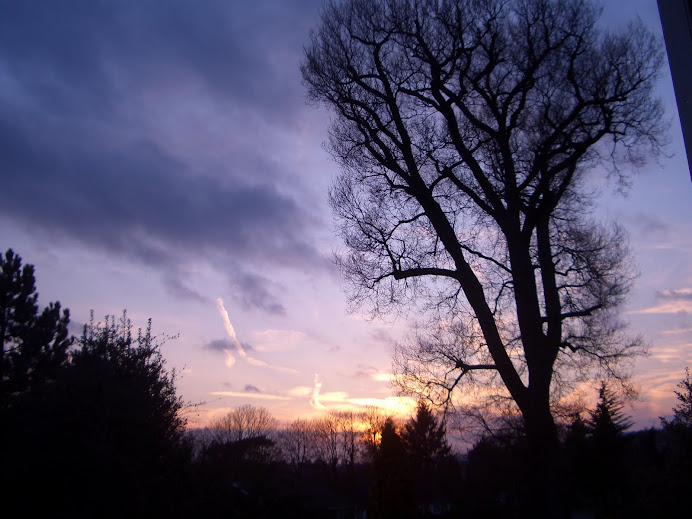
with vapor trails
Subscribe


 Posts
All Comments
Posts
All Comments