I have been following a blog for a while called Sustainability in Crisis. One particular post caught my eye this week: Should we put a Financial Value on the Natural Environment.
This discussion came about because the UK Government have tried to do just that.And opinions are very divided on how and whether it can be done.
But this is not confined to the UK - the principles are just as relevant in the USA, and Robert Kennedy and others have had something to say about the issue on the other side of The Pond.
This is what I said by way of comment on that blog but it is either awaiting moderation or has disappeared into the ether. So for what it is worth I am saying the same thing here:
"I think we could turn this question on its head. Perhaps we should look at the economic system itself, which is flawed in many ways. One important flaw is that humans are not valued within the system.
We measure a ‘healthy’ economy in terms of the material wealth or prosperity that is created by and for its working citizens, expressed in terms such as the gross domestic product (GDP), gross domestic income (GDI) or gross national product (GNP). Whichever measure is used, they all put a zero valuation on the environment, on healthy citizens, social cohesion and cultural values!(1) As Robert Kennedy said:
…the (Gross National Product) does not allow for the health of our children, the quality of their education, or the joy of their play. It does not include the beauty of our poetry or the strength of our marriages… It measures neither our wit nor our courage, neither our wisdom nor our learning, neither our compassion nor our devotion to our country, it measures everything, in short, except that which makes life worthwhile. And it tells us everything about America except why we are proud that we are Americans. (2)
A very large number of people in our society are presently undervalued or not valued at all in monetary terms. These include the old and young, the infirm and disabled, the housewives and the many community and charity volunteers without whom many organizations would simply not survive. All of these people outside the conventional workforce often work very much harder and longer hours than many in full time employment. But they gain no financial independence or recognition within the economic framework from their toil. I know of a wife who for two decades has selflessly cared full time for an increasingly and profoundly disabled husband. Or I think of the mother who takes a career break to raise her own children. These women both lead enormously valuable lives, but feel undervalued.
But it is the economic system that is wrong.
So to return to the question – and the concern expressed that the natural world should be seen as having some value in and of itself, not just in its benefit for human welfare and well-being. This could happen, but we would need this to be within a financial system that is cyclical and sustainable and environmentally sound, and that is far from the reality of our present economy.
The fact is that we cannot sustain our present financial systems
There is massive wastage in our consumer society, both from personal consumption and in our industrial processes. Alarming statistics can be found of physical waste:
Americans waste or cause to be wasted nearly 1 million pounds of materials per person per year…[and] this does not account for wastes generated overseas on [their] behalf…the amount of waste generated to make a laptop computer is close to 4000 times its weight (3).
There is a beautifully sustainable cycle within nature. Dead bodies provide food for living creatures, plants photosynthesize and produce oxygen from carbon dioxide and animals use that oxygen in their respiration of which the by-product is carbon dioxide. At school we learnt all about this and called it the Carbon Cycle, little suspecting that 50 years later this would have such a fundamental significance for the future of the world!
If we can see the Earth as a single living entity involving complex interrelationships and a finely tuned balance of all life, as envisioned for example by James Lovelock, should it not be logical for a sustainable economy to mimic that natural world, indeed be a part of that world, where everything is recycled, everything has a further use elsewhere. We would then be able to build a system that is totally cyclical and sustainable and environmentally sound, and such a system would be able to place values on those important intangibles.
Evolution biologist and futurist Elisabet Sahtouris (4) once posed the question: doesn’t it seem crazy and so obviously illogical that our household finances and the study of how we make a living (or economy) should be so totally divorced from the study of how other species make a living (or ecology)?
This seems so simple and obvious but we cannot see it and we stumble onwards within an economic system that is deeply flawed!
So let’s first look at how we can change our economy – to embrace all these other essential qualities."
1. Hazel Henderson, 2001, cited in The Path to Living Economies – a collaborative Working Document of the Social Ventures Network at http://livingeconomiesforum.org/living-economies-path
2. Robert F. Kennedy, from transcription of audio version of Address made 18 March 1968 at the University of Kansas, Lawrence, Kansas, sourced at http://www.jfklibrary.org/Historical+Resources/Archives/Reference+Desk/Speeches/RFK/RFKSpeech68Mar18UKansas.htm
3. Paul Hawken and Amory and T. Hunter Lovins,1999, p. 52 cited in The Path to Living Economies – a collaborative Working Document of the Social Ventures Network at http://livingeconomiesforum.org/living-economies-path
4. Attributed to Janine Benyus at a Bioneers conference – from a Note from the Author Elisabet Sahtouris, 2000 at http://www.ratical.org/LifeWeb/Erthdnce/erthdnce.html
© Eleanor Stoneham 2011
Showing posts with label mass consumerism. Show all posts
Showing posts with label mass consumerism. Show all posts
Saturday, 4 June 2011


Thursday, 7 April 2011
The Dukan Diet
I hadn't heard of the Dukan Diet until this week!!! Where have I been, you may well ask!
But nonetheless, it has finally come to my attention, and I am fascinated by what French diet doctor Pierre Dukan has to say himself about his own creation.
Speaking to Lucy Cavendish in an interview for The Times Magazine last weekend, he explained to her why we eat too much. We are empty, he says. We need food yes, but we also need love and spirituality and beauty and nature and if we fall short on any of these we fill the gap with food.
Now that caught my attention because it is what I have been saying. It is symptomatic of our general malaise that we not only eat to fill a gap, but shop and shop to fill another gap in our needs - and that is appropriately enough called "retail therapy."
He concluded his interview with Cavendish on this self same note. "Industrialised nations are all about growth and consumerism. What makes us 'appy," he told her, are things that are free - "love, the air, belief and nature... but this does not make growth possible so we are all told to consume, consume, consume. We 'ave to stop doing it..." Just what I have been saying!
"So," Cavendish asks, "this diet is a call for a quiet revolution against consumerism?"
Yes, he replies. and what is more he is taking his message to America. He is going to tour the United States later this month with the American version of his book. I hope his message is well received. The book is already a massive best seller.
But nonetheless, it has finally come to my attention, and I am fascinated by what French diet doctor Pierre Dukan has to say himself about his own creation.
Speaking to Lucy Cavendish in an interview for The Times Magazine last weekend, he explained to her why we eat too much. We are empty, he says. We need food yes, but we also need love and spirituality and beauty and nature and if we fall short on any of these we fill the gap with food.
Now that caught my attention because it is what I have been saying. It is symptomatic of our general malaise that we not only eat to fill a gap, but shop and shop to fill another gap in our needs - and that is appropriately enough called "retail therapy."
He concluded his interview with Cavendish on this self same note. "Industrialised nations are all about growth and consumerism. What makes us 'appy," he told her, are things that are free - "love, the air, belief and nature... but this does not make growth possible so we are all told to consume, consume, consume. We 'ave to stop doing it..." Just what I have been saying!
"So," Cavendish asks, "this diet is a call for a quiet revolution against consumerism?"
Yes, he replies. and what is more he is taking his message to America. He is going to tour the United States later this month with the American version of his book. I hope his message is well received. The book is already a massive best seller.
Thursday, 17 February 2011
Why we need the Sabbath
The Sabbath is a Quiet Antidote to Web Chatter.
This was the title of Jonathan Sacks’ column in last Saturday’s Times.
 “The soul needs its silences,” he wrote, “in the midst of the web chatter and the electronic noise.” He was writing of the Jewish Sabbath, a time for putting technology aside, a time to spend with family, to focus on the important things in life, on relationships, building communities, strengthening marriages, giving parents and children, he writes, undistracted time with one another. Time that we tend to call “quality time.” And this time is becoming ever more precious, as we all become slaves to Twitter, Facebook, E Mails, and all the other distractions we face every day.
But it is not just technology we need a break from. Mass consumerism is equally insidious, with its effects on our planet, our pockets, our sanity.

 Last Sunday we went to have lunch with some of our family in London. We would have gone by train, but we drove because we needed to pick up some heavy and bulky essential DIY materials at one of those huge stores in a shopping mall on the way.
We had started the day by going to our early Eucharist service in the local church: essential nourishment for the soul. But my peaceful state of mind was soon shattered by the sheer awfulness of the frenetic shopping we experienced all around us when we entered the store. And I was reminded of another weekend, a half term weekend many years ago when our boys were still young.
It was a rain soaked Sunday, and we had the misfortune to visit another large shopping mall outside town to return some goods and get our money back.
All those years ago the elder of our two boys was in a religious studies lesson at school. They were discussing Sunday Trading. “It is just wrong,” he said. No reason was needed – it was simply wrong!
Ever since it was introduced I have abhorred Sunday trading, and actually I also loathe those big soulless monuments or temples to consumerism and materialism we call superstores and shopping malls. But as I said we needed to change something and thought we could save gas by calling in on our way to visit a local house and garden of historic interest with the kids. Again, I had completed my morning duties at the Sunday service in our local parish church. This trip to the shop was meant to be incidental only, en route to our traditional Sunday afternoon family excursion, this time to Down House, the country home of Charles Darwin for the last 40 years of his life until he died in 1882.
Now I realize that for many Christians who like me abhor Sunday trading the mention of Darwin and his views on evolution may itself open up a fairly passionate discussion about The Origin of the Species and his theories of Natural Selection. I’ll take that risk, but that isn’t the point of this story.
The car parks around the superstore were practically gridlocked, cars jostling for the scarce, almost nonexistent empty parking spaces, tempers were frayed, and families with their children were pouring into and out of the store, those on the outward home bound journey pushing trolleys loaded high with consumable goods. There were several thousand cars there, with perhaps 3 or 4 or more in each car. The arithmetic is simple and the disquieting effect on my previous feeling of spiritual calm was very real!
The damage to the environment inflicted through our collective behaviours around that one store on that one day must have been colossal. It doesn’t bear contemplation to multiply the effect by the number of other similar stores around the country presumably displaying the same patterns of greed and consumerism! These places have become for many the new religion, shopping malls replacing the church as the Sunday venue of first choice.
At least I was trying to economise that day and avoid two car trips where one could suffice; and our shopping trip was intended to be fleeting! And my sense of spiritual uplift and sustenance nourished by the liturgy and Christian fellowship of the morning’s church service, was in no real danger of being permanently destroyed by that retail experience. But let’s consider the shoppers themselves. For how many was this outing their main Sunday family entertainment? Next weekend how many of those same families will be burdening our already overflowing landfill sites with the goods displaced by their latest retail bonanza? What sort of long term satisfaction do they obtain from their shopping frenzy, from their obsessive accumulation of material goods? Such behaviour is simply not healthy or sustainable and certainly does not make for any lasting and real happiness. On the other hand, as soon as we could we escaped the gridlock and the obvious tempers and aggressions of many of the trapped drivers, and the onward drive to Down House, not more than a few miles away, took us through some of the most beautiful autumnal colours in the Kent country lanes, a spiritual joy to behold, and food for the soul. How sad therefore that during that whole day, a half term weekend, we were informed by the staff that Darwin’s house, with all its interest and artefacts, its gardens and greenhouses, and brilliant exhibits of his life and work, with plenty of child friendly diversions and so close to the conurbation that is Greater London, had been visited by only an estimated 150 people! Yes, 150 people in the whole day!
I have been reading again the book by Jim Wallis, Rediscovering Values – on Wall Street, Main Street and Your Street. Part Two, How We Got Here, writes of our culture of greed, not need, of self- interest without the restraint of ethics, of it being “all about me,” of mass consumption and consumerism being a part of the American identity (and it is no different in Britain I can assure you). He explains how such behaviour has brought us to where we now find ourselves, struggling out of the Great Recession.
He writes of the loss of values within our modern economy and suggests that the financial Market, with a capital M, is our “idol of ultimate allegiance,” the modern day equivalent of the Golden Calf that Moses found being worshipped when he came down from Mt Sinai with his Tablets. He argues that the market, without the capital letter, must serve us, not the other way around. The first commandment of The Market, he writes, is “There is never enough.” This, he emphasizes, must be replaced by “the dictum of God’s economy; namely, there is enough if we share it.”
This book is a call to us all to rediscover values in our lives, as individuals and together, to work for an economy that is for the “common good,” not just for Me. This book has a strong and sound message for us all.
Whatever our faith, or none, how about we all set aside one day of "quality time" at the weekend with our families as a quiet antidote to the chatter and noise of technology and consumerism.
This was the title of Jonathan Sacks’ column in last Saturday’s Times.
 “The soul needs its silences,” he wrote, “in the midst of the web chatter and the electronic noise.” He was writing of the Jewish Sabbath, a time for putting technology aside, a time to spend with family, to focus on the important things in life, on relationships, building communities, strengthening marriages, giving parents and children, he writes, undistracted time with one another. Time that we tend to call “quality time.” And this time is becoming ever more precious, as we all become slaves to Twitter, Facebook, E Mails, and all the other distractions we face every day.
But it is not just technology we need a break from. Mass consumerism is equally insidious, with its effects on our planet, our pockets, our sanity.


We had started the day by going to our early Eucharist service in the local church: essential nourishment for the soul. But my peaceful state of mind was soon shattered by the sheer awfulness of the frenetic shopping we experienced all around us when we entered the store. And I was reminded of another weekend, a half term weekend many years ago when our boys were still young.
It was a rain soaked Sunday, and we had the misfortune to visit another large shopping mall outside town to return some goods and get our money back.
All those years ago the elder of our two boys was in a religious studies lesson at school. They were discussing Sunday Trading. “It is just wrong,” he said. No reason was needed – it was simply wrong!
Ever since it was introduced I have abhorred Sunday trading, and actually I also loathe those big soulless monuments or temples to consumerism and materialism we call superstores and shopping malls. But as I said we needed to change something and thought we could save gas by calling in on our way to visit a local house and garden of historic interest with the kids. Again, I had completed my morning duties at the Sunday service in our local parish church. This trip to the shop was meant to be incidental only, en route to our traditional Sunday afternoon family excursion, this time to Down House, the country home of Charles Darwin for the last 40 years of his life until he died in 1882.
Now I realize that for many Christians who like me abhor Sunday trading the mention of Darwin and his views on evolution may itself open up a fairly passionate discussion about The Origin of the Species and his theories of Natural Selection. I’ll take that risk, but that isn’t the point of this story.
The car parks around the superstore were practically gridlocked, cars jostling for the scarce, almost nonexistent empty parking spaces, tempers were frayed, and families with their children were pouring into and out of the store, those on the outward home bound journey pushing trolleys loaded high with consumable goods. There were several thousand cars there, with perhaps 3 or 4 or more in each car. The arithmetic is simple and the disquieting effect on my previous feeling of spiritual calm was very real!
The damage to the environment inflicted through our collective behaviours around that one store on that one day must have been colossal. It doesn’t bear contemplation to multiply the effect by the number of other similar stores around the country presumably displaying the same patterns of greed and consumerism! These places have become for many the new religion, shopping malls replacing the church as the Sunday venue of first choice.
At least I was trying to economise that day and avoid two car trips where one could suffice; and our shopping trip was intended to be fleeting! And my sense of spiritual uplift and sustenance nourished by the liturgy and Christian fellowship of the morning’s church service, was in no real danger of being permanently destroyed by that retail experience. But let’s consider the shoppers themselves. For how many was this outing their main Sunday family entertainment? Next weekend how many of those same families will be burdening our already overflowing landfill sites with the goods displaced by their latest retail bonanza? What sort of long term satisfaction do they obtain from their shopping frenzy, from their obsessive accumulation of material goods? Such behaviour is simply not healthy or sustainable and certainly does not make for any lasting and real happiness. On the other hand, as soon as we could we escaped the gridlock and the obvious tempers and aggressions of many of the trapped drivers, and the onward drive to Down House, not more than a few miles away, took us through some of the most beautiful autumnal colours in the Kent country lanes, a spiritual joy to behold, and food for the soul. How sad therefore that during that whole day, a half term weekend, we were informed by the staff that Darwin’s house, with all its interest and artefacts, its gardens and greenhouses, and brilliant exhibits of his life and work, with plenty of child friendly diversions and so close to the conurbation that is Greater London, had been visited by only an estimated 150 people! Yes, 150 people in the whole day!
I have been reading again the book by Jim Wallis, Rediscovering Values – on Wall Street, Main Street and Your Street. Part Two, How We Got Here, writes of our culture of greed, not need, of self- interest without the restraint of ethics, of it being “all about me,” of mass consumption and consumerism being a part of the American identity (and it is no different in Britain I can assure you). He explains how such behaviour has brought us to where we now find ourselves, struggling out of the Great Recession.
He writes of the loss of values within our modern economy and suggests that the financial Market, with a capital M, is our “idol of ultimate allegiance,” the modern day equivalent of the Golden Calf that Moses found being worshipped when he came down from Mt Sinai with his Tablets. He argues that the market, without the capital letter, must serve us, not the other way around. The first commandment of The Market, he writes, is “There is never enough.” This, he emphasizes, must be replaced by “the dictum of God’s economy; namely, there is enough if we share it.”
This book is a call to us all to rediscover values in our lives, as individuals and together, to work for an economy that is for the “common good,” not just for Me. This book has a strong and sound message for us all.
Whatever our faith, or none, how about we all set aside one day of "quality time" at the weekend with our families as a quiet antidote to the chatter and noise of technology and consumerism.
Wednesday, 12 January 2011
Shopping to Drop
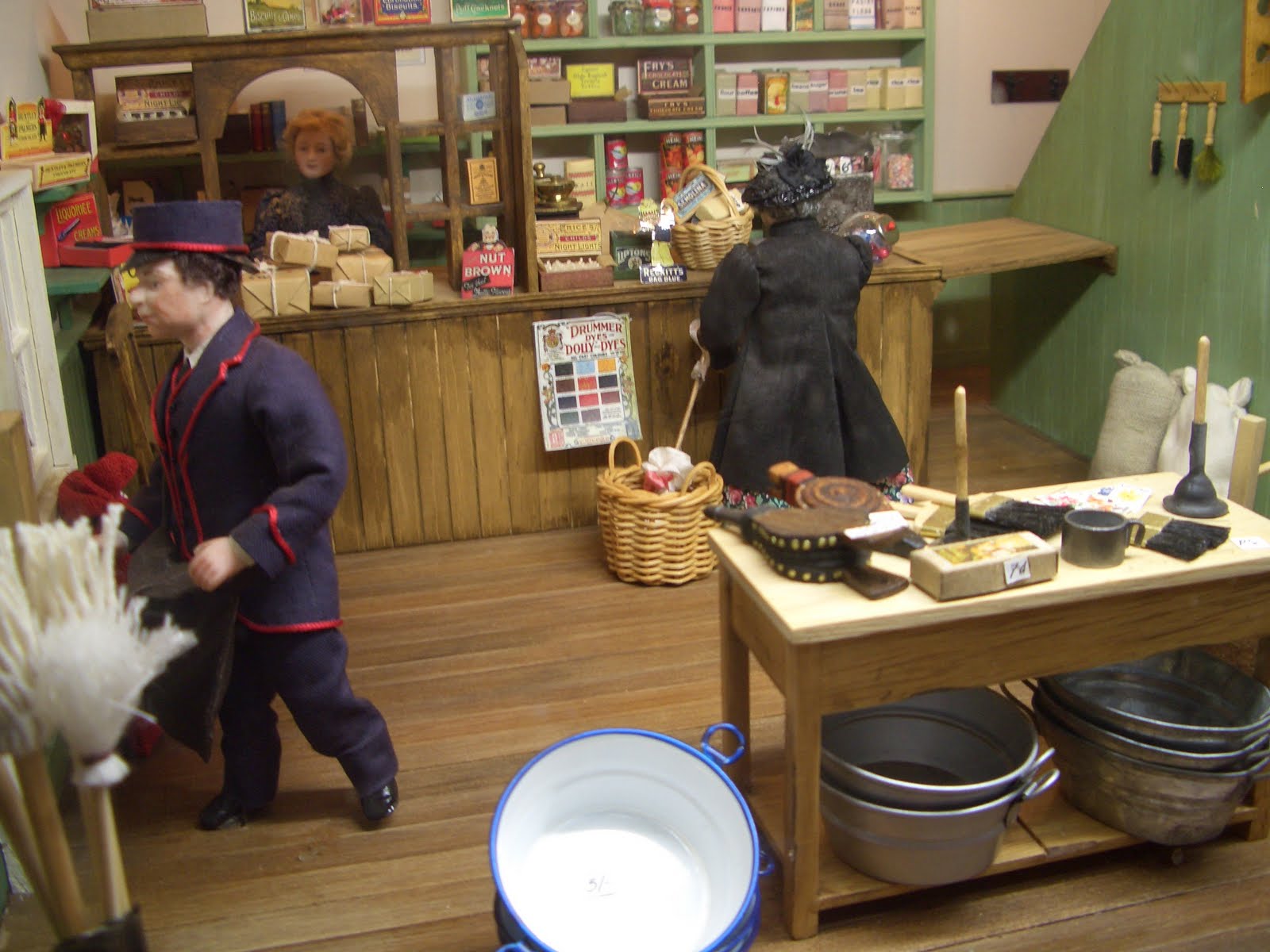

So we have a hike in our UK VAT rate to 20%, the highest we have known. People have rushed to the shops, seduced by retailers promising to absorb the increase, not passing it on to the customer for the time being. But how much more stuff do we want? Are we shopping for personal need or greed? There is one easy way to avoid the increase in VAT. Don’t shop!
One of the joys to me of going away is not being cluttered up with possessions. It is amazing just how comfortably one can live out of a small suitcase, or in a basic tent, surrounded only by what we really do need. Alice Thomson said just this in her Opinion in The Times on 5th January, only for her the realisation came when the plane took them her and her family away on holiday without their suitcases, left languishing in the snow at Heathrow and they were forced to buy the basic essentials when they arrived at their destination.
What is it about us that we are obsessed with shopping? It is a national pastime. Why do we eat too much, consume too much? Mass consumerism is a disease of our overly comfortable Western lives. It is as if we are always feverishly looking for something to satisfy us, to fill some kind of hole in our lives. And the media are far from blameless. Driven by profit motives, they shamelessly exploit us in advertisements and articles to pamper ourselves, to treat ourselves, to have whatever we want at all times. This fuels greed rather than need. Competitions reward us with a supermarket trolley dash: the winner fills a trolley with as much as possible from the shelves in a frenzied grab over a given time. Color supplements publish glossy images of items we must have. Surely the fostering of pure self-indulgence is an affront to our humanity while so many starve and suffer elsewhere in the world.
That is not to say that we should deny ourselves an adequate standard of living. But neither should we live extravagantly. We should strive to live responsibly and sustainably. We should minimize our own footprint and always have regard for the needs of our fellow human beings as if they were living with us under our same family roof.
‘We need an expression,’ mused Alastair McIntosh to The Honorable Sir Maxwell MacLeod of Fuinary and the Isles as they shared a car journey in Scotland back in 1992. ‘We need something that describes the way people mask their misery by going out shopping.’ ‘How about,’ Maxwell pondered, ‘how about ‘retail therapy’?’ And that, according to McIntosh in his wonderful book Soil and Soul, is the origin of the phrase now so widely used today across the globe.
Wednesday, 17 February 2010
Rediscovering Values
This half term week reminds me of another half term; it must have been many years ago - my boys are now young adults. It was a rain soaked Sunday, and we had the misfortune to visit a large shopping mall outside town to return some goods to one of those internationally known super stores.
All those years ago the elder of our two boys was in a religious studies lesson at school. They were discussing Sunday Trading. “It is just wrong,” he said. No reason was needed – it was simply wrong!
Ever since it was introduced I have abhorred Sunday trading, and actually I also loathe those big soulless monuments or temples to consumerism and materialism we call superstores and shopping malls. But as I said we needed to change something and thought we could save petrol by calling in on our way to visit a local house and garden of historic interest with the kids. I had completed my morning duties at the Sunday service in our local parish church. This trip to the shop was meant to be incidental only, en route to our traditional Sunday afternoon family excursion, this time to Down House, the country home of Charles Darwin for the last 40 years of his life until he died in 1882.
Now I realize that for many Christians who like me abhor Sunday trading the mention of Darwin and his views on evolution may itself open up a fairly passionate discussion about The Origin of the Species and his theories of Evolution and Natural Selection. I’ll take that risk, but that isn’t the point of this story.
The car parks around the superstore were practically gridlocked, cars jostling for the scarce, almost nonexistent empty parking spaces, and families with their children were pouring into and out of the store, those on the outward home bound journey pushing trolleys loaded high with consumable goods. There were several thousand cars there, with perhaps 3 or 4 or more in each car. The arithmetic is simple and the disquieting effect on my previous feeling of spiritual calm was very real!
The damage to the environment inflicted through our collective behaviours around that one store on that one day must have been colossal. It doesn’t bear contemplation to multiply the effect by the number of other similar stores around the country presumably displaying the same patterns of greed and consumerism! These places have become for many the new religion, shopping malls replacing the church as the Sunday venue of first choice.
At least I was trying to economise that day and avoid two car trips where one could suffice; and our shopping trip was intended to be fleeting!
All those years ago the elder of our two boys was in a religious studies lesson at school. They were discussing Sunday Trading. “It is just wrong,” he said. No reason was needed – it was simply wrong!
Ever since it was introduced I have abhorred Sunday trading, and actually I also loathe those big soulless monuments or temples to consumerism and materialism we call superstores and shopping malls. But as I said we needed to change something and thought we could save petrol by calling in on our way to visit a local house and garden of historic interest with the kids. I had completed my morning duties at the Sunday service in our local parish church. This trip to the shop was meant to be incidental only, en route to our traditional Sunday afternoon family excursion, this time to Down House, the country home of Charles Darwin for the last 40 years of his life until he died in 1882.
Now I realize that for many Christians who like me abhor Sunday trading the mention of Darwin and his views on evolution may itself open up a fairly passionate discussion about The Origin of the Species and his theories of Evolution and Natural Selection. I’ll take that risk, but that isn’t the point of this story.
The car parks around the superstore were practically gridlocked, cars jostling for the scarce, almost nonexistent empty parking spaces, and families with their children were pouring into and out of the store, those on the outward home bound journey pushing trolleys loaded high with consumable goods. There were several thousand cars there, with perhaps 3 or 4 or more in each car. The arithmetic is simple and the disquieting effect on my previous feeling of spiritual calm was very real!
The damage to the environment inflicted through our collective behaviours around that one store on that one day must have been colossal. It doesn’t bear contemplation to multiply the effect by the number of other similar stores around the country presumably displaying the same patterns of greed and consumerism! These places have become for many the new religion, shopping malls replacing the church as the Sunday venue of first choice.
At least I was trying to economise that day and avoid two car trips where one could suffice; and our shopping trip was intended to be fleeting!
Monday, 18 January 2010
The need for a Dunkerque spirit.
The planet is in a bad way - surely few can disagree with that statement. And there are lots of ideas around for the reason why, and for what can be done to help secure a better future for us all. My theme is that we need a return to spirituality - and that the vulnerability and compassion of the Wounded Healer can play a part. Meanwhile years tick by as we crawl inexorably towards a precipice - beyond the point of no return even. Gloomy prognosis? Yes, perhaps, but I am sure it reflects the truth!
 But I have often wondered why it seems to take so long for obvious truths to be heeded, and for action to be taken when solutions to problems sometimes seem so clear. Our greed and mass consumerism is surely unsustainable. But what drives us to this? And why does behavioural change often seem so slow, even if we accept that such change is needed. Let's leave it to the next man, we say. why should we be the first to start change?
Ignorance is often to blame. Obviously, busy individuals do not tend to read books and textbooks outside their own spheres, and specialists do not tend to look beyond their own fields to the wider significance of their knowledge and skill – often having quite enough to do in their own work! Too often it seems that wisdom is then lost within the pages of a book – good ideas do not always convert into positive action - and are never developed further. And even the most respected media will distort facts either by accident or design to grab headline attention.
Am I right? Is there hope?
please let me have some thoughts!
By the way I liked the photo and I guess it has some relevance to the topic!! Any one like to hazard a guess as to where I took it?!
 But I have often wondered why it seems to take so long for obvious truths to be heeded, and for action to be taken when solutions to problems sometimes seem so clear. Our greed and mass consumerism is surely unsustainable. But what drives us to this? And why does behavioural change often seem so slow, even if we accept that such change is needed. Let's leave it to the next man, we say. why should we be the first to start change?
 Some say that as humans we actually need a sense of urgency, a Dunkerque kind of mentality before we will all pull together as a race to save our fellow beings. This may well be so. We all know how easy it is to procrastinate around our less favourite activities, revising for exams for example, until the last possible moment. Sometimes good ideas for change can be buried in cumbersome and unwieldy bureaucracy. Sometimes effective leadership is missing.
Ignorance is often to blame. Obviously, busy individuals do not tend to read books and textbooks outside their own spheres, and specialists do not tend to look beyond their own fields to the wider significance of their knowledge and skill – often having quite enough to do in their own work! Too often it seems that wisdom is then lost within the pages of a book – good ideas do not always convert into positive action - and are never developed further. And even the most respected media will distort facts either by accident or design to grab headline attention.
Am I right? Is there hope?
please let me have some thoughts!
By the way I liked the photo and I guess it has some relevance to the topic!! Any one like to hazard a guess as to where I took it?!
Subscribe to:
Posts (Atom)
Sunset
with vapor trails
Subscribe


 Posts
All Comments
Posts
All Comments