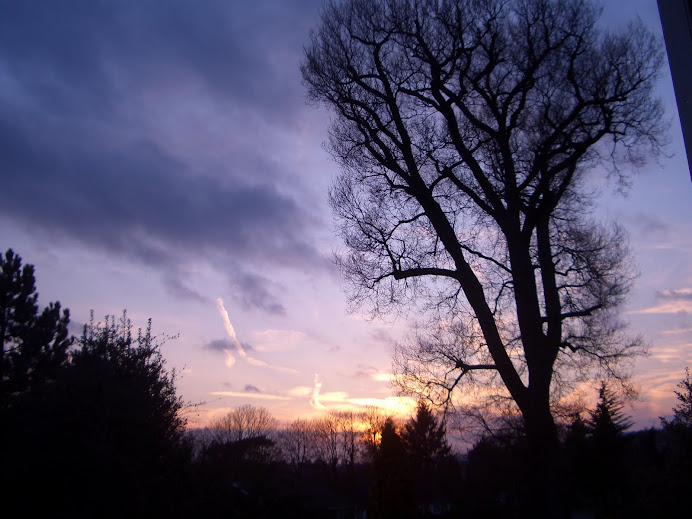
"The penalty good men pay for indifference to public affairs is to be ruled by evil men." attributed to Plato

"Bad men need nothing more to compass their ends, than that good men should look on and do nothing." attributed to Edmund Burke

Let's between us make the world a better place.


Showing posts with label ancient wisdom. Show all posts

Friday, 14 November 2014

Relationship and community - indigenous and ancient wisdom

Now couldn't that be what we all need in the world today?
I spotted this in the Australian Aboriginal Cultures Gallery, spread over two levels, in the South Australian Museum Adelaide North Terrace. This is said to be the most comprehensive Aboriginal Cultural Gallery in the world, and I found it a wonderfully fascinating experience.

I explore the issue of relationship and indeed relatedness in the context of community in my book Healing This Wounded Earth, devoting a whole chapter to this very important healing influence...explaining why it is so important and what we can do to promote real healing community.

So often I find evidence that the world's indigenous tribes carry much wisdom that we would do well to heed. We ignore the ancient wisdoms at our peril. We may think we know best but we surely do not. 
And by one of those happy coincidences which are surely meant to happen, I just heard news of "The  Global Indigenous Wisdom Summit being organised by the Shift Network. Here is a free online gathering of some of the best the world can offer of indigenous wisdom - running from 18th to 20th November 2014. Please follow the link to see what will be covered and to sign up if you are interested.


Thursday, 29 September 2011

Cathedrals of the Mind, Hospitals of the Soul.

I'm talking about libraries.

I simply love quotations. I use them liberally in everything I write. I carry my favorites around with me. Those words that were spoken or written centuries, or perhaps even millennia ago, and that still resonate deeply with us today demonstrate that some things never change, including human nature! And they show us how important and relevant many of our ancient wisdom still is - why we should listen to the sages and prophets of long ago.

But here is a lovely modern quote brought to my attention by Chief Rabbi Jonathan Sacks in a piece he wrote recently for the superb Credo column in The Times. It is from Caitlin Moran:

Libraries, she wrote, are "cathedrals of the mind; hospitals of the soul; theme parks of the imagination. On a cold, rainy island, they are the only sheltered public spaces where you are not a consumer, but a citizen instead. A human with a brain and a heart and a desire to be uplifted, rather than a customer with a credit card."

Wonderful! But actually our brilliant art galleries and museums serve a very similar healing function, as long as we resist the shop on the way out!

This is Funchal cathedral in Madeira

Sunday, 5 June 2011

Sacred Geography

How do we value our natural environment? - I asked in my last post.
However we do, one thing of which I am certain is that we must recognise the sacredness of nature, of our environment of which we are an inextricably linked part. Only then, as we view the living Gaia around us with awe and wonder, and with a sense of that sacredness, will be find ourselves forced to respect it, to nurture and protect those fragile interconnections.
The sacred geographies of ancient cultures, Paul Devereux tells us in his latest book, Sacred Geography contain a fundamental wisdom, a lesson we would be wise to heed.

How a culture maps its world says much about its way of thinking about its environment, "how its soul and the soul of the world...interact." Make our environment sacred once again, he tells us, and the right environmental behaviour will come naturally; the mapping of the physical world will be integrated with the geography of the soul.
We have little time to waste in making this essential connection again.

Thursday, 14 April 2011

Ancient Wisdoms - Modern Economy

I’ve written quite a bit lately about the flaws in our economic system. What are the alternatives?

This is where I believe we can find inspiration from Ancient Wisdoms.
You don’t have to be religious to be able to appreciate the wisdom of spiritual texts in the context of the twenty first century. The Bible teaches that money is first and foremost a tool for us to use wisely for the furtherance of the Kingdom of God. But what if you don't believe in God? The Old Testament sets out principles of economics relating to the management of land and debt that in their essence are clearly designed to promote and maintain healthy relationships and prevent the concentration of wealth and power in the hands of a minority. That to me sounds enormously relevant for today’s world, whether or not you believe in God!

The Jubilee Land laws
When the Israelites entered Canaan in the fourteenth century BC the land was carved up between them per capita, and the Jubilee Land Laws were formulated.1 No freehold sales were allowed and every fiftieth year, the Jubilee Year, the land had to revert to the original family freeholder, 2 at which time the people were to return to their own clans.3 At this same time bonded servants or debt slaves were released. This sound albeit informal welfare system ensured that the disabled, elderly and infirm were cared for, and the extended family was kept together, maintaining personal dignity and self-reliance for all.
Then there were the laws that gave freedom from debt servitude. There was an interest ban on loans between Israelites (not applicable to refugees and immigrants) and the loan would be cancelled every seven years. This kept the wealth within a family unit and worked to keep the family together.
Lending was about helping the poor and needy through financial crises. Loans were for helping in the short term, they were not intended to cause any hardship to a borrower over the longer term.
These laws for periodic debt cancellation and the return of family property protected a family’s roots and avoided wealth concentration and economic dependency. The laws underlined justice on the one hand with redistribution rules and the importance of relationships on the other, with families being rooted in their own areas. ‘There is hope for your future, says the Lord, and your children shall come back to their own country.’4
This is quite the opposite of the global mobility encouraged today in the workforce. Such mobility brings with it the inherent disadvantages of losing family cohesion, not knowing others around you in society and not feeling part of any community. When people generally do not feel loyalty and attachment to a particular area there can be an increase in crimes against the person and an increase in violence against the environment.
Many of us believe that there is an inextricable link between religious faith and social values, between theology and sociology, between the spiritual and the political. But we must have the courage to uphold these values in our lives. If we do not do so we fail society, and we fail God.5

Comments welcome!

1. Holy Bible, RSV, Joshua chapters 13 to 21
2. Ibid, Leviticus 25.
3. Ibid., Lev 25.10
4. Ibid., Jeremiah 31.17
5. The Rt. Reverend James Jones, Bishop of Liverpool, in his foreword to Schluter, Michael and John Ashcroft, Editors, Jubilee Manifesto: a Framework, Agenda and Strategy for Christian Social Reform, Leicester: Inter-Varsity Press, 2005, p. 11.

The photo, by the way, is of tobacco being dried in the Dordogne.

© Eleanor Stoneham 2011

Tuesday, 22 March 2011

Fare dodger, turnstile jumper, fare beater, fare evader, fare fiddler

Fare dodger, turnstile jumper, fare beater, fare evader, fare fiddler, we all know what that means - the person guilty of fraudulent travel or just simply “travelling without a ticket.”
In New York City the legal term is apparently “theft of services”
The problem seems to be universal – but the bottom line is that the honest amongst us subsidize the dishonest.

Boris (Johnson – London Mayor) slams the fare-dodging ‘parasites’ who cost us £75million, the London Evening Standard headline shouted. And that’s just in one year, in London, £40million on the buses and the Tube £20million.

And I’m sure New York and other big cities are as bad.

On the next page of the same newspaper: 20,000 speed off with petrol without paying says the headline. Apparently motorists stole nearly £800,000 worth of petrol (gas) in “drive-offs” from petrol stations in London last year.

Again I’m sure London is in no way unique.

In our church there is a little wooden holder on the vestry wall, made many years ago to store the match-boxes and lighters for lighting our candles. It is inscribed: EX. XX. XV.
The text referred to? The Book of Exodus in the Old Testament, specifically the Ten Commandments, and particularly number 8 – Thou Shalt Not Steal!

Someone in the distant past in our church must have got fed up with the matches disappearing!

Time to get back, I think, to a few good old fashioned moral codes and ancient wisdoms.

Monday, 27 December 2010

Educating our Children

Following the reviews on Amazon.com of Prince Charles' wonderful book Harmony, I came upon one reviewer's comments that took me back to something I have written about elsewhere; What future do we have if we do not recognize the need for a holistic education for our children?

I visited Herm a year or so ago. It is a very small Channel Island ‘community’ off the coast of North France, where life of necessity is simple. I watched the children playing outside, gloriously free and dirty and happy, using what nature has given them, the trees and bushes and grass and flowers, and their own abilities to run and hide and shout and climb trees, to be themselves. There was not an adult in sight. And I recalled the vision held by Alastair McIntosh, in his wonderful book Soil and Soul,for a spiritually rich and holistic education. He imagines a life-long curriculum of organic food and biodiversity, energy alternatives and respect for all, healing skills incorporating not only the most advanced scientific advances but also the spiritual healing principles, of poetry and story. There would be the study of conflict resolution and how to eliminate the causes of war. And the kids would have fun and play in tree houses.
McIntosh’s wish list is long but the spiritual message is clear. Such an education is about ‘building of community as right relationship between soil, soul and society, powered by the passion of the heart, steered by the reason of the head, and then applied by the skilled technique of the hand.’
The Global Justice Movement describes the purpose of education as to ‘teach people how to become life-long learners and virtuous human beings, with the capacity to adapt to change, to become masters of technology and builders of civilization through their ‘leisure work,’ and to pursue the highest spiritual values.’
The Dalai Lama stresses that education ‘constitutes one of our most powerful weapons in our quest to bring about a better, more peaceful, world.’He emphasizes the need to open children’s eyes to the needs and rights of others, so that their actions have a universal dimension, and they develop their ‘natural feelings of empathy so that they come to have a sense of responsibility towards others.’ He reminds us that traditionally it has been assumed that ethical and human values would be taught through a child’s religious upbringing rather than in mainstream state education. With the declining influence of religion and faith in family life this vital part of a child’s education has become neglected. The Dalai Lama proffers three guidelines for the education of our children. First, he says, we need to awaken their consciousness to basic human values by showing them how these are relevant to their future survival, rather than presenting them as solely an ethical or faith issue. Then we must teach them how to discuss and debate, to understand the value of dialogue rather than violence for resolving conflict. Finally there is the urgent need to teach children that differences of race, faith, culture, while important to preserve, are nevertheless secondary to the equal rights of us all from whatever background to be happy. And of course this is best done in the security of a close loving family unit.
Regrettably the purpose of education as seen in most of our traditional schools is to train people for jobs, rather than to be the rounded and spiritually grounded citizens of tomorrow. As a result the system becomes shackled by the needs of exams and syllabuses and league tables. May it come to pass sooner rather than later that many more of our schools come to be judged not only on their position in academic league tables but on how successfully they turn out well rounded, happy, respectful, empathic and spiritual citizens.

Tuesday, 23 November 2010

A New Rennaisance; Transforming Science, Spirit and Society


E. F. Schumacher once said: “man is far too clever to be able to survive without wisdom.” And we now need that wisdom in large measure.

Someone said to me today: "the trouble is, (a phrase I dislike as much as "the problem is") there are so many books on this climate change stuff and other problems of our age, but nothing ever gets done."

That is simply not true, but there is always room to do more.

I went recently in London to a day conference at the University of London, the occasion being the launch of A New Renaissance; Transforming Science, Spirit and Society. This book was born out of a vision by the Scientific Medical Network of the urgent need for action to address the now deeply rooted and dangerous ecological, political and spiritual crisis in which we find ourselves.
Members of the Network were invited to submit essays on aspects of the crisis, which would discuss the causes of, and/or the paths beyond, the current crisis, to create an important repository of wisdom.

The predominant aim was to underpin a programme of action, to help the Network to “move boldly from theory to practice,” with progressive solutions, not only within the Network itself but by working with other like minded organisations and within the wider global community.

What we have now in this excellent volume is a compilation of 25 of the best essays, many of them from some of the world’s leading thinkers, bringing the latest scientific discoveries and philosophical ideas alongside ancient spiritual wisdoms.
The book is divided into four sections, under the headings; Worldviews in Transition, Consciousness and Mind in Science and Medicine, Spirituality and New Understandings of the Sacred, and finally Global and Local Transformation: Governance, Economics and Education (and also including, importantly, a chapter on the role of music and the arts in a possible future). This final part is most important, examining as it does some possible reforms in politics, economics and education, to help "bring forth a society that can sustain the flourishing of human beings in the twenty first century."

The scene is set in the first chapter (by Ervin Laszlo) by diagnosing the world’s own health problems –unsustainable living, irrational behaviours and obsolete beliefs and aspirations. But crisis brings opportunities for transformation, in enlightened politics, a more socially aware business ethic, and personal responsibility. And underlying all of this is the need for a greater spiritual awareness, a shift of our dominant consciousness towards a connectedness with each other and with the natural world, a new understanding of humans as psychic beings. This is a theme that occurs again and again in many of the essays; that rediscovery of our souls, or the spirit in matter, or a sense of the sacred, or changes in human consciousness in some way, will be essential for finding a more meaningful and spirit filled world and for healing our planet. And this new understanding of reality must acknowledge the inadequacy of reductionist materialism and the mechanistic scientific worldview.

Readers will not agree with everything here. Boundaries are being pushed to limits of thought and understanding, but there are common threads of purpose, and urgency. There are practical ideas in plenty, and there are messages of hope from some authors, whilst others seem more doubtful that we still have time for change or indeed about the nature of the crisis itself.

I enjoyed reading all these essays immensely. Some are more technical than others, some the reader will find controversial. But all have their own profoundly important message from the authors’ own hearts. They combine a rich pattern of diverse thinking, knowledge, wisdom and proposed solutions and together they form a valuable resource for healing this wounded earth.

However, all this effort will have been in vain unless the book promotes positive healing actions. As humans we have freedom of choice and the benefits of hindsight and foresight and if we want to we can put this to a healing purpose. And this, we are reminded, will variously require courage, confidence and determination to move ideas forward, changes in education, changes in mindset, hearts and minds, and a sense of personal responsibility. Some believe that change must start from small groups, within community, a bottoms- up approach, and that we have to change our beliefs and attitudes before we can change our values and behaviour. Others stress the need for careful and respectful dialogue to establish a shared wisdom, for a unifying vision of our purpose on this planet and a call for global unity in diversity.
I could go on – there is so much wisdom in these pages. But to go into detail on any specific chapter would surely offend, albeit unintentionally, those I have left out.

As humans we yearn to be happy, at peace, part of a global family. This book is an important step in that direction if we heed its wisdom and advice.

(This article, with a few small changes, repeats the review I have posted on Amazon.com and Amazon.co.uk).

Monday, 22 November 2010

HRH Prince Charles too old fashioned to be King?


I wrote very recently about HRH Prince of Wales and his new book Harmony. Now I am saddened - indeed worried - to hear that many of us (do not include me) believe he is too "old fashioned" to be our future king and that he should stand down to make way for his son William in due course.

Clearly his message is not getting through yet to many of the populace. Far from being old fashioned, His Royal Highness is very much up to speed with all that is going on in our world and more than happy to embrace new ideas - as long as they are sustainable and not harmful to our planet. He thinks and feels very deeply about these issues, is hugely knowledgeable about them and passionate to do all he can to promote a new sustainable way of living for us all in the interests of protecting our planet from any more harm. And if that means resurrecting many values which we have lost sight of in the profligate West, what is wrong with that? We must not confuse ancient wisdom with the derogatory implications of the term "old fashioned."

I quote again from my earlier blog on his latest book Harmony; A New Way of Looking at the World:

From the publisher's notes - this book is: "A practical guide to what we have lost in the modern world, why we have lost it and how easily it is to rediscover. Harmony is a blueprint for a more balanced, sustainable world that the human race must create to survive...Drawing on his own practical experience, Prince Charles charts how changes to how we look at the world could lead us toward a better future. He describes how knowledge and perspectives now largely lost could help us meet very modern challenges, including in the built environment, engineering, medicine and farming."

Beautifully illustrated and thoughtfully written, this would make a lovely present for anyone who respects the Prince's views on these vital issues, but perhaps more importantly anyone who will be receptive to having their eyes and hearts opened to the really urgent need for a change in perception and heart to save our planet. And we need to open as many peoples' hearts and minds and souls to these issues as we possibly can.

Wednesday, 3 March 2010

Roots and walls and the Great Recession

There are two primary spiritual responses to what in America is being called the Great Recession; to build walls around us, out of the weakness of fear, or to put down roots to give us strength and hope. So writes Tim King, assistant to Jim Wallis, in Jim's book Rediscovering Values: on Wall Street, Main Street and Your Street (A Moral Compass for the New Economy). The former response of fear comes from the "Greed is good, it's all about me," "I want it now" camp. Too scared to share, too scared to show vulnerability, these people build ever bigger walls around themselves and their ever more "valuable" assets, trying to buy security and happiness. but of course it won't work in the long run.
On the other hand, we can have hope, and grow roots to give us the strength to live by the maxim that enough is enough, we're in this together, and we will look after the interests of the generations coming after us. Roots dig under the surface, reach to the source, give us the strength to meet the challenges ahead - with such a sound source of strength we are not afraid to share, not afraid to be vulnerable, and we can make the world a much fairer and better place.
This is a good book. Even though it is primarily written for the American reader it is just as relevant and accessible for any English speaking audience - the recession has after all been global. But all will be wasted if we don't use this opportunity to change things - don't just go back to the same economic and spiritless behaviour that got us in this mess in the first place. We need real change of heart and mind, and we need spirituality. Tim King recalls the sound wisdom of sharing so that all may have enough, passed down from his great grandmother to his grandmother. I am reminded of an even older wisdom in a passage in Alastair McIntosh' wonderful book Soil and Soul:
McIntosh recalls how Tom Forsyth, a crofter from the Scottish West Highland community of Scoraig, would say: ‘it’s not good enough to do your community-development only at the grass roots. So much of the grassroots are just at the level of spectator sport, television, cigarettes, drink and consumer culture. No, you’ve got to get down to the taproots…that are rooted in the ‘ancient spiritual bedrock.’’ This is where change has to start.
Amen

Tuesday, 2 February 2010

In the UK, near Birmingham, the Hindu community has reclaimed an area of polluted industrial scrubland. Here they have built a beautiful Hindu Temple within surroundings that now incorporate a historic canal, woodland and hills. From early beginnings where there was much resistance from local communities, there is now a place of beauty that is available for not only Hindu worship, but also cultural and educational events. The Hindus have healed the earth and restored a green and healthy environment to wildlife and the local community.


Here is a religion that teaches its followers to live simply and to see God in everything in the Universe. “Conserve ecology or perish,” says the Bhagavad Gita, (or Song of God), the Hindu sacred scripture.

“God’s creation is sacred. Humanity does not have the right to destroy what it cannot create. Humans have to realize the interconnectedness of living entities and emphasize the idea of moral responsibility to oneself, one’s society, and the world as a whole.”

Hindus teach that we can learn spiritual happiness and find fulfillment by living simply and without chasing after material wants and pleasures:

"They have to milk a cow and enjoy, not cut at the udder of the cow with greed to enjoy what is not available in the natural course. Do not use anything belonging to nature, such as oil, coal, or forest, at a greater rate than you can replenish it… do not destroy birds, fish, earthworms, and even bacteria which play vital ecological roles; once they are annihilated you cannot recreate them. Thus only can you avoid becoming bankrupt, and the life cycle can continue for a long, long time."

These quotations are taken from an excellent book, Faith in Conservation- New Approaches to Religions and the Environment, with permission, from the Hindu Faith Statement written for the book by Swami Vibudhesha Teertha, Acharya of Madhvacarya Vaishnavas, Udupi, Central Advisory Committee Member of the Visva Hindu Parishad.

Monday, 28 July 2008

Healing Imperatives for a Fractured World

Ripples of Hope – Healing Imperatives for a Fractured World
‘Each time a man stands up for an ideal, or acts to improve the lot of others, or strikes out against injustice, he sends forth a tiny ripple of hope, and crossing each other from a million different centres of energy and daring, those ripples build a current that can sweep down the mightiest walls of oppression and resistance.’
Robert Kennedy Speech 7 June 1966 Cape Town
I am a child of the fifties. In those early post war years we had freedom to play outdoors all day with our friends, with minimal adult supervision. We cycled or walked or bussed to school in all weathers, often alone. We had little money and we lived simply. But we were happy. Changes since then to our material "well being" have been immense. But they seem to have come at an extreme cost. Material wealth does not apparently bring us happiness, peace and contentment. 50 years on we now live in a culture where "success" seems to be based on celebrity status and wealth. We buy too much, we own too much, we hoard too much, we throw away too much and we do not recycle enough. The material possessions of others often create envy and greed, and this fuels its own social problems. We have ethnic and racial problems, terror, violence, public disorder, crime waves, the ‘yob culture’ on our streets, binge drinking, metal detectors in schools to combat knife crime and terrorist attacks in our Western European cities. We feel the need for gated roads and secured driveways. Many of these problems were unheard of, even unimaginable, in my own childhood and youth.
And whilst we live in this material splendour, real poverty is rife. 1 billion in the world live on less than the international poverty level of $1 per day. More than 850 million of the world’s 6.55 billion population starve. These statistics are an affront to our humanity. The injustices of the rich/poor divide bring discontent and envy, particularly with the globalisation of information. Poverty brings disease and lack of education, which itself perpetuates that poverty. Lack of resources also increases vulnerability to natural disasters that in the developed nations we are broadly speaking better able to handle. Inadequate and poor quality housing exacerbates the impact of floods, hurricanes, tsunamis and earthquakes. And how many of these are linked to man’s own arrogant interference with the planet?
We have a love affair with our car, our house, and our material possessions. And we all love a bargain. So much so that many of us are unwilling to pay the premium for fairly traded and fairly priced organic or local goods. We love our sanitised, standardised, pre-packaged meat and perfectly blemish free fruit and vegetables. But when we chase the cheapest mass-produced goods we are at the same time casting aside any ethical considerations regarding the production of those goods. We really do not want to think about the possibly sweat-shop conditions of the labourers, the unrealistically low wages that may have been paid, the cruelty inflicted on helpless animals, that our purchasing behaviour may be promoting.
My generation remembers the Cold War, with the Suez crisis of 1956/57 and the Cuban Missile crisis of 1962. We recall the sense of euphoria when the Berlin Wall, symbol of the Cold War since 1961, was dismantled in 1989, marking the end of European communism. We hailed a New Era and a new and peaceful world. How wrong we were!
In his Acceptance Speech following receipt of the 1989 Nobel Peace Prize the 14th Dalai Lama remarked: ‘As we enter the final decade of this century I am optimistic that the ancient values that have sustained mankind are today reaffirming themselves to prepare us for a kinder, happier twenty-first century.’ Sadly his prediction looks unpromising as we start the new millennium. We now live in a more perilous world than we could possibly have foreseen as children of the fifties.
Nick Clegg recently observed, with reference to Britain under the Labour Government in November 2006, that: ‘If legislation was a guarantee of greater public safety, this country would be the safest nation on earth.’ It seems that throughout the developed world Governing and regulatory bodies try to combat every ill of society as it arises by what can only be interpreted as knee-jerk legislation.
Small businesses find it difficult to keep up to date with the continual red tape handed out to them. Private investors have to be protected with an overly complex Financial Service Act and Money Laundering regulations for the simplest of transactions. Schools and hospitals struggle to cope with more tests and targets and league tables. In fact life is becoming far too complex and stressful for us all.
Over zealous legislation not only stresses us. It also takes away our individual sense of ethical, spiritual and social responsibility. And we do have personal responsibilities; towards ourselves, towards each other, towards our communities, our nations and ultimately to our living planet earth Gaia. And of course legislation fails to address our underlying behavioural problems, our selfishness and aggression, our greed and our envy, the seemingly prevalent albeit petty dishonesty amongst so many of us, fuelled by attitudes displayed in popular "soaps" on the TV and in films. Even the normally law - abiding citizens amongst us sometimes ignore the rules and regulations. Simple examples are the widely disregarded restrictions on speeding and the use of hand held mobile phones whilst driving. Such behaviour is obviously selfish. It exposes our fellow road users, pedestrians, cyclists, horses, pets, wild life and other vehicles to mortal danger. Why do we do it? Would we change our driving behaviour if we knew that every other user on the roads around us was a cherished friend or relation or even pet? Of course we would! If we always drove with consideration and care and indeed love for every other person sharing the road with us, traffic regulations would not be needed at all!
It seems clear to me that lasting and real solutions to the many and seemingly intractable problems of the 21st century world in which we live will not be found in Government interventions and interference. The world’s many fractures will not be healed in that way. Positive change must come from within our own hearts, through a healing of our own wounds and our own behaviour. To achieve that we have to rediscover our own spirituality, recognise with new eyes the spiritual in all our material experiences, whether at work or at leisure, and feel that spiritual awakening in our own individual consciences.
This is a healing imperative for our world. ‘There are a thousand hacking at the branches of evil to one who is striking at the root,’ wrote Henry David Thoreau. We all have to start striking at those roots.
This has been précised from my book in progress "Ripples of Hope – How to Heal our Fractured World," that explores how healing our own behaviour rather than relying on Government interventions is the real key to solving the world’s problems of climate change and violence that threaten our very existence. For more see www.eleanorstoneham.com

It's Time you knew - by Transition Rachel at YouTube

Many reasons to love La Gomera

Madeira

Sunset

Sunset
with vapor trails

Followers

Total Pageviews